

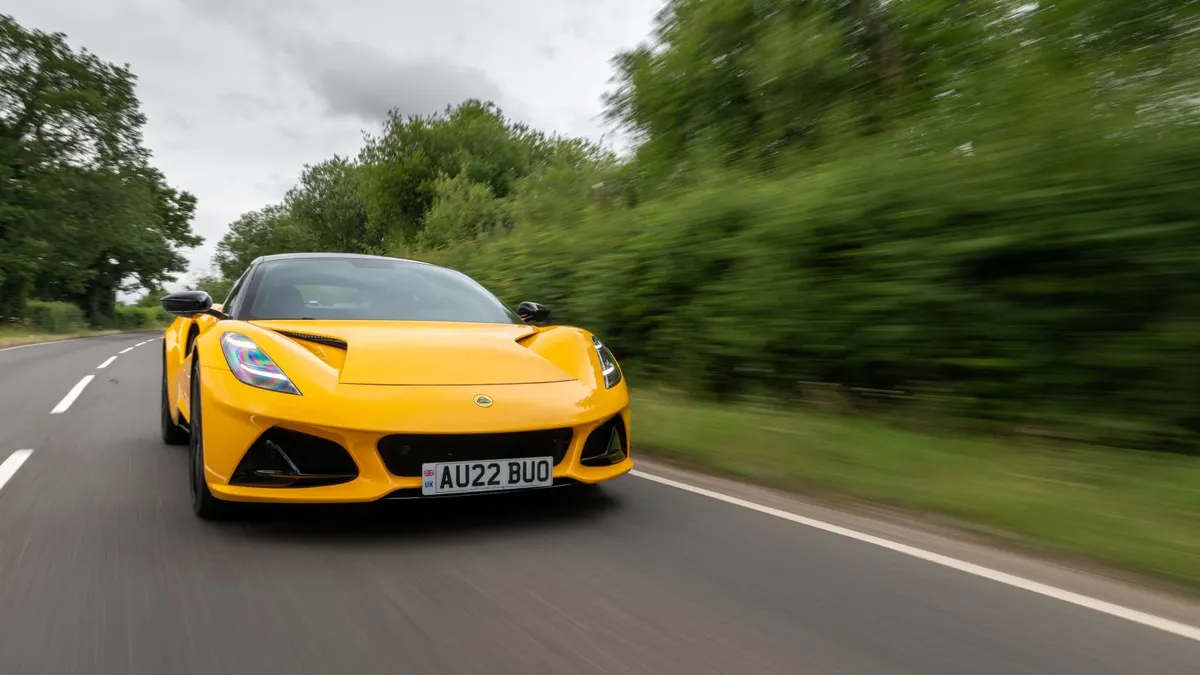
Lotus’s ongoing target is to grow its way back into profitability. And greater vehicle sales in the U.S. are its most likely medium-term prospect.
That’s the view of Lotus Technology Chief Financial Officer Daxue Wang, who also told WardsAuto in an online interview that protecting the brand’s core sports car reputation is a priority.
“Crucially, we are not pursuing volume for its own sake,” he said. “We are kind of committed to growth that protects both our pricing power and also our brand.”
Wang expects the U.S. consumer’s interest to be focused mainly on its internal combustion engine vehicles.
“Currently the ICE car Emira is kind of popular product in the States but the next generation of our sports cars is going to be a PHEV version,” said Wang.
He was referring to the upcoming Lotus hyper-performance plug-in hybrid, the 1,000-hp V-8-powered Type 135 expected to reach global markets in 2028.
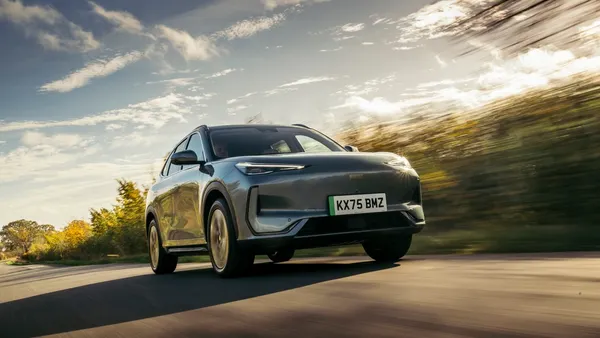
Wang consistently refers to the company’s electric vehicles, such as the Lotus Eletre and Lotus Emeya, as “lifestyle cars” whereas ICE products are known as its sports cars.
“You know, for the sports car, I think the main car market is going to be the States and, for the lifestyle cars of course, China is currently among the largest market for us,” said Wang. “And we are also looking forward, I think Europe is going to be the also strategic for this one and we have already launched our new Eletre X PHEV version early this June,” he added.
However, vehicle sales come a clear second to maintaining profit margins, explained Wang.
“For us, the quality of that growth matters even more than the headline figure,” he said. “Our margins are moving in the right direction and the gross margin has reached 10%, marking the clearest financial validation,” said Wang.
“Our Focus 2030 target is to achieve a gross margin about 20%,” he added.
Wang also committed the brand to its historic Norfolk plant at Hethel in the U.K.’s East Anglia region following the company’s “One Lotus” strategy bringing together its manufacturing and electric mobility divisions.
“We're committed to maintain the product there, supported by the ongoing upgrades in the advanced manufacturing capability, workforce development and overall operational efficiency,” said Wang.