Three-row SUVs are not meant for the drag strip — and not really for heavy off-roading, either.
But Volkswagen claims to up the ante in both aspects with the 2027 Atlas — along with the redesigned, vastly upgraded interior and expansion of tech and safety features that shoppers will actually be prioritizing.
Second-generation versions of the three-row Atlas recently began rolling off the assembly line in Chattanooga, Tennessee, where the model has been built since December 2016. The first-generation vehicle got two facelifts, with more tech being added for model year 2021 and an upgraded interior for model year 2024.
Now, the company has “perfected the recipe,” James A. Burch, product manager, Atlas and Atlas Cross Sport, told WardsAuto during an interview conducted in the front seat of the new Atlas.
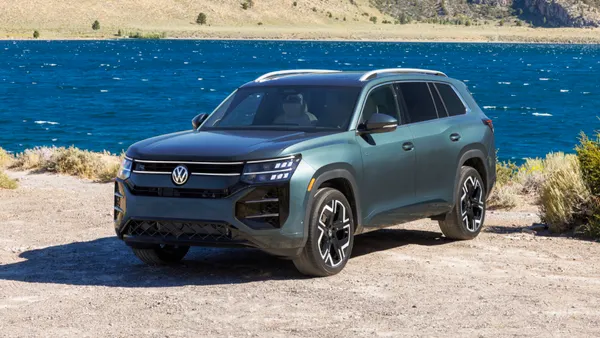
The 2027 Atlas is built on the automaker’s upgraded MQB Evo architecture, which is dimensionally similar that of the outgoing model, summed Burch. But the body features stronger proportions and sleeker surfacing all around, he said.
The Atlas is an important vehicle for Volkswagen in the U.S. market. About 80% of its current sales are SUVs compared to just 14% a decade ago, Burch says. About one in three VW vehicles sold in the U.S. is an Atlas, with sales reaching 102,608 units in 2025.
VW sold 71,044 of the standard Atlas in the U.S. in 2025 along with 31,564 of the two-row Atlas Cross Sport, totaling 102,608 for the Atlas family.
A new statement — plus better performance, more or less
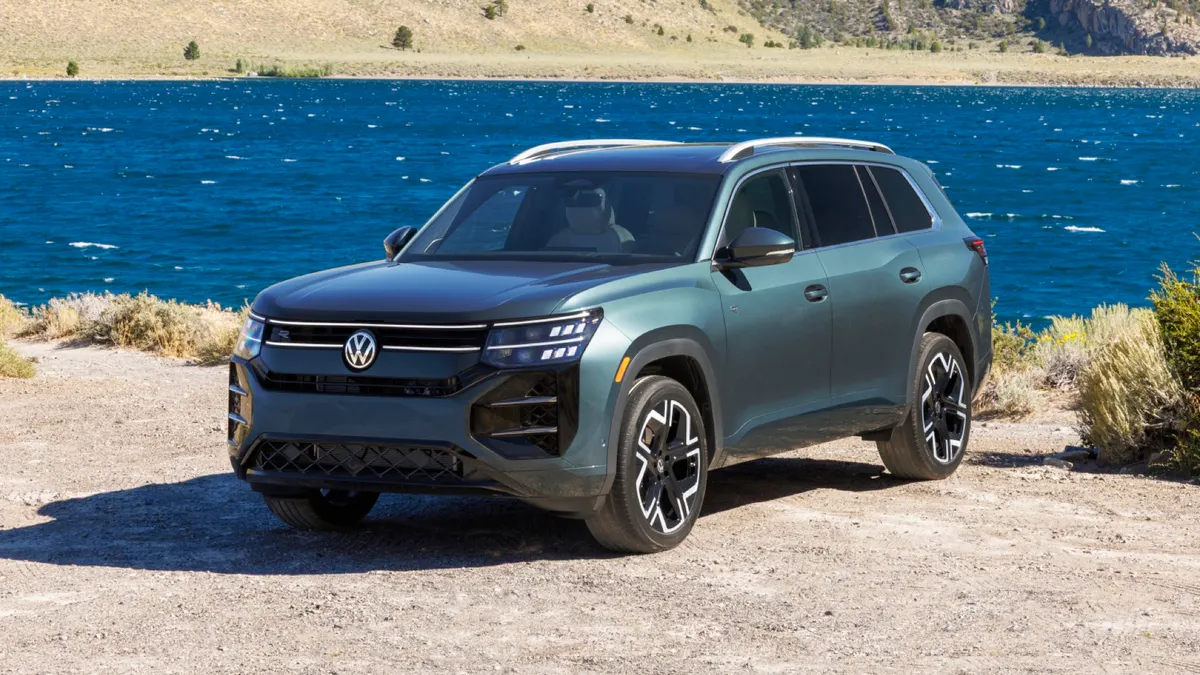
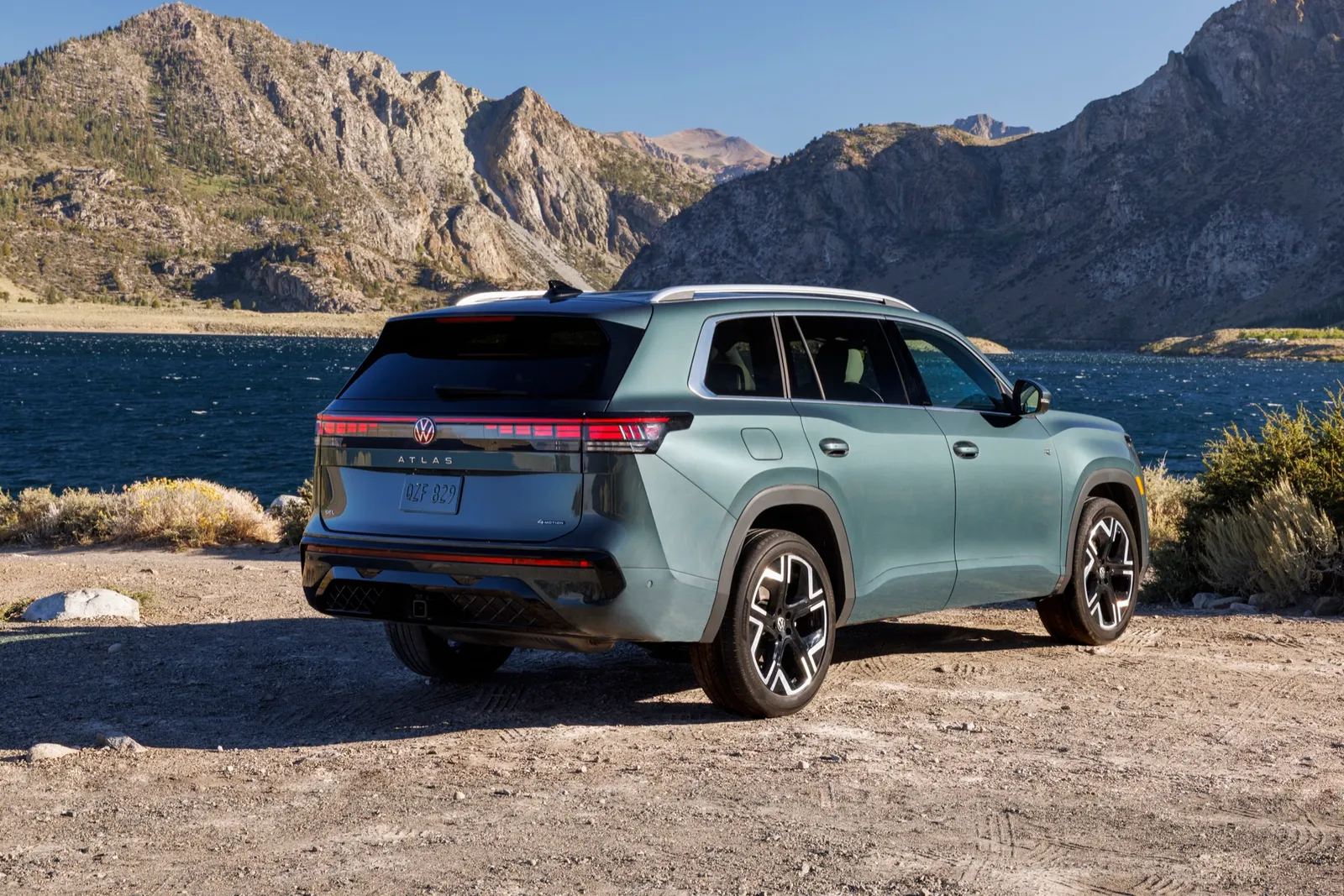
A sharp theme line runs along the upper body sides, augmented by strong fenders, and sculpted side sills. The spoiler is more pronounced and the tailgate lies flush with the rear bumper.
One of the most noticeable changes on the exterior is its redesigned front and rear lighting featuring double-stacked LED headlights. Double light lines and an illuminated VW badge are standard on all but the base trim. Illuminated door handles are available, as are puddle lamps with a unique projection pattern.
The 2027 Atlas is powered by a 2.0-liter turbocharged inline 4-cylinder engine that offers 282 hp and 273 lb-ft of torque — 13 hp more but 15 lb-ft less than the 2026 model. It comes mated to an 8-speed automatic transmission, with a choice of front wheel drive or 4Motion all wheel drive.
“Obviously, there was a concern, ‘Oh, we're going to lose this torque,’” said Burch.“But after driving the vehicle, I really don't miss it. We’re happy that we have more horsepower.
Although it weighs up to 4,650 pounds, the Atlas doesn’t feel heavy or overly large, despite being 2.5 inches longer than the 2026 model. Other core dimensions, including width, height, and wheelbase, remain unchanged from the 2026 model.
In our three-hour drive on some mildly winding roads of varying elevation, the Atlas felt nimble yet planted, likely due to engineering that balances quick steering response with ample high-speed stability.
No hybrid yet
Fuel economy has been improved slightly, with an EPA-estimated 20 mpg city and 27 mpg highway with all-wheel drive. All-wheel drive versions are rated at 23 mpg combined. That’s 1 or 2 mpg better combined than the 2026 Atlas.
The model could really benefit from a hybrid powertrain, but unfortunately buyers will have to wait. The automaker plans to introduce hybrid variants of the Tiguan and Atlas at their midcycle refreshes, and that’s about two to three years away, according to a statement provided to WardsAuto by a VW spokesperson.
Interface homes in on what people want
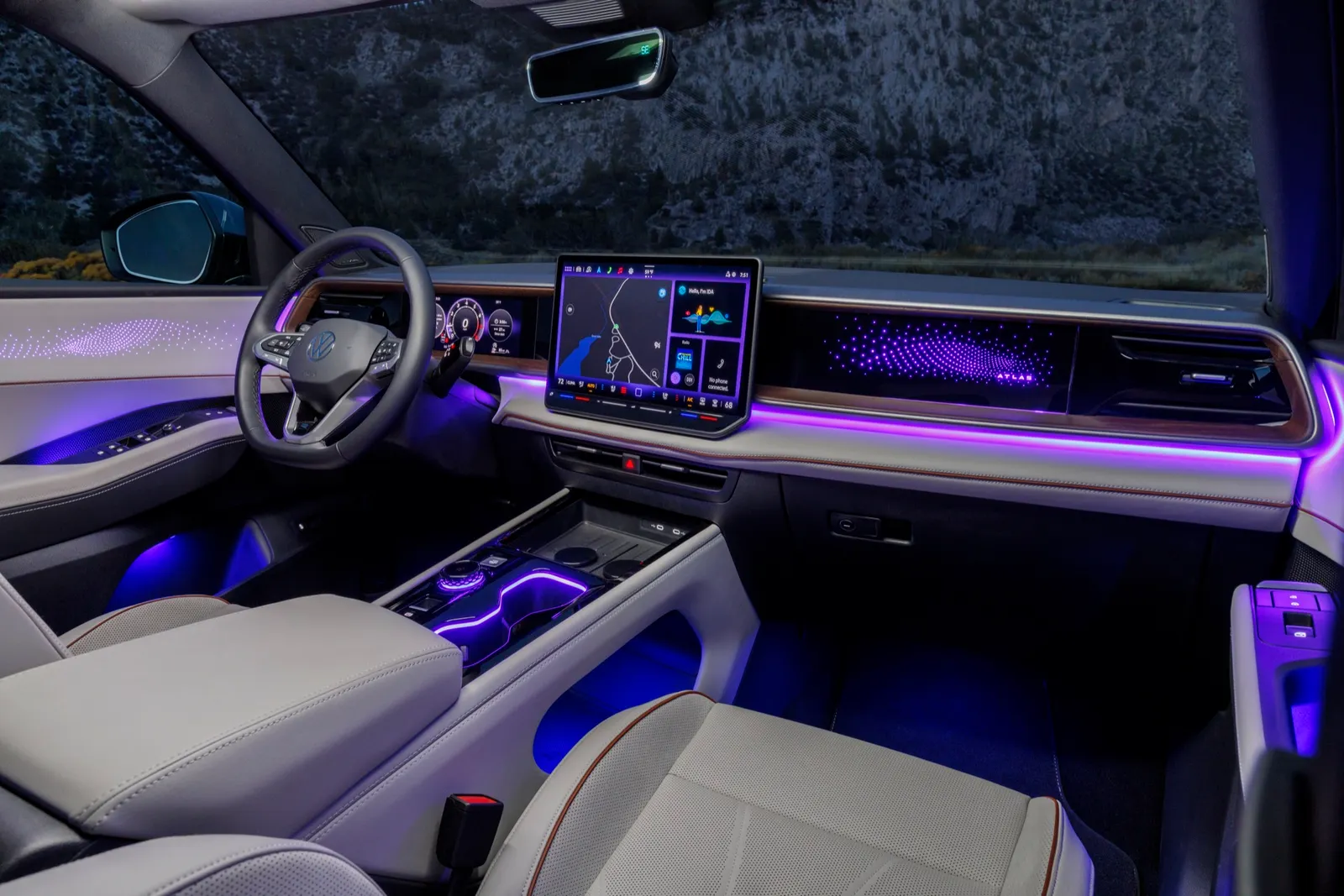
Volkswagen took note of customer complaints when redesigning the interior of the 2027 Atlas, Burch said. The automaker brought back a physical and prominently placed volume knob, replacing the 2026 model’s cumbersome touch-sensitive slider located below the touchscreen. Those controls were previously not backlit at night, which made for a real game of skill for the user.
A reimagined cabin has real wood decor and multi-color ambient lighting as standard. Most of the lineup gets a 15-inch infotainment display, versus the base model’s 12.9-inch screen.
A bold loop surrounded by ambient light in your choice of colors unifies the cockpit design, and the pattern from a distinctive organic spiral in the dash continues through perforated backlit door panels in the first and second row. The “Atmospheres” feature includes five preset “moods.”
The shift lever has been relocated to the steering column, freeing up space in the large center console. A revised armrest and integrated door handles gives the Atlas a more premium look.
Chargers include a dual wireless Qi2 setup in the center console and seven USB-C ports throughout the vehicle, including six 45-watt ports.
More kids, more safety features, more expensive
The front-wheel-drive Atlas SE starts at $43,135, while the 4Motion starts at $45,135. The top SEL Premium R-Line model starts at $58,135. All prices include a $1,525 destination fee. The 2027 VW Atlas is more expensive than 2026 model, but VW says it includes more features and value. The SEL Premium R-Line gets puddle lamps, a 14-speaker Harman Kardon premium audio system, Nappa leather seats with premium stitching and a front-seat massage function. Captain’s chairs are available for $695 on all but the base SE model. Other standard features include a power tailgate, rear sunshades and ultronic parking sensors that helps avoid people or obstacles behind the vehicle.
Safety features are key in this family hauler that’s designed to accommodate five kids plus two adults — with up to three car seats in the third row. A new front center airbag in the 2027 Atlas brings the total number of airbags to seven.
The new Atlas also includes more family-friendly features as standard, including a power tailgate, rear sunshades, dual wireless charging and parking sensors, and an ultrasonic parking assistance feature that helps avoid people or obstacles behind the vehicle.
Expect many of these same updates, upgrades and new styling to carry over to the two-row 2027 Volkswagen Atlas Cross Sport, due to return to dealerships in the first quarter of 2027.