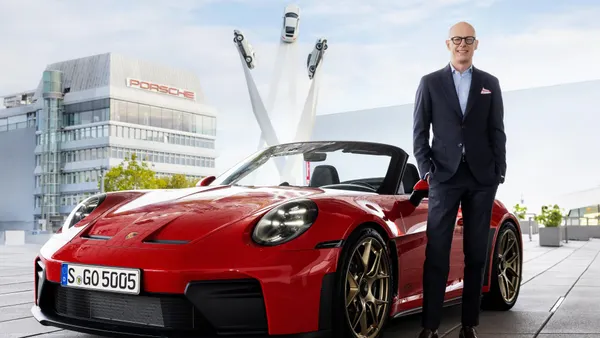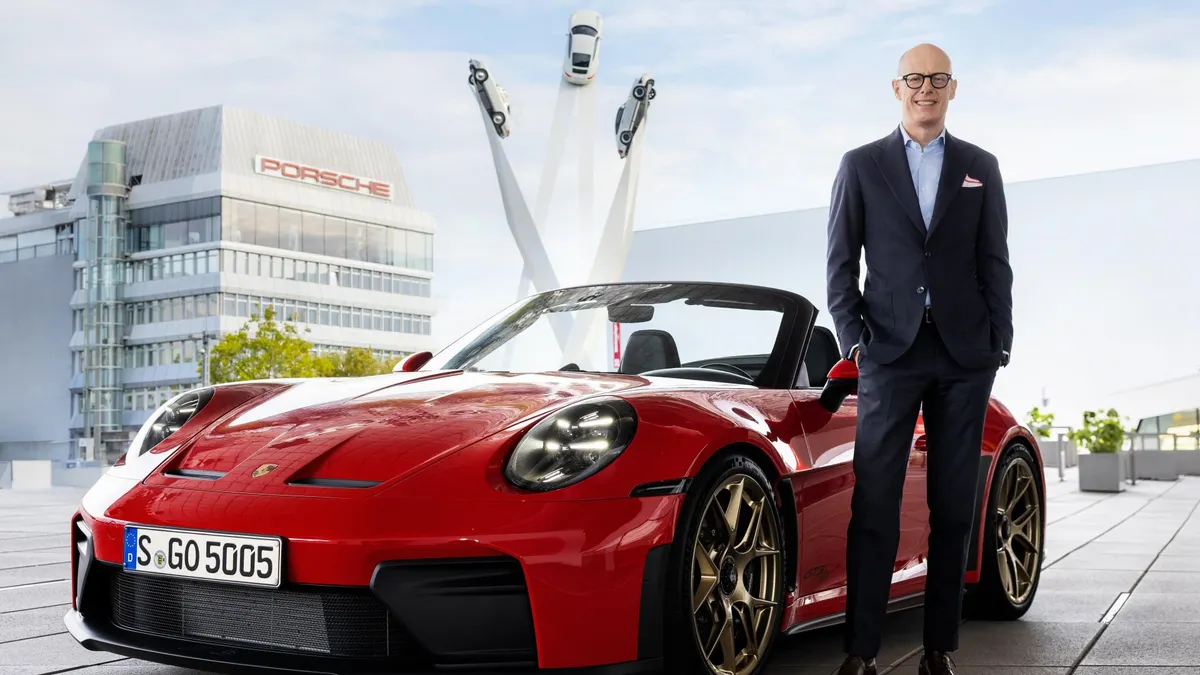
Porsche has unveiled a revised new product strategy that includes additional SUV models, a new range-topping supercar positioned above the 911 and renewed investments in plug-in hybrid technology through to 2035.
The common thread between the majority of these new models is that they will use a gasoline engine.
Presented as Sportwagenschmiede ’35 by CEO Michael Leiters at the Porsche Development Center in Weissach, Germany on Wednesday, the strategy represents a reset of the automaker’s previous direction, which anticipated electric vehicles accounting for more than 80% of sales by 2030.
The changes, as outlined in an accompanying press release, form part of a wider effort to restore profitability and investor confidence following heavy investment in electrification, falling global sales and weakening performance in China — developments that have contributed to a sharp deterioration in earnings and Porsche’s share price.
Bringing back the gasoline Macan — which it just discontinued
In 2022, Porsche declared that its Macan and Cayenne SUV lineups, the Panamera, and the 718 coupe and roadster would all go fully electric by the end of the decade, while the 911 was set to be the only one in the lineup retaining a combustion engine.
On the product front, the updated strategy marks a pronounced change in priorities and reverses some plans and hits pause on others. Porsche now aims to maintain internal combustion engine, plug-in hybrid and electric drivetrains across its lineup well into the next decade, while directing new model investment toward higher margin segments, as well as reducing the number of individual model derivatives.
Central to the changes is a new SUV model positioned under the Cayenne scheduled to be unveiled in 2028. Positioned in the same segment as the discontinued internal combustion engine Macan, it will offer gasoline and plug-in hybrid drivetrains and be sold alongside the Porsche Macan electric.
Porsche expects this new SUV to make a “significant contribution to sales and profitability” from 2029.
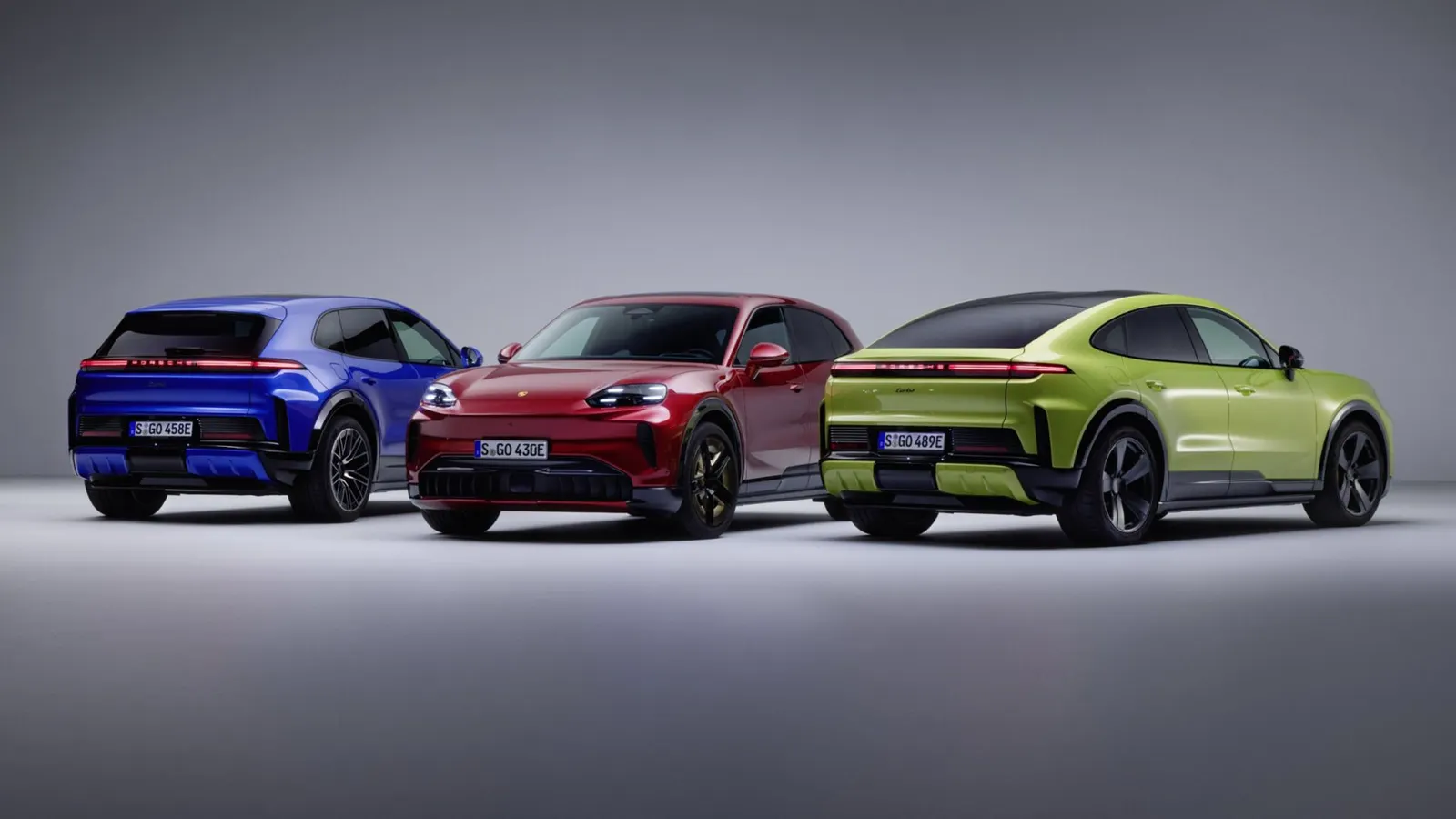
The move addresses one of the most consequential decisions of Porsche’s earlier electrification push: not developing a direct internal combustion engine successor to the original Macan. That left the company and its retailers dependent on the electric Macan to replace one of its biggest-selling models just as growth in electric vehicle demand began to slow.
The decision has been particularly significant in the U.S., historically one of Porsche’s strongest markets and one where the gasoline Macan remained an important part of Porsche’s sales mix. The Macan has been the brand’s top-selling model in the U.S. for years.
Investment will continue in what Leiters describes as “brand-defining” internal combustion engine and plug-in hybrid drivetrains alongside next-generation battery technology.
“We are pursuing a clear plan,” Leiters said. “The ultimate goal is to further strengthen our brand — across all model lines and with new models in particularly high-margin segments.”
Range-topping supercar coming — details TBA
There is also a renewed push at the top of the range, with confirmation of a new mid-engine platform for a supercar positioned above the 911 set to be unveiled on Oct. 15.
Whether this proposed range-topping model is offered on a limited basis in a role similar to the previous Carrera GT and 918 Spyder or is intended to remain in the Porsche line-up in the longer term has not yet been confirmed.
At the other end of Porsche’s sports car lineup will be the forthcoming electric 718 Boxster and Cayman, which after a long delay are planned to go into production in 2027, with a first full year of sales set for 2028.
Leiters confirmed further 911 derivatives are under consideration and revived plans for an additional SUV positioned above the Cayenne. At least one significant new model is due each year through 2030, he said.
Focus on getting financials in check without a volume push
Fundamentally, the brand is repositioning to rely less on volume. Leiters says Porsche wants to lower its break-even point to fewer than 200,000 cars annually.
The automaker is targeting an operating return on sales of between 10% and 15% in the medium-term and 15% over the long-term. In 2025, it delivered 279,449 cars, according to sales information provided to the media in January.
It also wants the larger, higher-priced models more profitable D- and E-segment models to account for a substantially greater proportion of its sales.
There is a clear move further upmarket as well. Average selling prices of Porsche’s range-topping models are targeted to rise by around 20%, while sales from its Sonderwunsch customization business are targeted to increase sixfold.
The broader lineup of new models will come with less complexity, Porsche says. The number of model derivatives is set to fall by around 20%, with Porsche forecasting this will increase sales per derivative by around 30%.
Alongside the new model changes comes a leaner operating structure. Development costs for future models are targeted to fall by up to 20%, with up to a 30% reduction in production personnel costs and 40% reduction in management positions.
Despite a lessened pressure on volume, Porsche also sees a closer cooperation on platforms with fellow Volkswagen Group company Audi, “while preserving the unique character of each brand through brand-specific technology and features,” it said.