Dive Brief:
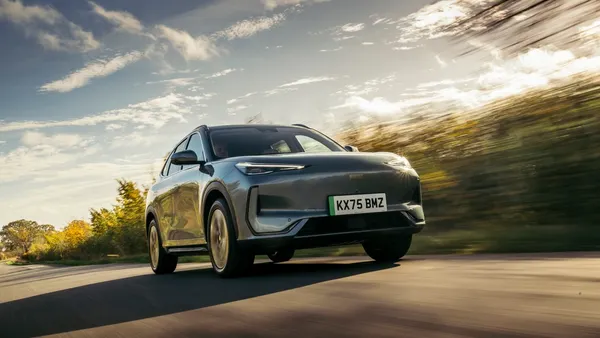
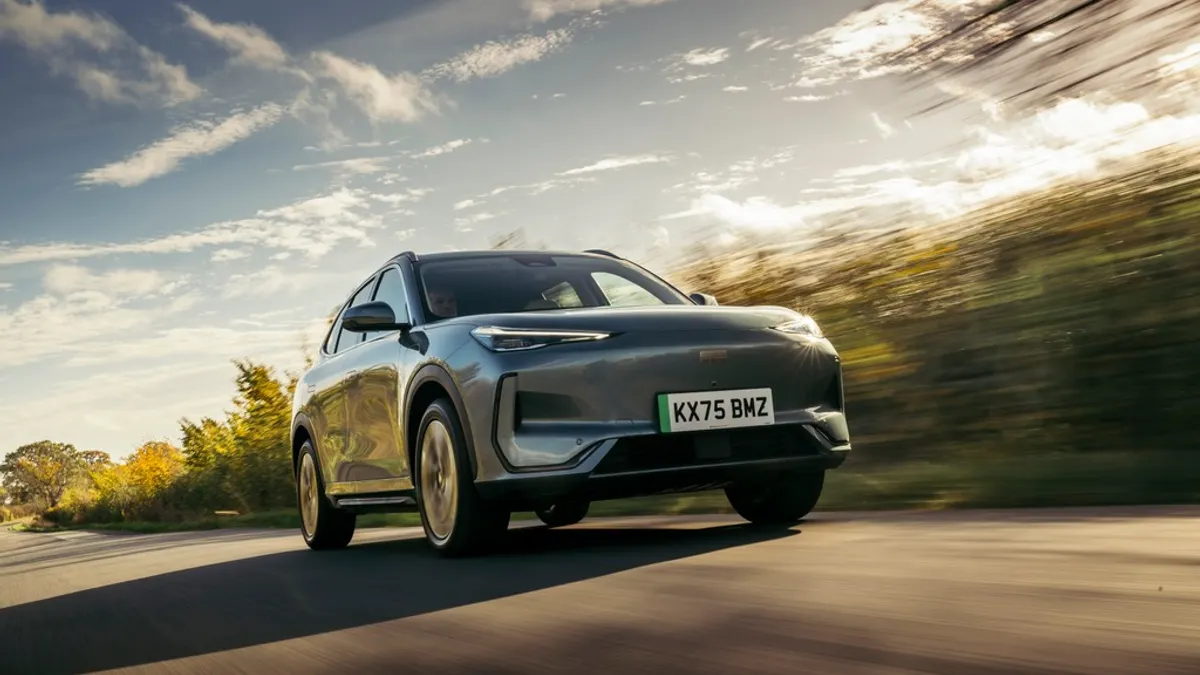
- Hangzhou, China-based automaker Geely Auto has officially launched in the Canadian market with a local team now in place, the company announced in an Oct. 8 press release.
- Geely Auto said it’s establishing local operations and developing a retail and service network ahead of introducing its first model in Canada next year.
- “Canada represents an important next step in Geely Auto’s international growth,” said Bryan Wu, managing director of Geely Auto Canada, in a statement. “We are entering this market with a long-term commitment, bringing our global technology and engineering capabilities to Canadian drivers while building strong local partnerships and the support customers need to feel confident in choosing Geely.”
Dive Insight:
Geely Auto said its launch in Canada marks the next chapter in its continued international expansion. In the first half of this year, Geely entered seven new European markets, including Germany, Spain, the Netherlands and France.
The automaker sold over 3 million vehicles globally in over 100 countries in 2025, including nearly 1.7 million new energy vehicles, a category that includes both hybrid and fully electric models.
Geely Auto Canada will tap into its parent company’s global capabilities, local market expertise and a customer experience designed around the needs of Canadian drivers, per the release. Central to that foundation is the development of a Canadian retail and service network with highly trusted and experienced partners who understand their local communities and can support Geely Auto customers throughout the ownership journey.
Geely’s expansion into Canada follows a trade agreement it reached with China in January, which includes a reduced import tariff on China-built EVs in exchange for reduced duties on a range of Canadian exports, including agriculture and seafood products.
The agreement allows Geely to import 49,000 EVs into Canada per year at the most-favored-nation tariff rate of 6.1%, removing a 100% tariff set in 2024. As part of the five-year deal, 50% of the EVs that Geely imports must be affordable models with a price of CA$35,000 or less. Canada said at the time that it plans to work with China-based OEMs like Geely to ensure that any imported EVs are certified to meet the country’s motor vehicle safety standards in a timely manner.
The Canadian Government’s favorable trade deal with China is a stark contrast to the U.S., which imposed an additional 100% tariff on China-built EVs in September 2024 on top of a 2.5% duty that was previously already in place. The tariffs were set by the former Biden Administration to protect the U.S. auto industry from what it called “unfair trade practices.”
Geely is also a majority owner of Sweden-based EV maker Polestar. However, Polestar was banned from the U.S. market in June after the Department of Commerce’s Bureau of Industry and Security did not grant its authorization to sell vehicles from model year 2027 onwards, citing a ban on connected vehicle technology linked to China or Russia as part of the Connected Vehicle Rule. Polestar said it would focus on the European market instead.
In July, Geely announced a joint venture partnership with Ford Motor Co. to build cars at Ford’s assembly plant in Valencia, Spain. The collaboration supports Ford’s product offensive to bring five new passenger vehicles to European showrooms by 2029, but also accelerates Geely Auto’s expansion in the EU. Geely models built in Spain will include two electric SUVs expected to launch in 2028.
Geely Auto Canada said it will share additional details about its first Canadian vehicles, its retail and service locations, availability and pricing as it moves closer toward commercial launch next year.