Dive Brief:
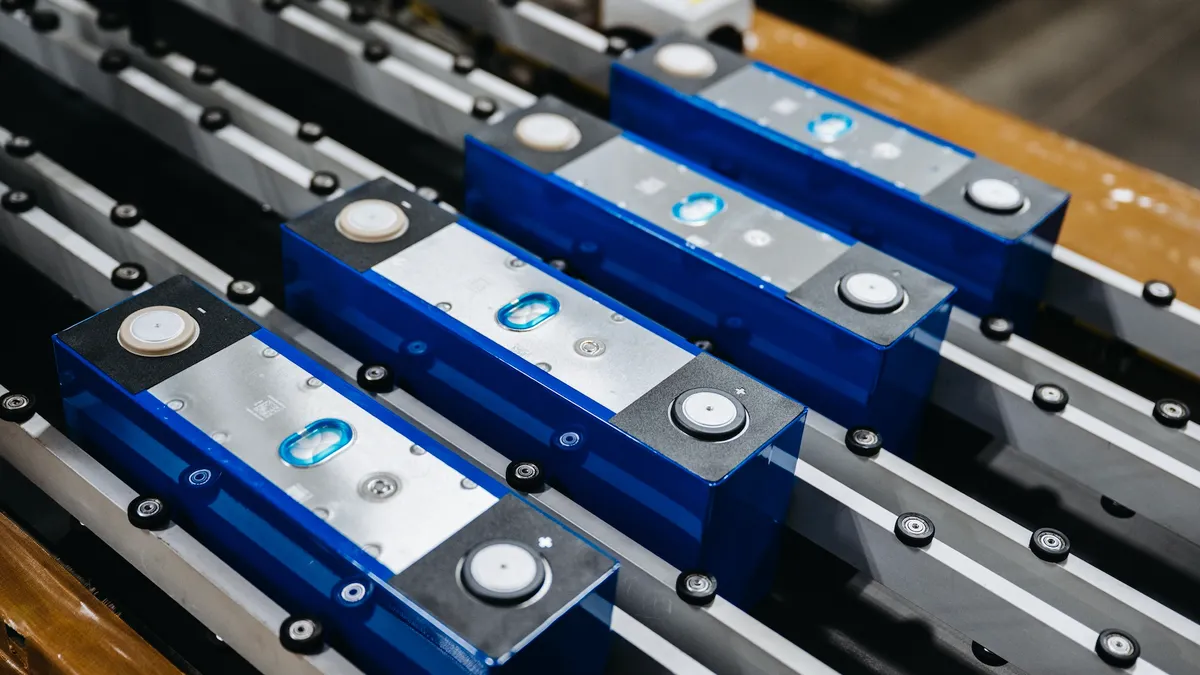
- Ford Motor Co. has shipped the first lithium iron phosphate cells manufactured at its BlueOval Battery Park Michigan facility, according to a Nov. 18 blog post, a key milestone in its ambitions to build a battery business.
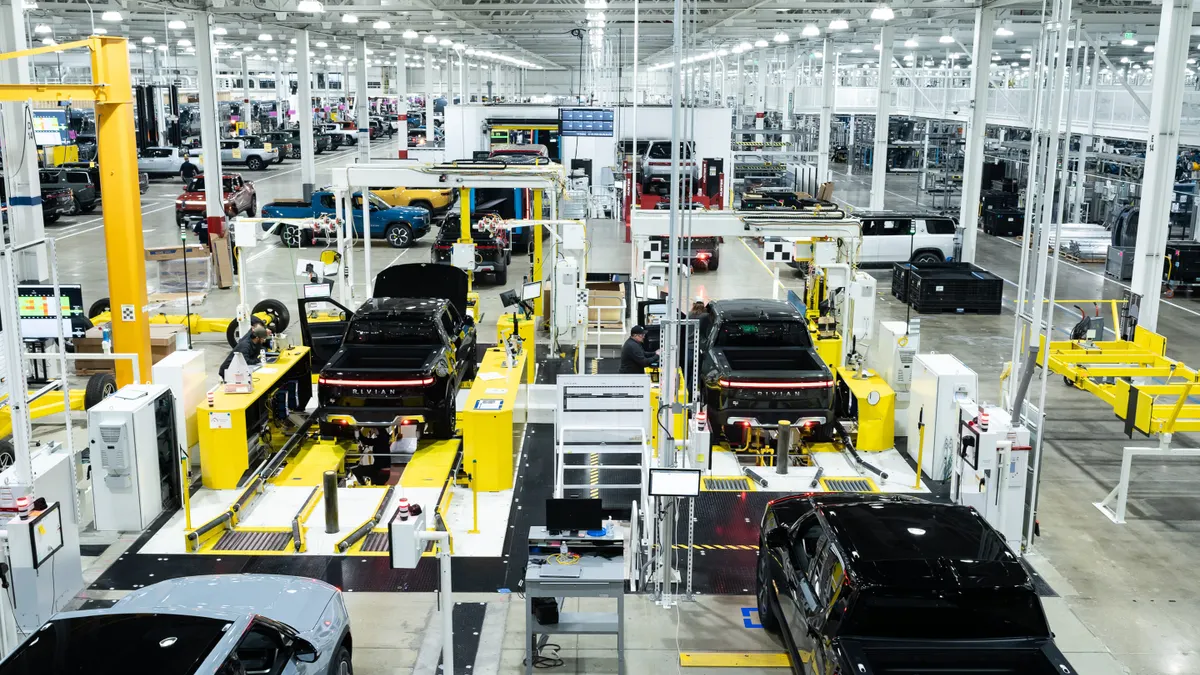
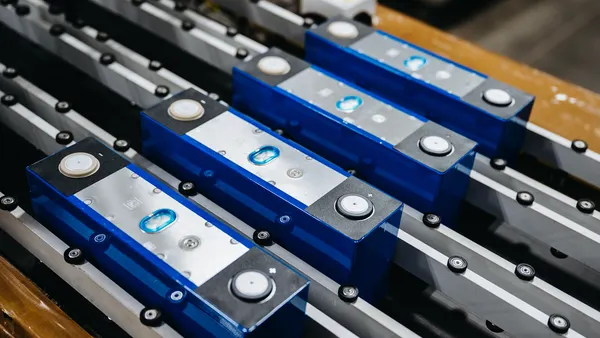
- It marks the Marshall, Michigan, factory's first delivery since plans for the $3.5 billion battery plant were announced in 2023. The assembly line can manufacture 40 cells per minute, making it among the fastest LFP battery production lines outside of China, according to Ford.
- The batteries are now headed to Ford's Louisville Assembly Plant to power prototypes of the Fathom electric truck, which will be assembled there in Kentucky in 2027.
Dive Insight:
By manufacturing battery cells at a plant it wholly owns and operates, Ford is both building the expertise it needs to build more affordable electric vehicles and investing in a new battery business.
“This milestone is about more than shipping our first cells,” Charles Poon, Ford’s VP of vehicle hardware engineering, wrote in the blog post he authored for Ford. “We’re building the expertise to produce high-quality batteries at scale for more affordable EVs and a new energy storage business.”
The company is producing prismatic cells in Michigan, which are rectangular and designed to fit directly into the chassis as a structural component. The battery pack of the Fathom pickup will serve as the truck’s floor.
The LFP battery chemistry uses no nickel or cobalt, which further reduces cost, according to Ford. These LFP cells are also durable enough for years of charging and use. Poon said in an August blog post that Ford’s aim is to design electrified powertrains to meet a minimum of 15 years or 225,000-mile service life, with consistent and reliable operation throughout that entire period.
To further ensure quality, workers at the BlueOval Battery Park are using AI-powered image recognition and other tools to identify any defects during production. Ford's goal is to reduce defect counts down to a frequency of “per billion cells” rather than millions.
Altogether, the efforts to improve battery quality while lowering costs are part of Ford's goal to deliver EVs with the performance customers expect, but with a lower price that entices owners of gas-powered vehicles to make the switch to electric.
The Fathom, for example, will start at $28,350 with a destination fee of $1,595, delivering on Ford’s promised starting price of under $30,000, the company announced in August.
The next phase for BlueOval Battery Park in Marshall, Michigan, is having the plant up and running in early 2027 ahead of the Fathom's launch.
But beyond the Fathom, Ford's investment in a battery plant in Michigan is also part of a larger strategy to vertically integrate its battery supplies while building a new business line.
In May, Ford officially launched its new Ford Energy subsidary to manufacture battery energy storage systems for data centers, utilities and large industrial and commercial customers in the U.S. The unit was established to meet the growing demand and generate new revenue streams for the company. Ford Energy is utilizing unused production capacity at the former BlueOval SK joint venture EV battery plant in Glendale, Kentucky, to manufacture the battery energy storage systems.
Although the Michigan battery plant is owned by Ford, the automaker reached a licensing agreement to manufacture its LFP cells using technology developed by China’s CATL, a major global producer of batteries for EVs and of energy storage systems that help power data centers.
However, Ford’s decision to license technology from CATL to manufacture battery cells in Michigan is controversial. In a Sept. 3 letter to Ford CEO Jim Farley, Transportation Secretary Sean Duffy said the agency remains “deeply alarmed” by the automaker’s reliance on technology from China and its impact on American jobs. Duffy urged Farley to cut the company’s technology ties with China.
In response, Ford pointed out that its partnership with CATL in Michigan is a “limited technology-licensing and services agreement,” not a joint venture or foreign-owned manufacturing operation.