

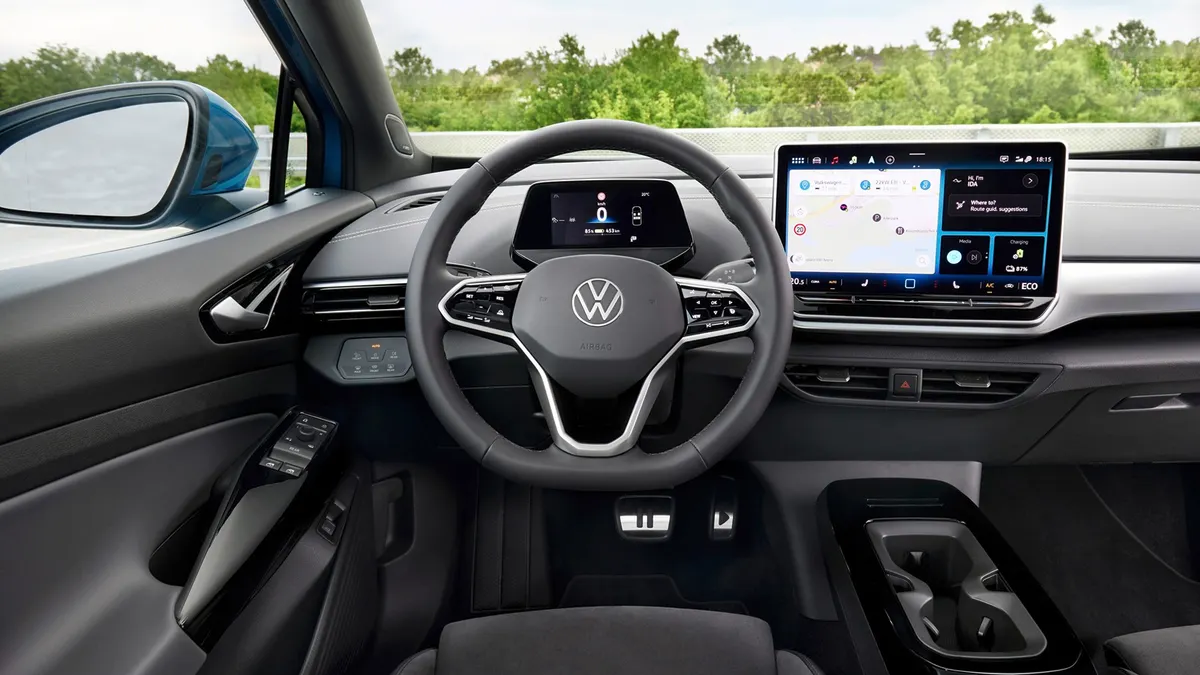
Cybersecurity in electric Volkswagen vehicles has been challenged in a hack that exposed flaws in the vehicle’s Bluetooth software.
The hack was unveiled in The Times newspaper report of Nov. 15 after reporters were walked through a live demonstration on how much control a research team from PCA Cyber Security could exert on the vehicle and its occupants.
The company’s team were able to alter the climate control of a VW ID.4 car to increase cabin heat, take control of its windscreen wipers, sunroof and to send messages to occupants of the vehicle.
During the demonstration at the company’s secure laboratory in the capital of Hungary, Budapest, researchers even recorded conversations between the driver and a passenger using the car’s European eCall system designed to communicate with emergency services.
The team was also able to access text messages and contacts on a phone connected to the car’s Bluetooth, whose system administrator had no password protection.
This hack exposes the fact that the VW ID.4 is one of the most digitally dependent vehicle on the road, said Dray Agha, senior manager, tactical response at cybersecurity company Huntress.
“Modern electric vehicles are effectively connected computers on wheels, which means a single weak point like a Bluetooth flaw can expose cabin microphones and personal phone data,” said Agha in an email to WardsAuto.
He pointed to the simple lack of password protection on the Bluetooth administrator can open a host of important vehicle functions to hackers.
“Carmakers must treat cybersecurity with the same urgency as mechanical safety, because taking over a year to patch known flaws leaves drivers unnecessarily exposed,” he said. “Vehicle owners should ensure their infotainment software is updated to the latest version and avoid accepting unexpected Bluetooth pairing requests,” added Agha.