Nissan is in the midst of an across-the-board product remake. In the aftermath of a failed merger with Honda last year, the automaker announced a new long-term strategy in April emphasizing next-generation AI strategies and shared vehicle architectures.
In the nearer term, the revamp positions Nissan with a product portfolio that’s smaller on a global basis but better positioned for the U.S., which the automaker considers a key global market.
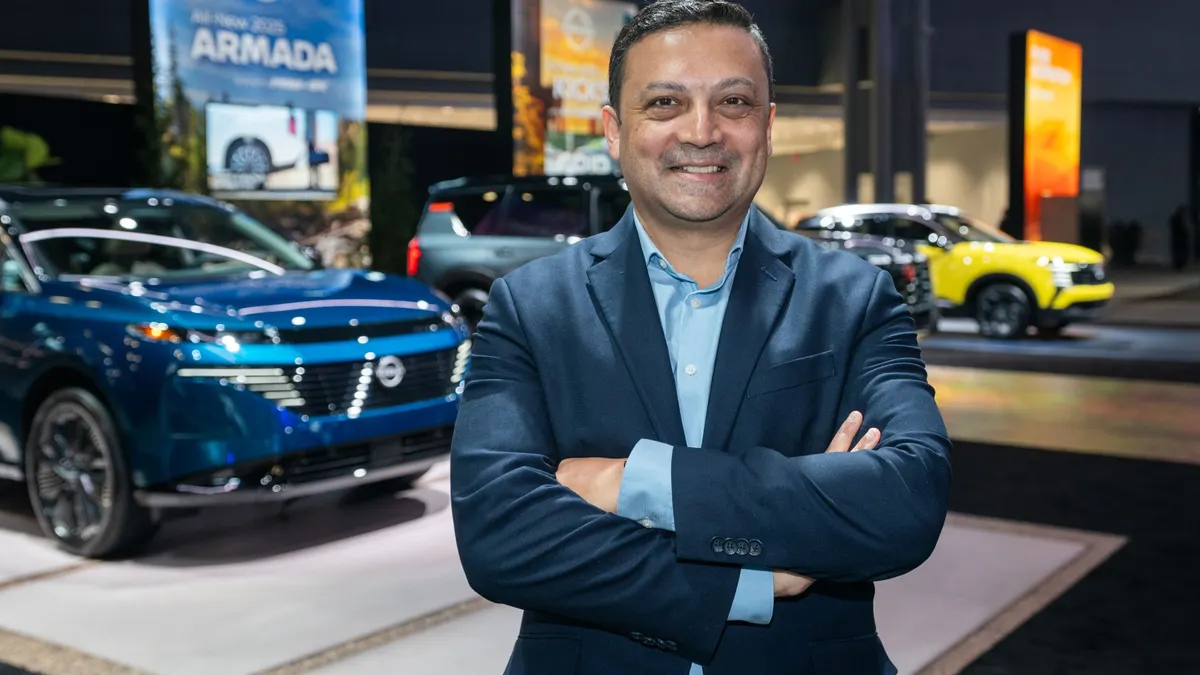
Ponz Pandikuthira has more than two decades of industry experience and has been with Nissan since 2012 in a variety of leadership roles, including global head of for Nissan Motor Co. He now oversees the company’s North American product planning as a senior vice president for Nissan Americas. We interviewed him by phone last month.
WARDSAUTO: How do you foresee the mix of ICE versus BEV, HEV, PHEV and EREV going forward?
PANDIKUTHIRA: The best strategy is to have a suite of available powertrains that we can switch across relatively easily. The best-selling vehicle and the best segment for us is the Rogue in the C-SUV segment. We're selling about 225,000 right now, but 35%-40% of that segment is hybrid at this point. So, we are introducing a 40-mpg series-hybrid e-Power powertrain around November of this year in an all-new Rogue, and we expect that powertrain to ramp up.
The wheels are driven only by electric motors, while the engine drives an on-board generator. And you can imagine that an extension of that technology would be an EREV with a larger battery pack that you can plug in for 70 to 80 miles of all-electric range. Right now, that doesn't make economic sense because, if it's a 25 to 30 kWh battery pack, at the current cost of batteries, that's a very expensive proposition to be in an affordable segment. And it would need too much packaging space, so would take away from cargo space. But it's much easier to have a series hybrid as the base architecture for an EREV compared to going from a parallel hybrid to an EREV.
We are also working on an EV architecture that will allow us to do a series of EVs, not just sedans.
We've stopped importing Ariya into this country for now, but if EVs take off in a few years, we will be well covered to meet EV demand with Leaf and Ariya as well as ICE and hybrid.
The current Mitsubishi-based Rogue Plug-In Hybrid is going away?
We did that car for a very specific reason, to bring it to market as soon as possible to see what having a hybrid in the lineup would do for overall demand. If people shopping online see that Rogue does not offer a hybrid, they will not go to the dealer. And while it's relatively expensive because of the subsidy having gone away, it has served that purpose.
The new e-Power Rogue will be at a very attractive price point with good fuel economy and the electric driving experience without having to worry about plugging it in. We think customers will gravitate toward that solution.
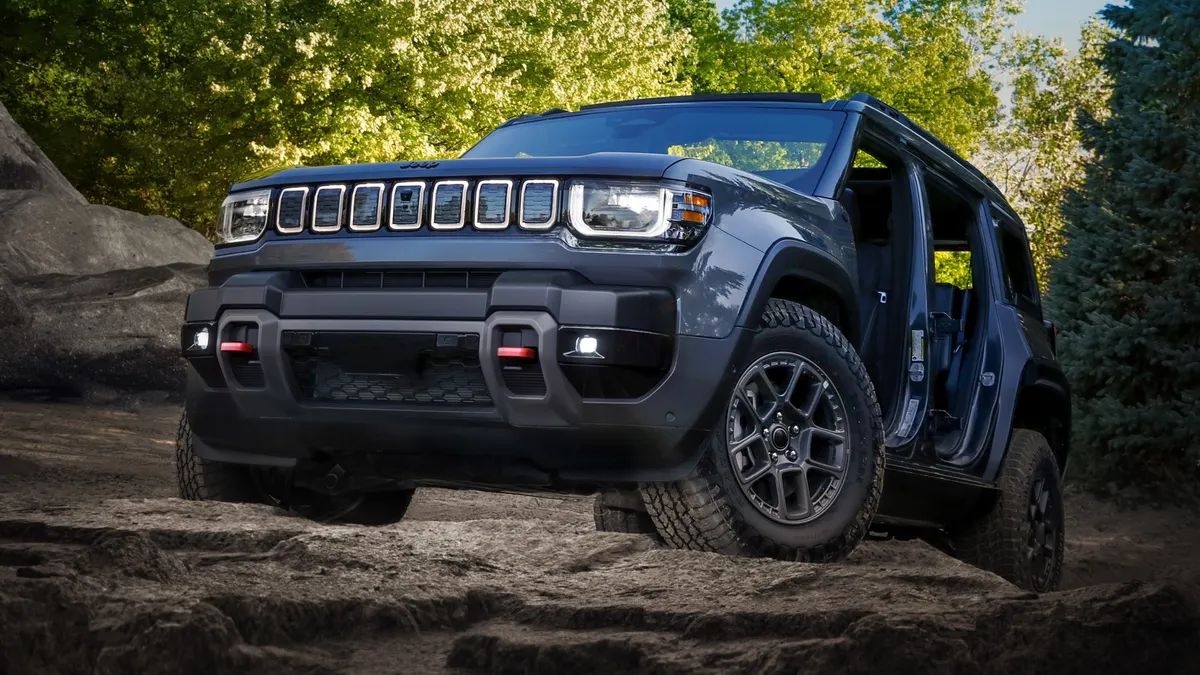
Will the new Xterra share its full-frame construction with the pickup?
Definitely. At the very minimum, you would do a pickup truck, a two-row SUV, potentially a three-row SUV and two- and three-row SUVs for the Infiniti brand as well…up to five derivatives with both ICE and hybrid options.
Will you continue the VC Turbo variable compression engine?
We have VC Turbos — the 1.5-liter in the current Rogue and the 3.0-liter V-6 in the Z — today, and there could be applications of those in future Infiniti powertrains. That V-6 is an expensive, high-performance engine, but it has excellent emissions compliance.
How much does it help that future U.S. emissions requirements have been eased?
It helps in the short term because it gives us more lead time to develop efficient powertrains. As a company that's been investing in EV's since 2010, that is not new to us, and we want to develop vehicles that customers want and are willing to pay for.
I think the reprieve we have been given gives us a more gradual route to switch to more efficient and lower-emission powertrains.
How badly is Nissan affected by tariffs?
They are a challenge. Our big foreign production sites are Japan and Mexico. The Kicks and Sentra are coming in from Mexico, and as lower-end vehicles with tighter margins, they obviously are hurt by tariffs. But we can start switching to more U.S.-built content even though the final production source is in Mexico, and that equation should get better as we do more of that.
As for vehicles coming out of Japan, we do have tariffs, but we also have a very strong foreign-exchange tailwind. The exchange rate of the dollar to the Japanese Yen is a benefit that largely offsets the impact of tariffs. However, our long-term strategy is very clear. With large production facilities here in Tennessee and Mississippi, we're working toward a build-where-you-sell strategy where we won't be affected much by tariffs.
What will your next-gen ProPilot add compared to today's ProPilot?
ProPilot 2 adds lane change and more precision. The amount of time you can spend completely hands-off is much greater. The car will drive itself as long as your eyes are open and your face is looking forward. It takes a lot of driving stress out.
But we're working on a step beyond that will be completely hands-off, where the car is driven not by an algorithm but by an AI-based learning system.
That technology is planned for around 2028. We have announced a partnership with the British company Wayze, and we think we can bring in that technology at a very competitive price. It's not a replacement for a focused driver, but the capability of that new system in urban environments and in suburban driving on 35-to-55-mph surface roads is just amazing.
The Product Roadmap
With that in mind, Pandikuthira provided a look ahead at Nissan’s U.S. product lineup for the new future, as it executes its global turnaround strategy:
Passenger cars: Sentra, Z and Leaf
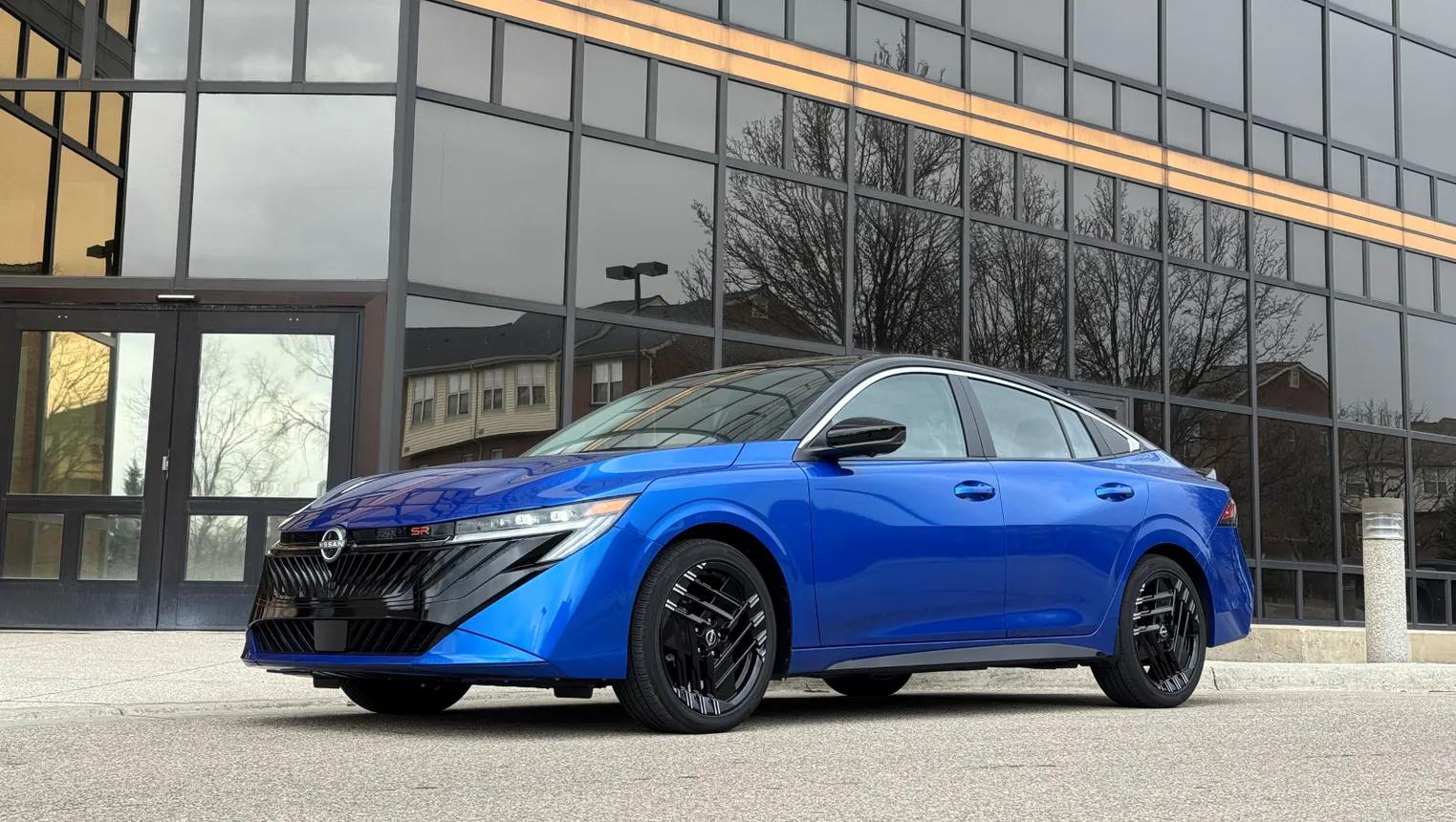
PANDIKUTHIRA: The entry level Versa and premium Maxima sedan are gone, and the midsize Altima will soon depart, since the new, more “grown-up” Sentra is intended to satisfy Nissan’s remaining sedan demand. Production for the U.S. market of the upscale Ariya EV is suspended for now, but it remains available in Canada, and future U.S. plans are under discussion.
We had planned two EV sedans for the space occupied by Altima and Maxima, but EV volume hasn't taken off yet. It may be closer to 2029 or 2030 before we see a resurgence in that segment, and there will be a lot of progress between now and then on the cost of electric vehicles and batteries.
Unibody crossovers and SUVs: Kicks, Rogue, Murano, Pathfinder and Armada
All our market data says that having a Kicks starting around $20-21K is the entry market we need to go after. And our data leads to what we now offer in the crossover space with Rogue, Murano and Pathfinder.
Across that spectrum, we are fully able to capture people who are coming in for a typical sedan. We are not losing out on sedan customers unless they are driven primarily by price.
Full-frame pickups and SUVs: Frontier, Armada, Xterra, and (maybe) Pathfinder
We will have a unibody Pathfinder and, as a premium to that, a frame-based SUV. Xterra will be much more of a lifestyle vehicle with a V6 ICE, and that's where we are evaluating a parallel hybrid system with more power and torque for a larger, heavier vehicle with higher capabilities but with hybrid fuel economy.