
Dive Brief:
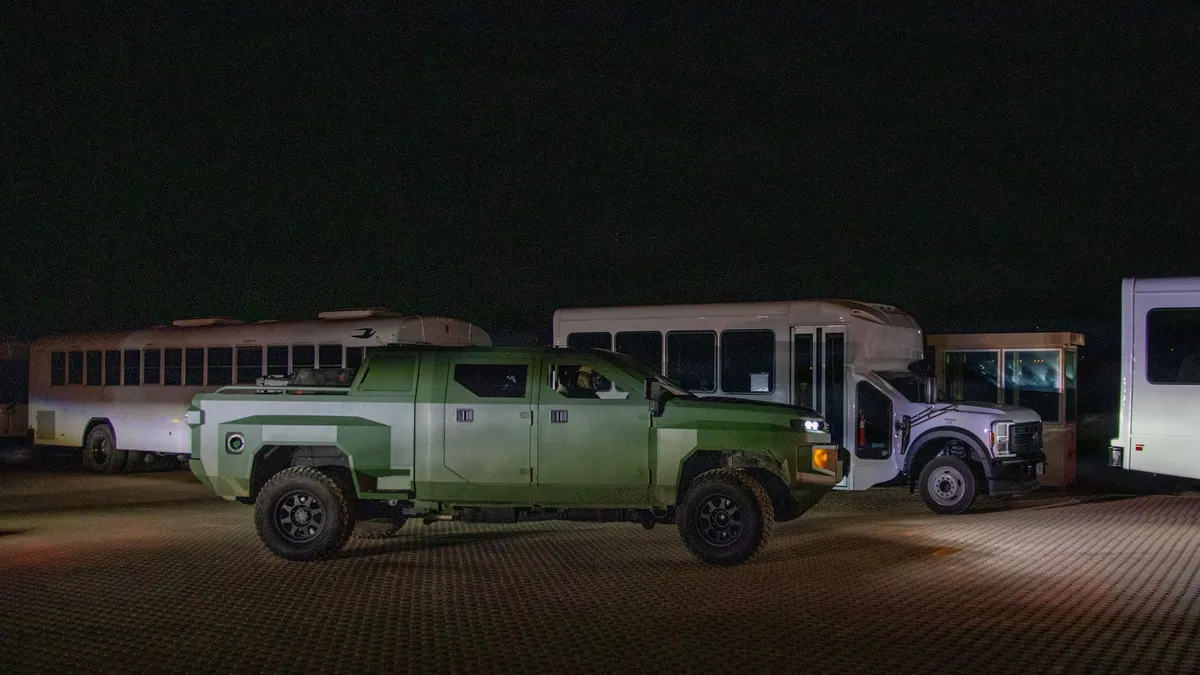
- The U.S. Army has awarded contracts to the Ford Motor Co., GM Defense and BC Customs on June 30 as part of its efforts to upgrade its Heavy Infantry Squad Vehicle, the military branch confirmed in an email Monday to Manufacturing Dive.
- The three automotive companies will each develop three prototypes of the ISV-H as part of a competition. Desired capabilities include traveling 62 miles in eight hours with a gas tank just three-fourths full. Contract requirements also include right-to-repair and data provisions.
- The first prototype deliveries are scheduled for March 30, 2027. Following delivery, the Army Test and Evaluation Command will assess and test the vehicles. The winner of the competition will receive a contract to produce over 600 ISV-Hs for the military branch.
Dive Insight:
Auto and component manufacturers are getting involved in the defense industrial base months after President Donald Trump urged automakers to participate in munitions production, with discussions beginning before the Iran war, the Wall Street Journal reported in April.
The president met with automakers again in June to discuss repurposing their factories for weapons production, CBS News reported.
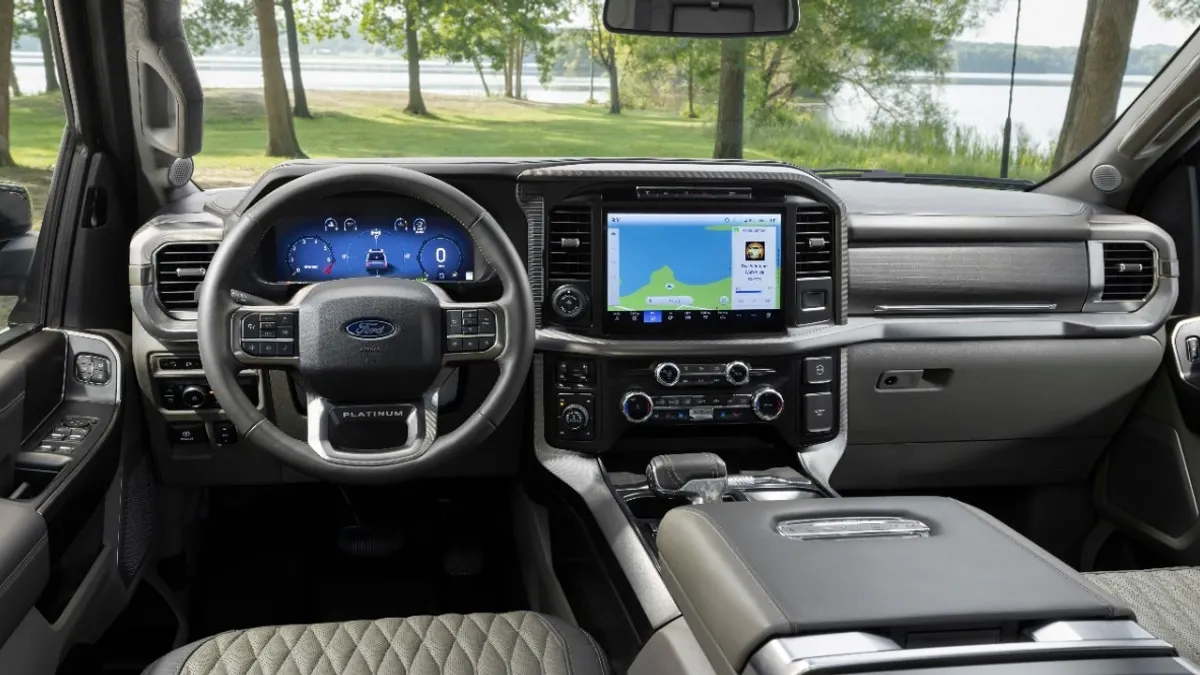
Ford’s subsidiary, Industrial Platform, will work on its prototype, which is based on the heavy Super Duty truck model, President and CEO James Farley said during an earnings call Tuesday.
He did not comment further on the Army contract. However, the automaker is continuing discussions about additional defense-related projects with the U.S. government, the Ford CEO added.
“We do believe we have a lot to offer, but we'll think through this as an adjacency,” Farley said. “It has to be a strong business with really good returns and really good capital returns.”
For GM, the Army contract builds on its agreement in June with weapons maker Lockheed Martin to build up domestic manufacturing and the defense industrial base.
“Our joint objective with GM is to explore applying the automotive industry's high-rate manufacturing and supply chain expertise to defense production,” Lockheed President and CEO James Taiclet said during a July 23 earnings call. “We hope this effort will provide us more access to the speed and scale of America's commercial industrial base to help significantly accelerate output as demand grows.”
GM is also working with other unnamed companies to “expand speed, scale and resilience in the defense industrial base,” Chairwoman and CEO Mary Barra said during a July 21 earnings call
“We are focusing our efforts on strengthening supply chain management, improving manufacturing readiness and expanding production capacity in ways that serve the United States and its allies well,” Barra said. “Over time, all of this should make GM Defense a more meaningful and diversified contributor to our earnings.”
GM is also “building momentum” with other government customers, including the U.S. State Department, Secret Service, and agencies in Canada, Qatar, Brazil and “other allies.” In May, GM was awarded a $220 million contract to build the Lunar Terrain Vehicle for NASA.
The company also expects its defense subsidiary to grow to nearly $700 million in 2026 as it works to build a backlog, Barra added. The automaker is anticipating GM Defense’s CAGR revenue to grow over 30% over the next few years “with double-digit margins. This includes the ISV-H awards that are expected to exceed $1 billion based on the Army’s requirements.
GM is shedding some of its defense and aerospace-adjacent businesses. For example, the automaker and plane manufacturer Boeing are selling their research and development joint venture, HRL Laboratories, to IBM for an undisclosed amount. HRL was established by Howard Hughes under the name Hughes Research Laboratories, in 1948.