

Dive Brief:
-
Despite top-line sales and revenue down year over year in Q2, Ford Motor Co. raised and narrowed its full-year 2026 guidance, to between $10 billion and $11 billion, up from $8.5 billion and $10.5 billion, buoyed by confidence in strong sales of high-margin trucks and a continued recovery from aluminum supply issues.
-
Ford reported a net loss of $1.3 billion in Q2, mostly related to its electric vehicle retreat. It cited $4.2 billion in charges, including $500 million from a canceled EV program and $3.6 billion related to dissolving a BlueOval SK battery joint venture.
-
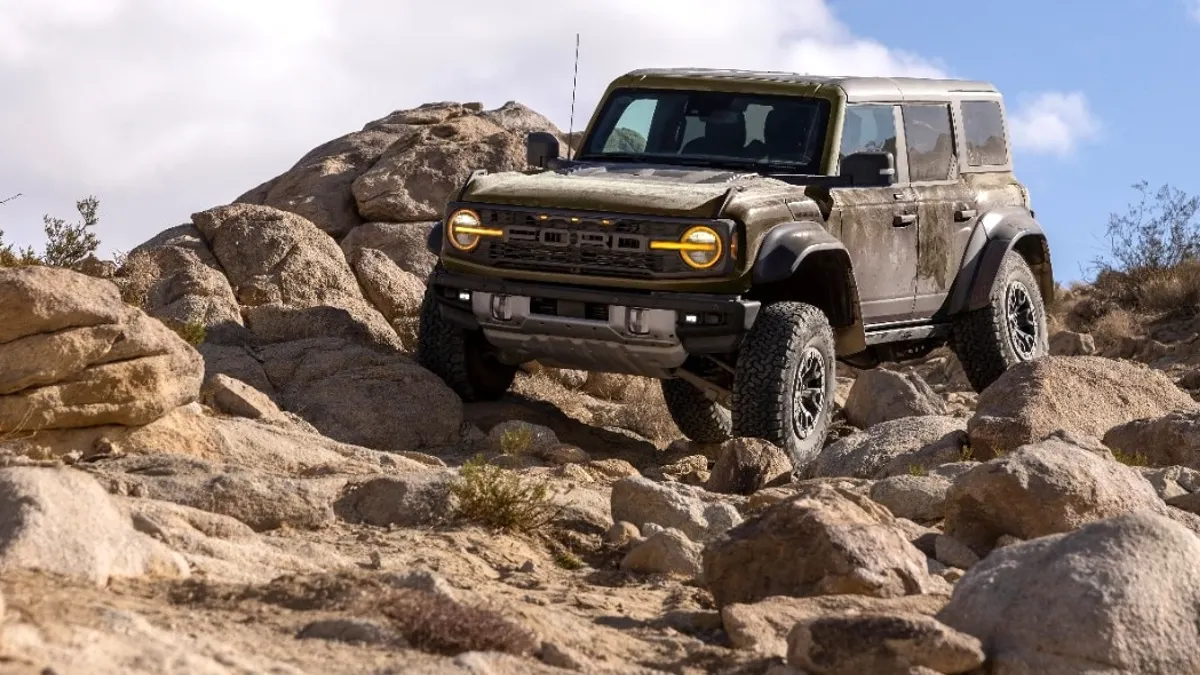
The automaker highlighted its third consecutive quarter of year-over-year profit improvement for its Model e EV business, even with sales down from the cancellation of the Ford F-150 Lightning. Meanwhile Ford reported the Bronco family’s best first half ever, record Maverick Hybrid sales, and strong sales of high-margin trims including Tremor and Raptor.
Dive Insight:
Sales of profitable truck models helped lift Ford’s financials in Q2, with total U.S. retail sales of Explorer and Expedition for the quarter up more than 20%. Tremor trims are now 15% of Expedition sales, according to Andrew Frick, the president of Ford's Blue gasoline and Model e electric vehicle business units, and Raptor sales are up 9% so far this year.
F-150 supply is down to 45 days, confirmed Frick during Ford’s Q2 earnings call. “That gives us upside coming out, and the demand continues to look really strong,” he said.
Pointing to Ford’s efforts to drive down costs and address affordability, CEO Jim Farley referred both to the upcoming $30,000 electric truck, set to be built in Kentucky and arrive in 2027, and to Ford’s recent agreement with China’s Geely, which will result in vehicles for both automakers being built at Ford’s plant in Valencia, Spain. Ford also last week committed to an additional amount set to transform its plant in Oakville, Ontario, for Super Duty truck production, alongside a new labor agreement for workers at the Canada facility.
The automaker is targeting efficiency, and says it’s on track to deliver material and warranty cost reductions of $1 billion for the year. Ford also claims to be cutting costs through its industrial system with next-generation products, starting with the first UEV platform truck, which will be built in Kentucky and, as Farley said, “will compete in the affordable heart of the U.S. EV market.”
“It starts around $30,000,” said Farley, who also touted the platform’s zonal architecture, in-house ADAS tech, and integrated Apple Maps. “It has more cabin room than a Toyota RAV4. Plus it has a pickup truck bed. It has bidirectional charging capability, incredibly fun to drive, and personalized technology in the experience.
“What I’m most excited about is the work I’m seeing in the next-generation products,” Farley said. “This team is absolutely obsessed with this next generation of products being engineered with the right supply chain to make a massive move forward in our cost of quality.”
Meanwhile, Ford continues to see subscriptions as a growing source of revenue. It reported that total paid customer subscriptions grew 50% year over year in Q2 to 1.6 million, which includes more than 900,000 subscriptions to Ford Pro Intelligence fleet services.
It also leaned into what Farley called Ford’s “adjacency businesses, that open all-new sources of profit for the company,” including its Ford Energy battery energy storage business, which was launched in May. That continues Ford’s relationship with SK, and a plant now operated by SK On and located at Ford’s BlueOval City facility in Tennessee.
“By restructuring this joint venture, we cleared the runway to repurpose those manufacturing assets for Ford Energy — our high-growth battery energy storage business,” stated CFO Sherry House in a blog post accompanying the earnings release.