

Dive Brief:
-
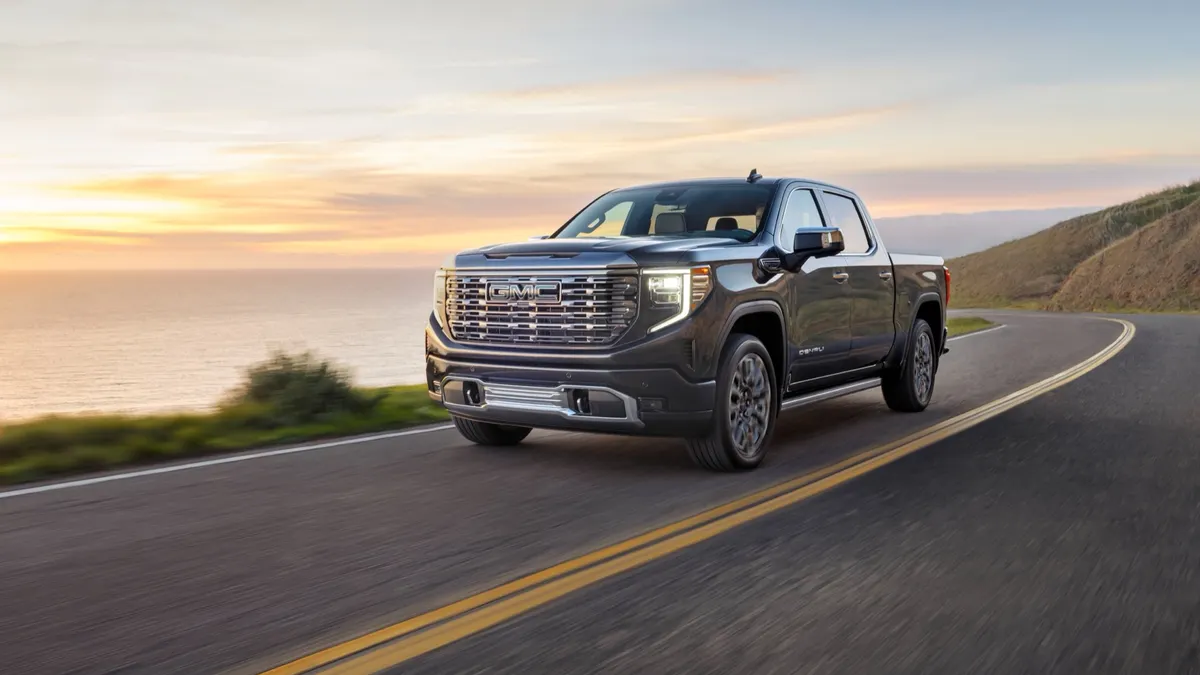
With the release of quarterly earnings and an overview of Q1 on Tuesday, General Motors claimed it took the top position in overall U.S. sales for the quarter, with about 626,000 deliveries. Although dealer inventory remained down 6% YoY overall and down 9% for full-size pickups, it managed 42% of the U.S. pickup market and 13% of the U.S. EV market.
-
Adding to $7.6 billion of EV-related charges in the second half of 2025, the automaker took another $1.1 billion charge in Q1 2026, driven mostly by contract cancellations and supplier claims. GM also continues to incur additional costs as it works through “right-sizing our battery supply chain with our joint venture partners,” as described by CFO Paul Jacobson.
-
GM is shifting more capacity for pickups and full-size SUVs to the U.S., and CEO Mary Barra pointed to market-share gains driven by crossover sales. The success of its Chevrolet Trax, Equinox and Traverse; the GMC Terrain and Acadia; and the Buick Envista have become “significant contributors to our profitability,” she said.
Dive Insight:
GM said it’s aiming for “disciplined inventory management” and low incentives for the remainder of the year—partly because it’s unsure whether consumers will want the same mix of products months from now.
In the automaker’s earnings presentation, Barra pointed to the automaker’s varied portfolio as a bulwark against changes in consumer behavior and noted that “the war In Iran has raised our costs, and its duration remains uncertain.”
“We are working to offset those cost pressures by reducing spending in other areas and by continuing to find efficiencies across the business, but we believe it’s prudent to wait and see how events unfold before we make any further changes to guidance as we move forward.”
While inventories of full-size trucks remained a pinch point, GM does have more U.S. manufacturing capacity on the way. It announced last June, as part of a $4 billion investment in three domestic plants, that it would pivot the renovation of its Orion Assembly plant near Detroit toward production of gasoline-fueled full-size trucks and SUVs, starting in early 2027.
Barra noted on the earnings call that expanding capacity to build large SUVs and pickups will serve demand elsewhere, like the Middle East when the conflict ends, as well as in the U.S., as the company aims to keep incentives low and earns “every truck buyer in a disciplined way because of the strength of our products,” she said.
As it accelerates truck ambitions, the automaker continues to incur billions of EV-related charges—due to the adjustment of its EV capacity and manufacturing footprint, including a “strategic realignment” of its Ultium battery manufacturing footprint. “We continue to work expeditiously through right-sizing our battery supply chain and our joint venture partners with a total of more than $5.6 billion in EV-related cash charges,” summed Jacobson, noting that the market sees EVs stabilizing at about 6% of U.S. industry sales.
GM delivered 1.29 million vehicles globally in Q1 and reported $43.6 billion in net revenue for the quarter, down from $44 billion in 2025, which the company attributed to lower EV sales volumes. While operating income was down about $500 million YoY to $2.9 billion.
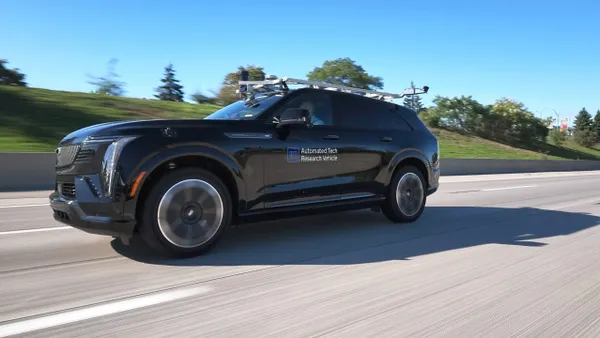
The automaker pointed to strong revenue growth from its OnStar unit, including the Super Cruise hands-free driver assistance system. It’s on pace to exceed 850,000 subscribers by the end of the year and it’s seeing renewal rates in the 30% to 40% range, according to Barra. GM again confirmed plans to introduce “eyes off/hands off” technology in the 2028 Cadillac Escalade IQ, and it has started public road testing of the next generation of its Super Cruise system in California and Michigan. It plans to scale the technology across multiple brands and price points.
GM raised its full-year earnings guidance by $500 million in anticipation of an International Emergency Economic Powers Act tariff refund on Section 232 levies, including steel and aluminum—although it pointed to higher commodity and logistics costs as adding an incremental $500 million through the end of the year.
An additional unknown as 2026 unfolds is how much production GM aims to maintain in Mexico versus the Orion plant, which depends on the United States-Mexico-Canada Agreement process that’s underway. “I think we’re going to be well-positioned to respond to not only U.S. demand but global demand,” said Barra.