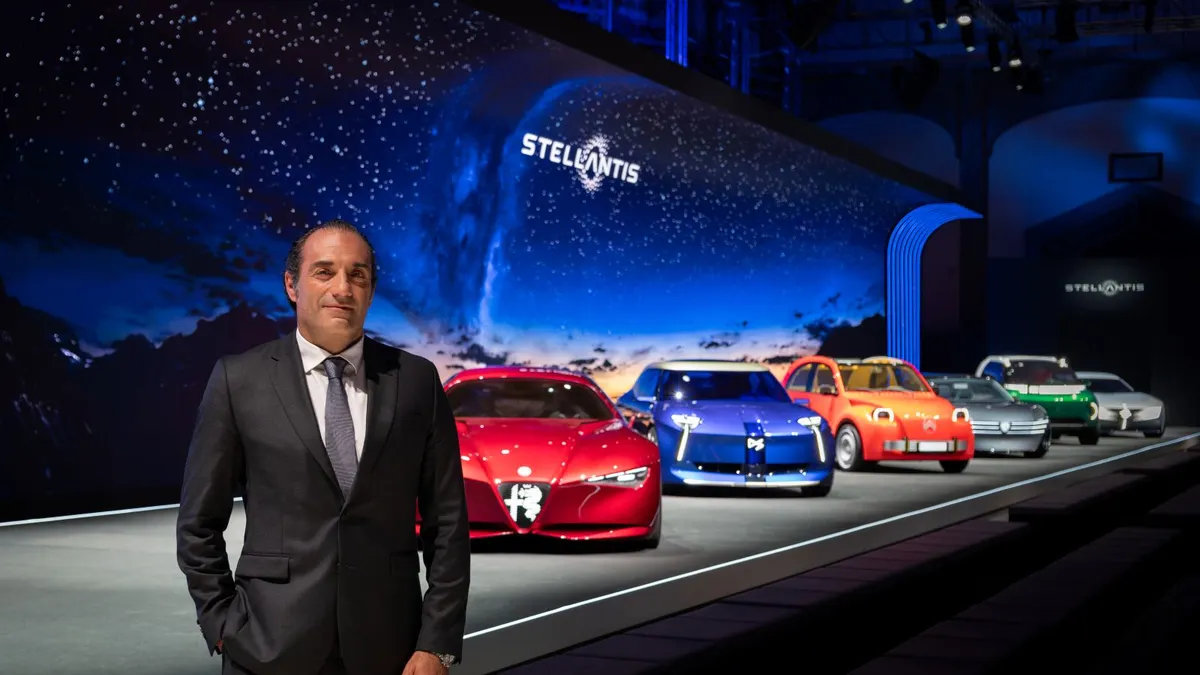


Stellantis plans to invest 60 billion euros ($69.7 billion) into its new five-year strategy to accelerate growth and profit, called FaSTLAne 2030, the automaker announced at its Investor Day event at its North America headquarters in Auburn Hills, Michigan on Thursday.
In a presentation outlining the automaker’s updated strategy, CEO Antonio Filosa said 60% of the money will be put into promoting Stellantis’ brands and products and 40% into new vehicle platforms, technologies and other common assets.
“FaSTLAne 2030 is the result of months of disciplined work across the company and is designed to drive long-term profitable growth,” said Filosa in a May 21 statement. “With the customer at the center of everything we do, the plan will deliver our purpose – ‘to move people with brands and products they love and trust’ – powered by our unique combination of strengths,” he added.
During his May 21 webcast presentation, Filosa also shared the company’s strategy for North America, which he said is expected to provide Stellantis with revenue growth of up to 25%. In the U.S., Stellantis expects production capacity utilization to increase from to 80% in 2030.
To address this, we will grow our offerings in new segments, increasing market coverage from 60% today to over 90%,” Filosa said.
North America currently represents about 40% of Stellantis revenues and its enjoys the benefits of strong brands and an extensive dealer network, Filosa pointed out.
“By 2030 we will fully refresh our North America showroom, adding 11 all new names and refreshing 12 current models,” he promised.
These will include a more efficient lineup of ICE vehicles, including the return of the legendary Hemi V8, plus an expansion of Stellantis’ hybrid offering, a new range of EVs and the new Jeep Recon EV coming year.
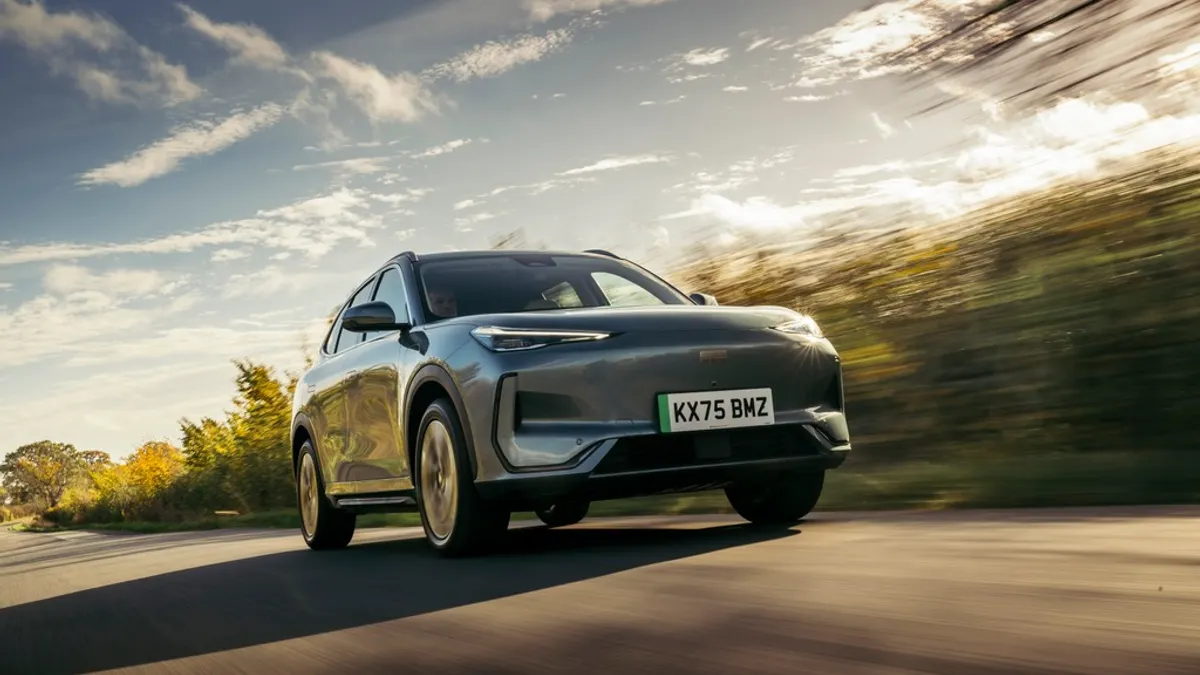
The company launched the strategy following a slew of announcements this week of partnerships, including with Dongfeng building Jeep and Peugeot branded vehicles in China and Stellantis building Dongfeng’s premium Voyah luxury EV in its Rennes plant, France.
Another Stellantis announcement in a May 20 release was the signing of a Memorandum of Understanding with Jaguar Land Rover to explore collobration on product development in the U.S. If agreed, the collaboration would see JLR side-step punitive import tariffs and Stellantis maximizing the efficiency of its production plants.
Part of the strategy aims for 60 new vehicle launches and 50 significant vehicle refreshes for Stellantis by 2030. These will include 29 electric vehicles, 15 plug-in hybrid or range-extended electric vehicles, 24 hybrid vehicles and 39 mild hybrid vehicles.
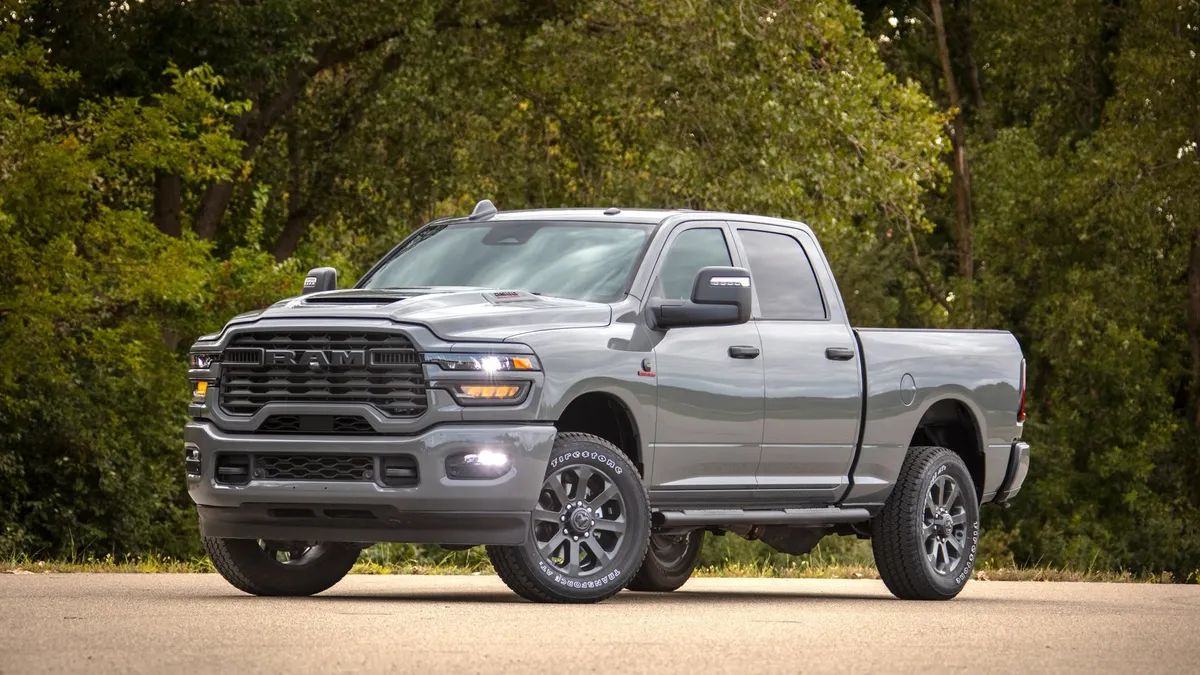
The plan also focuses production and marketing on its four global brands with the potential for the highest profitability: Jeep, Ram, Peugeot and Fiat. Stellantis said 70% of the plan’s brand and product investments will be directed to these brands, as well as to Pro One, Stellantis’ commercial vehicles business unit.
Then the company’s five main regional brands, Chrysler, Dodge, Citroën, Opel/Vauxhall and Alfa Romeo, will also benefit from these global assets and boost brand distinctiveness.
Historic brands, including DS and Lancia will be managed by Citroën and Fiat and developed as “specialty brands.”
Meanwhile, the group’s luxury-performance brand Maserati will add two new electrified models. Additional details will be shared in its hometown of Modena, Italy, in December.
By the end of the decade, half of global annual volumes will be produced on three global platforms, including the all-new STLA One, Stellantis’ statement said.
This modular platform is expected to meet the need to give consumers a broad choice of powertrains with multi-energy coverage with hybrids, EVs and efficient ICE options.
The company also expects that by 2030, nearly half of global annual volumes will be equipped with multi-regional powertrain solutions, with energy flexibility built into the portfolio.
The strategy also aims to incorporate AI into Stellantis’ technology stack in collaboration with Tier 1 partners and rolling it out locally to the brands and products in each region.
The technology includes the STLA Brain for onboard computing, STLA SmartCockpit for human-machine interfaces and the STLA AutoDrive scalable autonomous driving system. These platforms will be launched in 2027. By decade end, 35% of Stellantis’ global annual volumes will be equipped with at least one of these technologies and by 2035, that figure will increase to more than 70%.
In Europe, vehicle production capacity is expected to be reduced by more than 800,000 units, with repurposing of plants, such as in Poissy, France, and exploiting partnerships with Leapmotor in Madrid and Zaragoza, in Spain, and with Dongfeng in Rennes, France, all while aiming to preserve manufacturing jobs. Capacity utilization in the EU is planned to increase from 60% to 80% in 2030.