

Dive Brief:
-
General Motors and Cirba Solutions provided an update on a strategic collaboration, with a pilot program demonstrating a closed-loop pathway for making electric vehicle battery cells with 100% recycled nickel, cobalt and manganese that were recovered from end-of-life GM battery packs.
-
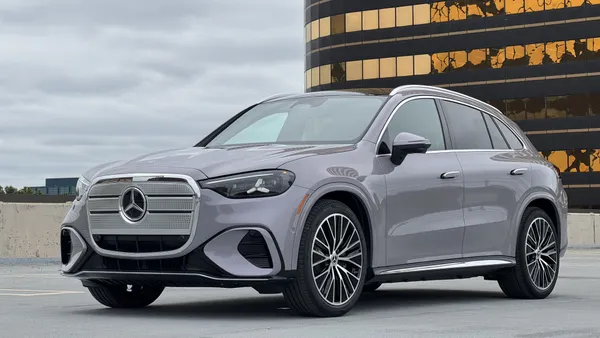
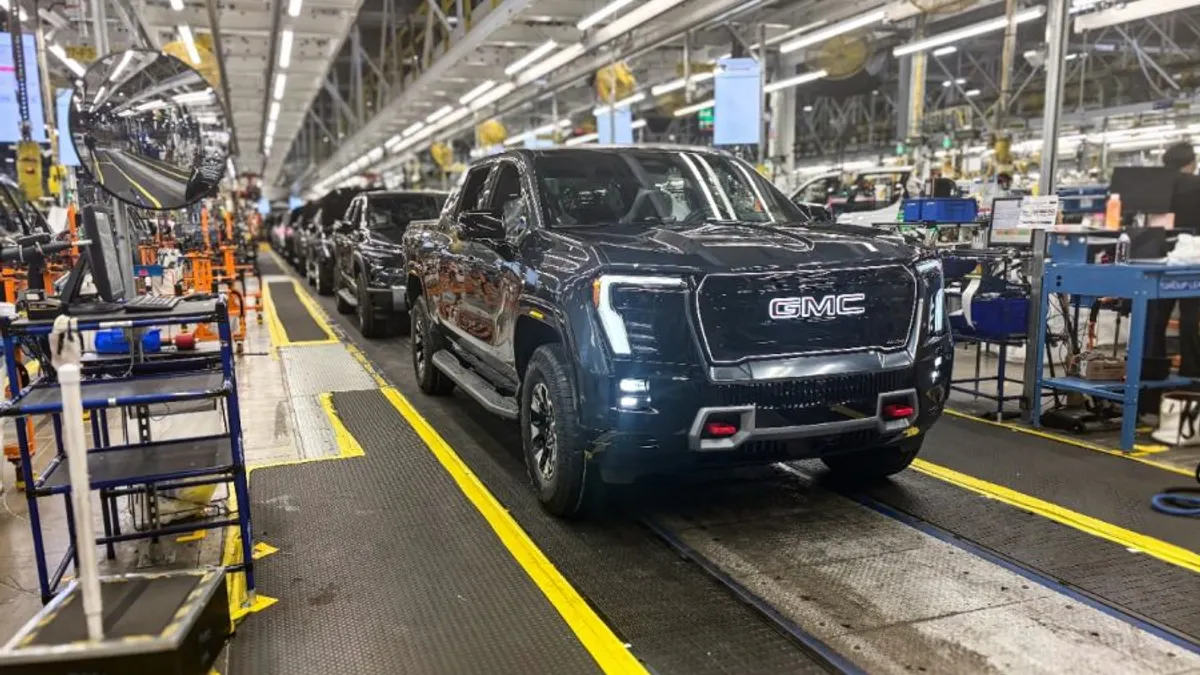
This month, a range of EVs were built with the recycled critical materials at the automaker’s Factory Zero plant in Detroit and its Spring Hill Assembly plant in Tennessee. Models getting the recycled batteries include variants of the Cadillac Lyriq, Vistiq and Escalade IQ, as well as the Chevrolet Silverado EV Trail Boss and the GMC Sierra EV AT4, confirmed GM in a blog post, and it said they’re “headed off to customers.”
-
“This pilot shows that the value of an EV battery can extend well beyond its first life — and that strong partnerships across the battery ecosystem are essential to building a more circular, resilient future for battery technology,” said Melissa Flaherty, Director of Sustainable EV Battery Ecosystem at GM in a press release from Cirba.
Dive Insight:
GM says that the program took years of engineering, quality, logistics, testing and manufacturing work with Cibra, as well as with Ultium Cells, LG Energy Solution and other stakeholders.
Flaherty explained in the blog post that 80 end-of-life battery packs were recovered in a pilot program with Cirba Solutions. At its facility in Ohio, Cirba recovered a “black mass” blend of battery materials — which in turn yielded 12 metric tons of new cathode active material made with 100% recycled nickel, cobalt and manganese.
As GM underscored, before recycled content could go into a new cell, it needed to meet the standards for quality, performance and safety as the “new” material — essentially validating the material and end product a second time. Flaherty said that “one of the key learnings we gained from this pilot is just how much teamwork and coordination these programs require.”
According to GM, its manufacturing and refurbishment programs are already designed to reuse more than 70% of pack components. Materials recovery methods are also rapidly being improved, but even with today’s technology up to 80% of lithium and about 95% of nickel, cobalt and manganese can be recovered, depending on the conditions and battery chemistry.
This isn’t GM’s first effort to recycle materials from its batteries into new ones. In 2024, Redwood Materials and GM confirmed plans to recycle cathode active material and production scrap from GM’s Ultium Cells LLC joint-venture battery plants in Ohio and Tennessee — with a goal of using the processed material for new batteries.
GM hasn’t yet said how much money it might potentially save if the recovery process is scaled up. In 2024, the automaker reached a $19 billion long-term supply agreement with LG Chem to source cathode active material for up to 5 million high-performance EVs. GM has also been working on rightsizing its battery sourcing, and recycling may eventually fit with its supply chain resiliency efforts.
GM gave no insight yet into the energy required to recover these materials. It’s also deploying roughly 10,000 batteries for second-life uses with Redwood Materials that preserves the originally manufactured cells. Those are part of what it calls the largest second-life battery microgrid in North America.
“This pilot demonstrates a pathway for using recovered battery materials in new cells and supports our larger goal of exploring ways to reduce the carbon footprint of battery materials and costs to consumers,” summed Flaherty.