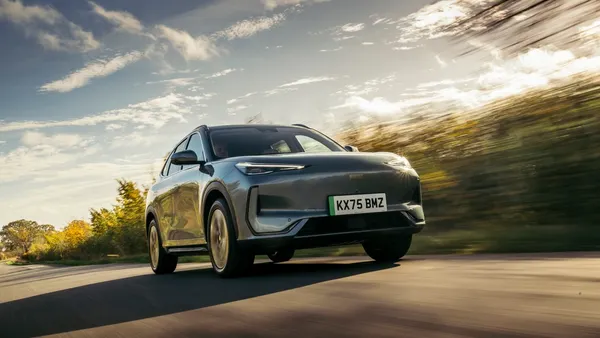


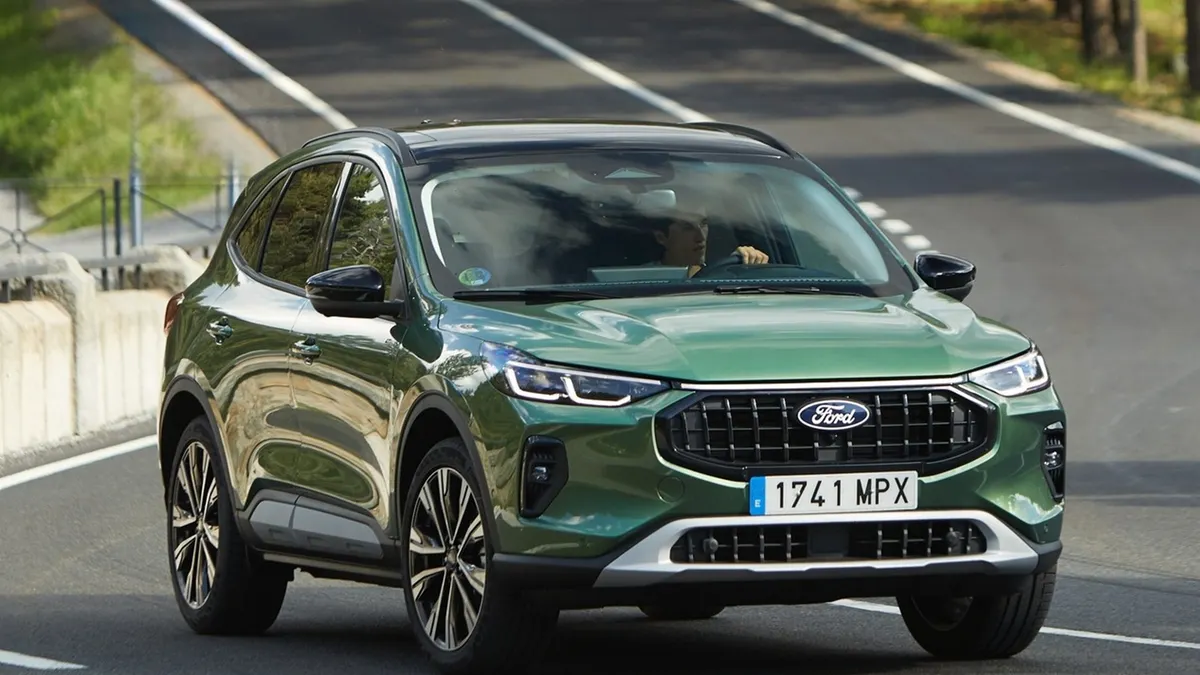
Ford Motor Company will enter a joint venture with China-based Geely Auto to build cars at the U.S.-based automaker’s vehicle production plant in Valencia, Spain.
The JV will build both Ford and Geely-branded vehicles and maximize the plant’s utilization to benefit from economies of scale, the pair announced in a July 23 joint statement.
This project is expected to produce a new member of the Ford Bronco family plus a multi-energy crossover while Geely-branded production will include two electric SUVs, with production starting in 2028. Existing Ford Kuga production at the plant will continue uninterrupted.
The collaboration supports Ford’s product offensive to bring five new passenger vehicles to European showrooms by 2029 and accelerates Geely Auto’s expansion in the EU.
Ford’s Valencia facility, first opened in 1976 and now claiming to be one of Europe’s most productive and advanced plants, is expected to be radically transformed and have the potential annual capacity of about 500,000 vehicles, Ford said in the statement.
Under the proposed ownership structure, Ford will own 66% of the new entity and Geely 34%.
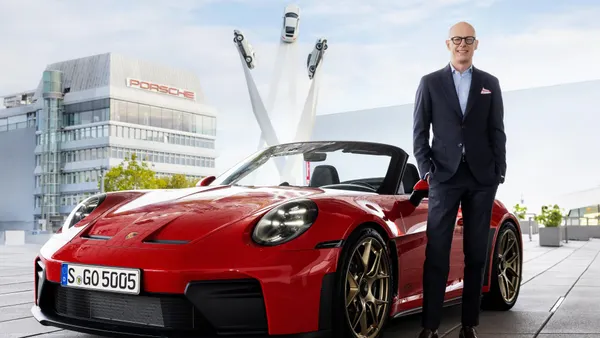
“This partnership shows how automakers are strengthening Europe's industrial base, but we can't do it alone,” said Jim Baumbick, president, Ford of Europe. “Together we can fully utilize a best-in-class plant with a great workforce and match the industry’s new cost benchmark.”
The new Bronco will be a compact SUV built for European roads, with production starting in 2028 along with Ford’s new crossover to be designed by Ford and jointly developed with Geely.
Geely models will include two electric SUVs which are scheduled to roll off the production line in the same year.
“This JV with Ford in Europe reflects our commitment to open, collaborative product development as part of our growth strategy, deepening our local presence and commitment to customers in Europe,” said Alex Nan, vice president of Geely. “Put simply: We are building cars in Europe, for Europe, alongside a trusted partner.”
An analyst’s view
However, partnerships between automakers can be a double-edged sword, warns Adam Ragozzino, Omdia’s principal analyst for batteries and electric powertrains.
Ford is facing severe cost pressures made worse by the aluminum smelter fire in Oswego, New York, he said in an email to WardsAuto.
Although the hot mill is back up and running, it may take several months before production and sales fully normalize, according to Ragozzino. Couple this to the volume loss from discontinuing the Ford Escape and Lincoln Corsair models plus the ongoing impact of global tariffs, and these pressures get even more challenging, he noted.
“While this tie-up provides Ford with a vital short-term lifeline, the long-term advantage tilts heavily toward Geely, firmly establishing it in Europe's critical EV market,” said Ragozzino. “Historically, whenever Chinese automakers enter a new region, they don't just compete — they dominate.”
The hyper-competitive arena of China's domestic market has forged some of the most adaptive and resilient automotive companies in the world, Ragozzino said.
“Meanwhile, high tariffs in the United States do little to help domestic automakers sharpen their dull competitive edge,” Ragozzino said. “Instead, this protective wall blocks the vital transfer of technology and operational know-how that Chinese EV leaders possess and Detroit desperately needs,” he added.
“While Valencia presents Ford with a rare opportunity to overcome some of those technological barriers, it still comes with a steep long-term cost,” concluded Ragozzino.