

Ford has set its sights on a challenge to develop a family of efficient EVs that are truly competitive versus gasoline vehicles, not just on price but to the company. The team that’s risen to that challenge, with a skunkworks approach to development, including rapid testing and iteration at the company’s Electric Vehicle Development Center in Long Beach, California.
Last August, Ford confirmed its plans to deliver a $30,000 fully electric pickup truck in 2027, which the California team had been working on for the past three years. In February, the automaker revealed the first technical details of the truck. Among them were improved aerodynamics, a new side mirror design, a platform employing edge computing, aluminum unicastings and a 48-volt accessory system that supports bidirectional charging.
Then last week, WardsAuto got a first look inside EVDC during a media tour where Ford teased out a few more details of its innovative electric truck. In addition to scrapping its cost-cutting norms in developing the electric truck, the automaker shared a fresh layer of technical twists and breakthroughs on how it's all coming together in a production model.
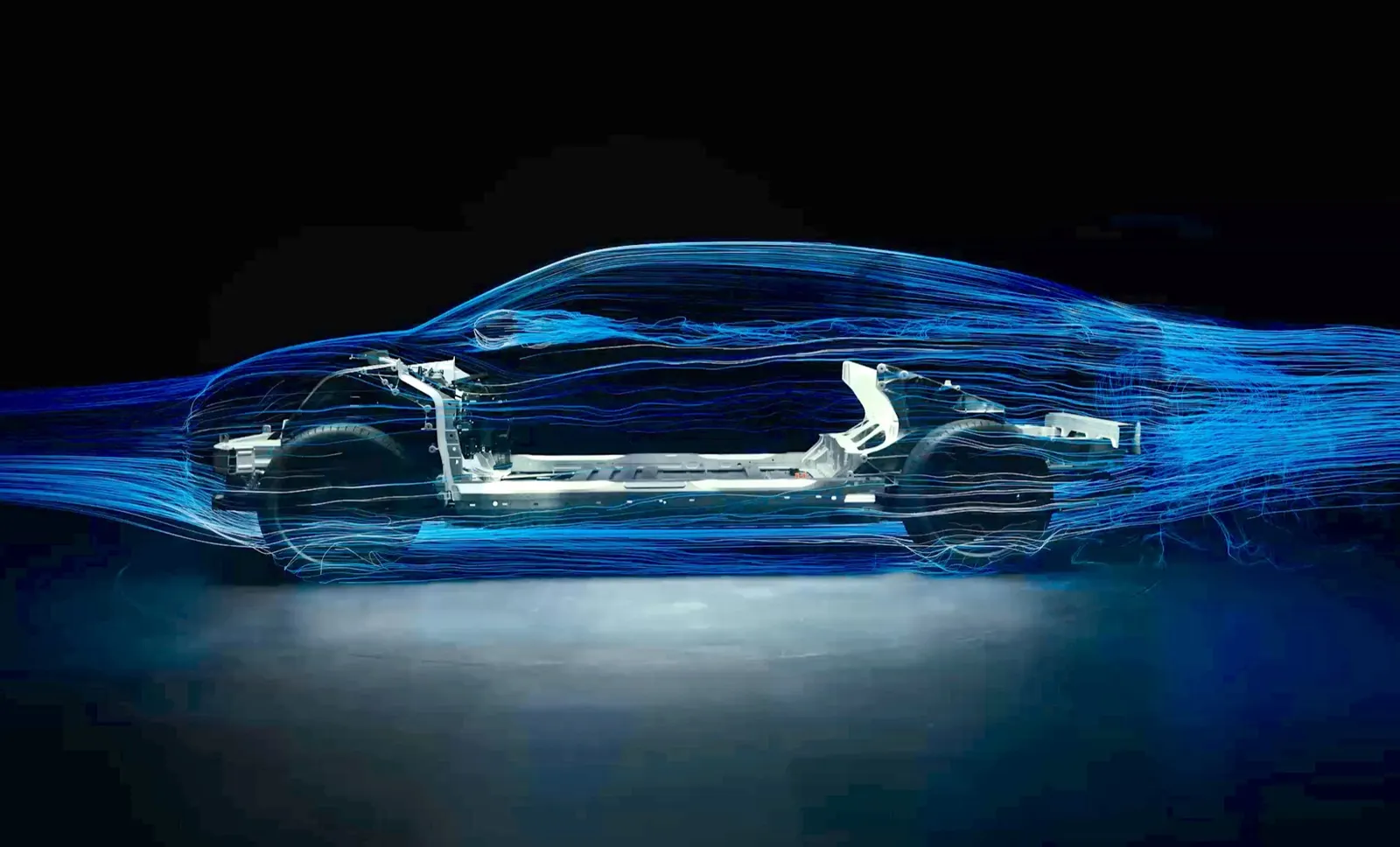
1. Three modular pieces on the assembly line
The team broke the vehicle into three core pieces: a rear clip, a center module and a front clip. Ford has considered operator efficiency and ergonomics for elements like pedal assembly from the start, and the three segments all come together as part of final assembly. For the sake of efficiency at Ford’s Louisville Assembly Plant where the electric truck is set to be made, the team shifted to fasteners that are applied from the outside rather than from inside the vehicle.
Ford has demolished its previous assembly line down to the concrete, according to Kevin Young, the advanced manufacturing program chief overseeing the EV, and is installing all-new conveyors. “The operators in Louisville are actually building the vehicles now, and we’re getting a lot of feedback from them,” he said.
2. Costs less to build, cheaper to repair
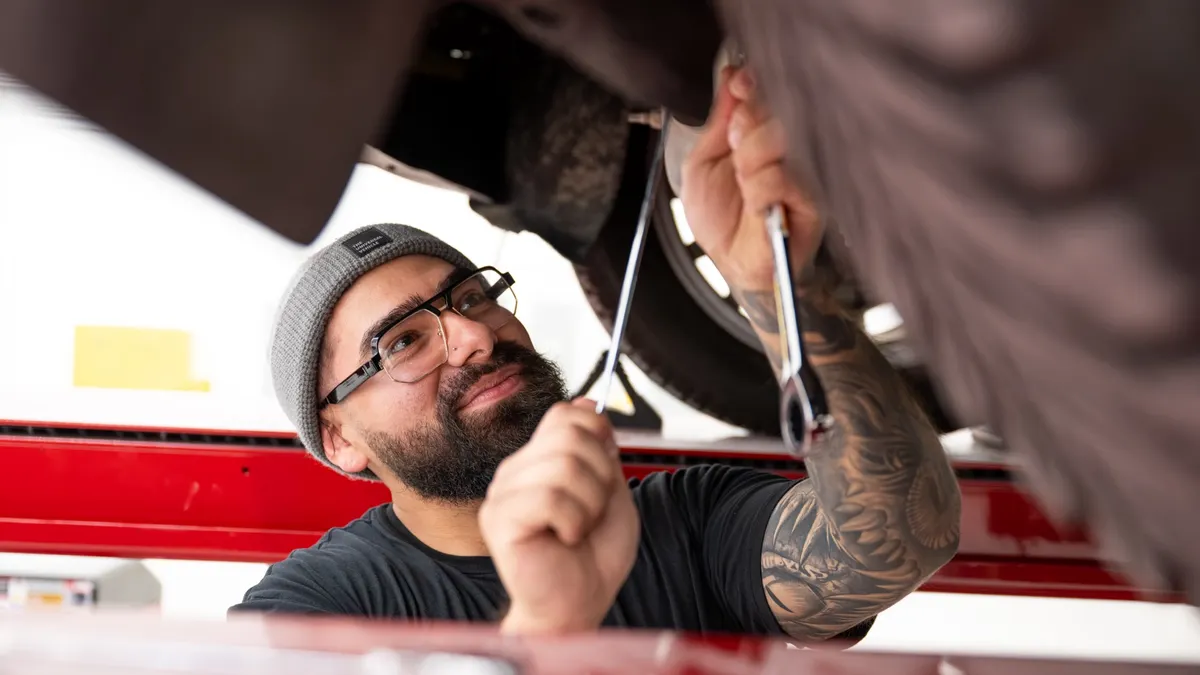
The front portion of the vehicle is designed as one big aluminum unicasting. If involved in an accident, Ford says it’s cheaper to trim and reweld portions of it than create replacement parts — and it’s just as strong. Compared to traditional vehicles with multiple stampings welded together, body shop techs have a cut line and essentially one weld to match, explained Vlad Bogachuk, Chief Engineer of Advanced Vehicle Structure Architecture, which he also said simplifies repair training.
“We actually worked with insurance companies and technical experts from the standpoint, ‘How can we repair the vehicles at cheaper cost?” said Bogachuk. “So that way it’s not that you’re buying the vehicle up front cheaper, but also, in the long term, it’s going to become cheaper for you if you have a fender-bender.”
3. Battery pack as floor
“The best part is no part; and if we have a part it should serve multiple functions,” said Young, pointing to how there’s no floor to the body structure and the top of the battery pack instead serves that purpose. Under Ford’s current assembly methods, the floor and front end are attached from the early stages, which requires assembly to bring every single part from the outside inside as it gets put together.
As the team noted, it can rapidly iterate the battery pack design as well, and build and test it on-site in a matter of days.
4. Neat E-Box packaging
A compact E-Box is controlled by a single microcontroller and provides 48 volts to three zonal nodes and manages AC and DC charging and DC-DC conversion. It tucks inside the battery pack, so it completely disappears under the floor, without any special packaging considerations. Ford also said the truck’s battery management system is packaged with the E-Box, which is designed to be serviceable without replacing the entire battery pack.
5. A cabin like no Ford cabin
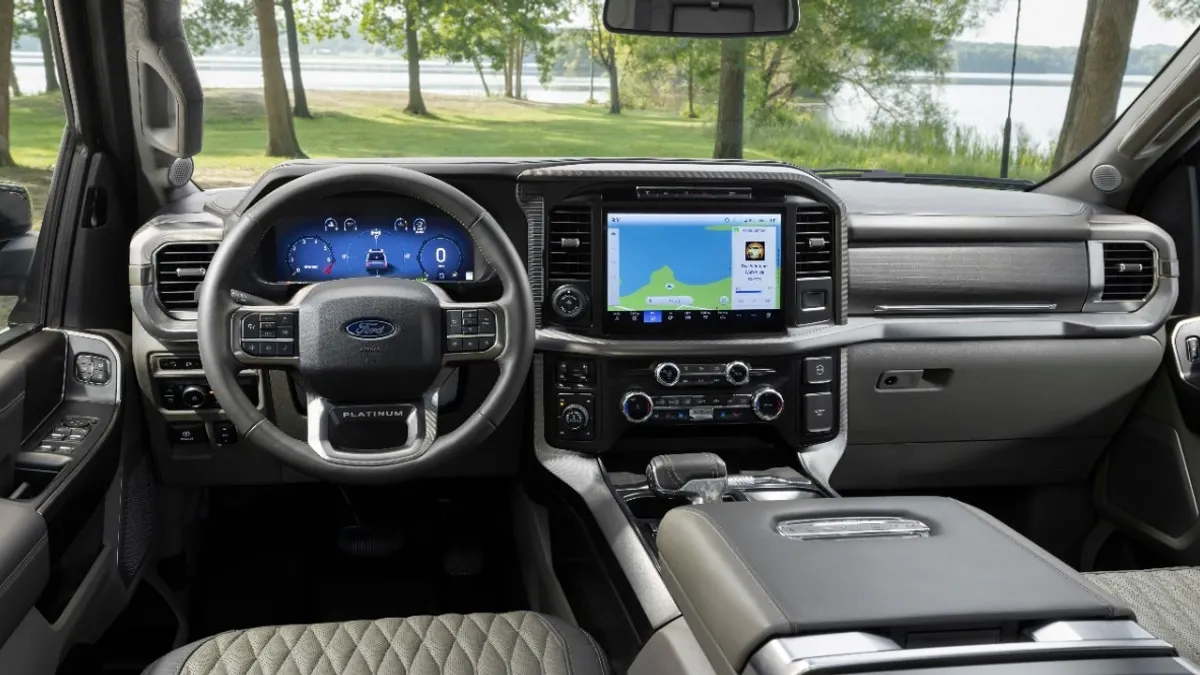
For efficiency, the truck’s design team sits right next to where prototypes are made. Ford is also designing its own seats, but acknowledged that it looked outside at fashion, interior design and consumer electronics for inspiration due to the challenges of cost constraints.
“We have absolutely no carryover parts,” said Simona Merker, the color and material senior designer. “Everything’s really new-defined, from the exterior color down to the smallest little hook you have that connects the floor mat to the carpet. So to make sure that everything harmonizes, everything works well, we have to really work with the teams together.”
6. Resistive heating goes away
The automaker revealed that a high-level priority for the EV project was the consolidation of multiple components into a compact vehicle thermal management system, including refrigeration, a heat pump and coolant distribution. Left and right zonal modules both juggle thermal duty, and software manages the best use of heat energy from all the vehicle’s hardware. The E-Box also integrates motor oil cooling with semiconductor water, acting as a heat exchanger without needing additional parts.
Perhaps the most interesting design is that there’s no resistive (sometimes called PTC) heater in the vehicle. Instead, a hot gas bypass function serves as a heater for the cabin and the battery pack in cold weather. That’s a packaging simplification not even Tesla has tried and hints at multiple hardware and thermal design breakthroughs yet to be detailed by Ford, as heat pumps take time to ramp up and struggle in extreme cold.
7. Ford sees personal or fleet use
When WardsAuto asked Alan Clarke, Ford VP, Advanced Development Projects, and the executive overseeing the facility and development of these EVs, if it also sees business use from Ford Pro fleet customers, or a particular type of customer as it does testing, he responded: “All of the above. Fleet use is important for us as well.”
Clarke emphasized that Ford considers the mid-size electric pickup to have a “pretty broad audience of individuals who are going to purchase it.”
What’s next?
Work is now underway at EVDC on a second product to use the UEV platform, confirmed Andrew Reimer, the senior director of vehicle integration and engineering. When asked what this might be, he referred to a Ford video from last August in which the automaker showed “everything from a B-sized car to a commercial van, and everything in between,” as he put it.
“We discussed last August in one of the announcements about the universal electric vehicle platform that we are looking at a range of vehicles over the next 10-plus years,” elaborated Daniel Smith, director of occupant architecture and seating. “So our team has done a lot of ideation and exploration about what will our platform support…what’s the smallest and the largest vehicle we could do?”