Ford Motor Co. has installed IBM’s AI-powered Maximo Visual Inspection technology at 17 of its North American manufacturing facilities to catch any assembly line defects in real-time using pictures taken of vehicle components in various stages of production using an iPhone and cloud-based platform.
Ford started its partnership with IBM in 2020. The company’s computer vision-based inspection technology is helping the automaker reduce warranty claims by identifying and fixing assembly line defects, as well as avoiding higher rework labor and repair costs to correct any issues after a vehicle is fully built.
During a presentation at the 2026 AutoTech conference in Novi, Michigan, last week, Jason Barger, Ford’s advanced manufacturing IT vision systems and cyber security product manager, and Ed Neubecker, principal automation specialist at IBM, provided a more detailed look on how the system works and how errors can be quickly corrected before they spread to other vehicles further down the line.
Ford refers to the inspection system internally as its Mobile AI Vision System, or MAIVS. It has been used to perform 150 million individual inspections at the automaker’s manufacturing facilities that flagged 400,000 quality issues that a human worker may have missed, according to the automaker.
“We needed to give our operators superpowers to see the unseen in real time, and that's where MAIVS comes into play,” said Barger. “MAIVS is like giving every operator a tireless set of trained eyes to see every small minute detail on the line. It's able to catch subtle defects, such as a missed component, misaligned assembly, or an improper part that's been installed.”
Vehicle complexity is also driving the need for more advanced computer vision inspection technology in manufacturing, according to Neubecker. For example, EVs contain more wiring than ICE vehicles with more connector inspection points, while software-defined vehicles include a more complex mix of sensors, electronic control units and display screens each with zero tolerance for failures.
“Traditional quality practices aren't really efficient, they miss a lot of things,” said Neubecker.
How IBM’s Maximo Visual Inspection technology works
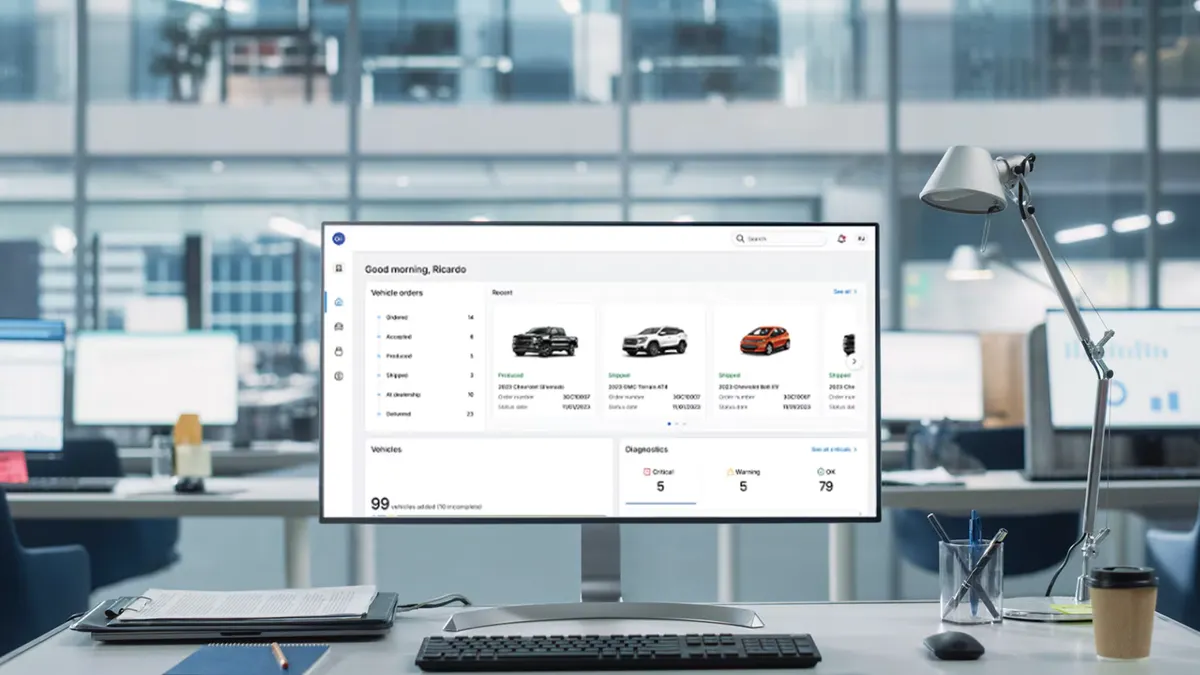
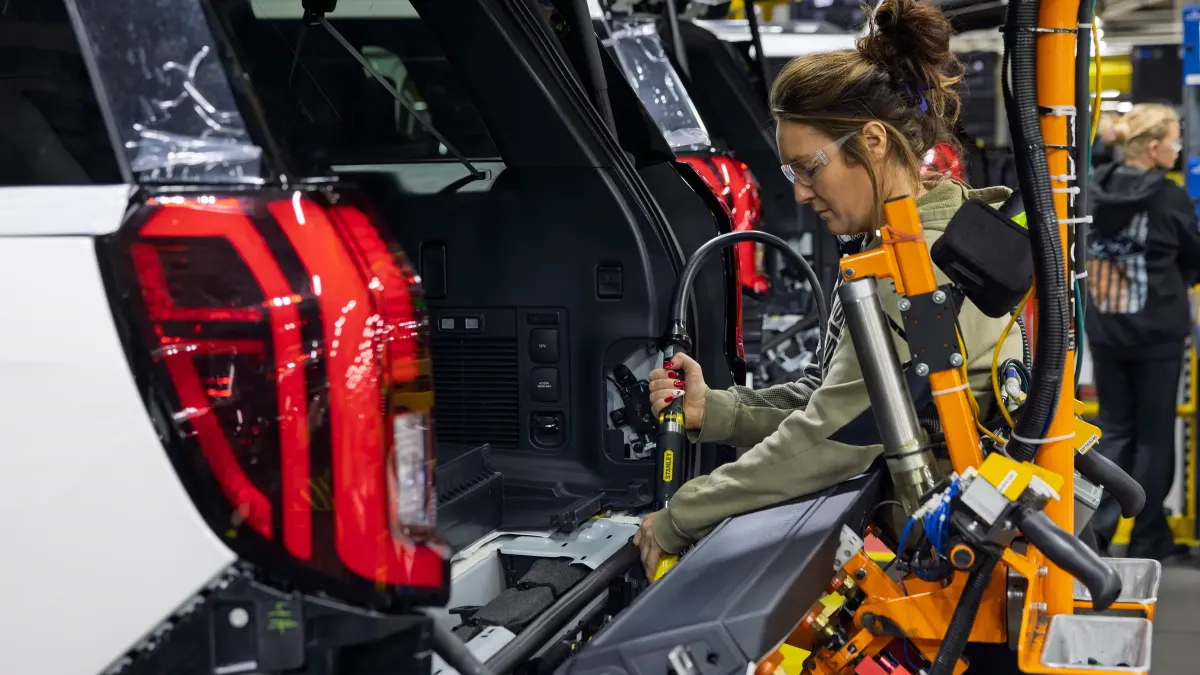
As a vehicle moves along the assembly line, an operator workstation located near the production lines and equipped with an iPhone for capturing photos first identifies the VIN and vehicle build complexity. The system also supports standard internet protocol cameras, according to Neubecker.
The inspection workstation prepares the device to take a picture of a particular area of interest, which could be anything on a vehicle from door panel components to electrical connections and wiring routing. The phones are capable of automatically capturing images as vehicles move on the line, but pictures can also be taken using visual triggers. If an inspection of more confined spaces is required, a worker can also manually take photos of an area of interest. The inspection system is also compact enough to be moved throughout the plant as needed.
Ford collects both good and bad images to train machine learning models, which are deployed to iPhones where the system runs inference on the image and sends pass/fail results in real-time.
For instance, if an unseated electrical connector is flagged, the concern is logged into Ford’s Quality Operating System for corrective action before an issue propagates to other vehicles on the line. If applicable, an operator fixes the defect on the spot and an in-station process coach closes the concern and clears the vehicle for release. Ford can also stop the production line for immediate correction of any issues.
“If that connector is not fully seated within the station, then it [vehicle] makes it all the way to end of line, now we've got a situation in which we may have to perform several hours of heavy repair right to get to that one second fix of that connector,” said Barger.
Ford says it has over 1,000 operator workstations currently deployed at its North American factories, which is helping the automaker improve vehicle quality and reduce warranty repairs. But Barger admits there is still room for improvement as vehicles become more advanced.
"Despite our best efforts, sheer speed and complexity of the assembly offline means this: defects could escape from the point of fit,” said Barger. “Trying to catch the most minute detail, misconnection, improper part, small things that can later lead to huge costs and capacity drains in our manufacturing process,” he said.
Barger said that Ford installed 40 new inspection systems this year alone at its manufacturing facilities in Michigan. At its Kentucky Truck Plant, Ford added 1,200 inspections, 203 new inspectors, 72 new technology tests and six times the number of AI-powered inspection tools for the 2026 Expedition SUV compared to last year’s model launch.
In 2021, Ford recognized IBM with an IT Innovation Award for its AI-powered inspection technology, which is awarded by the automaker to companies that deliver the greatest breakthroughs in innovation and drive value.