

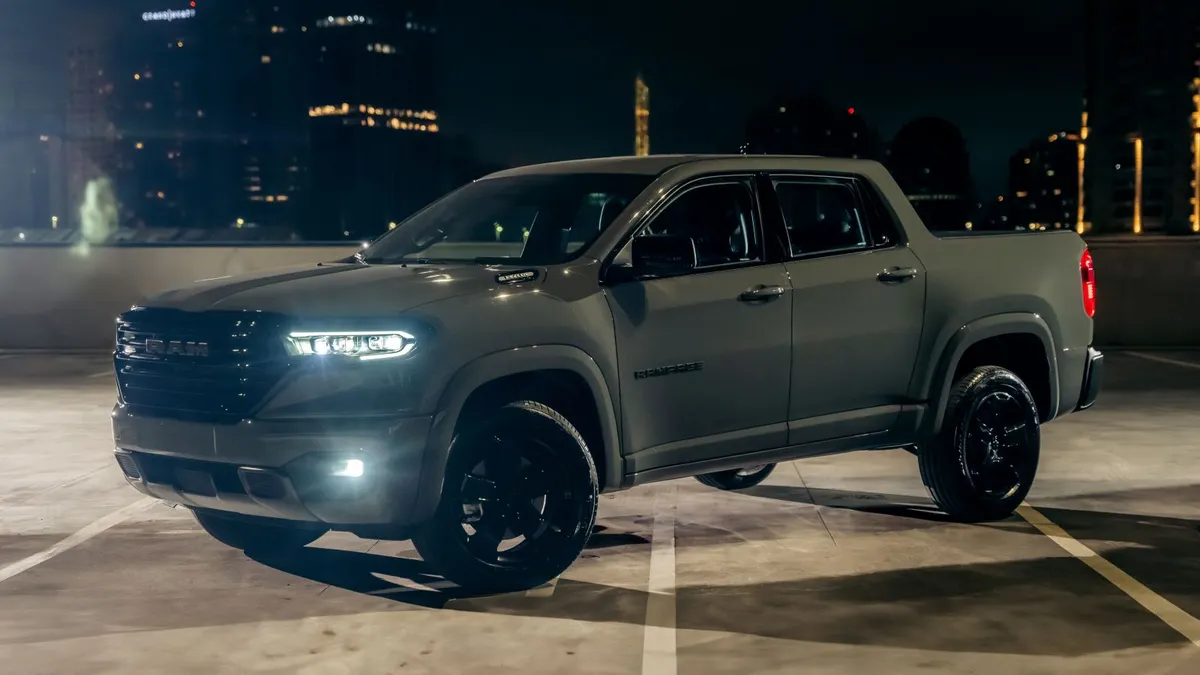
Draft changes by Europe’s regulators might see U.S. automakers barred from importing their big pickup trucks into the economic bloc despite a tariff deal between the nations.
A letter from the American Automotive Policy Council representing General Motors, Ford Motor and Stellantis and viewed by WardsAuto claims the draft being considered by the European Commission “would degrade access for U.S.-built vehicles sent to Europe.”
The Dec. 16, 2025 letter from AAPC President Matt Blunt to U.S. Commerce Secretary Howard Lutnick and Trade Representative Jamison Greer claims the changes under consideration by the EC “would directly contradict the Trump Administration’s August 2025 U.S.-EU Framework Agreement and joint statement.”
AAPC’s concerns center on possible changes to the EC’s regulations for Individual Vehicle Approval which currently sees “monster” pickup trucks, including the Chevy Silverado, Ford F-150 and Ram 1500, imported into European Union markets.
The IVA Regulation allows low-volume or unique vehicles to get approved for EU roads on a case-by-case basis by meeting national technical requirements rather than full, EU-wide type approval.
However, alarm bells began ringing when U.S. Federal Motor Vehicle Safety Standards and California emissions standards were left out of the EC’s draft proposal, Blunt’s letter said.
“Given that, we respectfully request that the Trump Administration’s trade team reach out to its EU counterpart to halt changes to its IVA regulation that would undermine this limited, but helpful access currently being provided by the EU to vehicles built to U.S. automotive safety standards and complying with U.S. certification procedures,” the letter added.
European Commission response
An emailed response to WardsAuto from an EC spokesperson attempted to calm the AAPC’s worries about the trade deal between the U.S. and the EU that has yet to be ratified.
“The IVA reform does not in any way affect or contradict the commitments to work towards mutual recognition of the respective standards for passenger cars as agreed in the Joint Statement,” the spokesperson said. “Once EU and U.S. will have agreed on a mutual recognition of car standards, this will be reflected both in the EU Type-Approval and in the EU Individual Vehicle Approval systems.”
However, Blunt’s letter also recognized the intense pressure from European climate and vehicle safety groups against allowing more large U.S. trucks into Europe.
“This growing utilization of the IVA has been actively opposed by an alliance of safety and green groups within the EU that have been pressuring the EU to end so-called ‘loopholes’ that allow large ‘American-style’ pickup trucks to be sold in Europe,” his letter said.
Monster truck safety risks
And Blunt is right to be wary, according to Lucien Mathieu, director of cars with the European climate and vehicle safety lobby group Transport & Environment.
“The makers of U.S. pickup trucks are demanding reduced safety for anyone walking or cycling on a European street,” he said in an emailed response to WardsAuto referencing Europe’s standards for vulnerable road users, including pedestrians, cyclists and motorcyclists. “Allowing more monster pickup trucks, which don't meet European safety standards, onto our roads will result in more deaths and serious injuries, including other drivers that these pickup trucks crash into.”
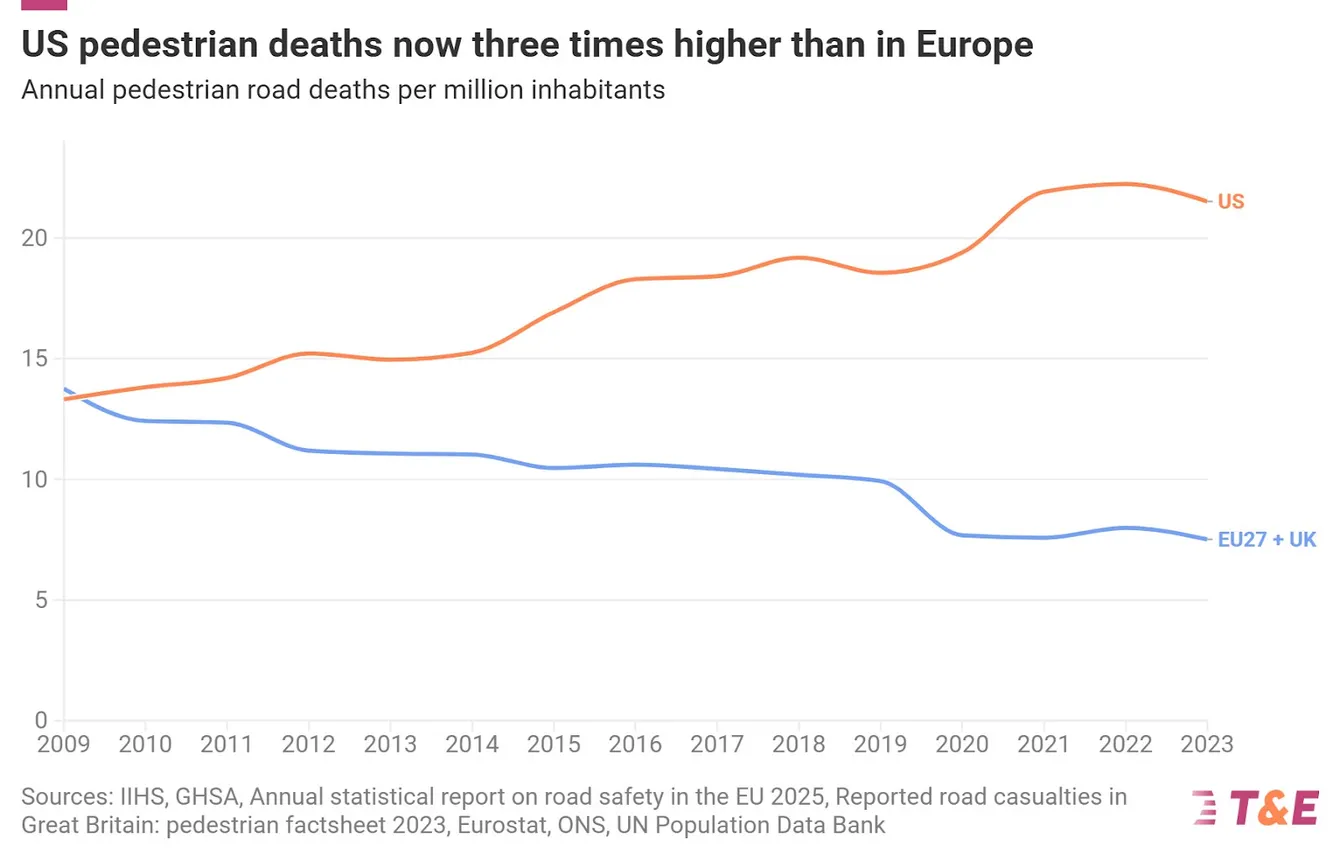
Mathieu pointed to decades of reduced pedestrian road fatalities in Europe compared to the U.S. where, despite advances in driver assistance systems, road fatalities remain stubbornly high, as illustrated in the chart shown below.
Europe’s regulators should reform the IVA rules that allow dangerous vehicles on European roads, Mathieu said, saving particular ire for the Ram 1500.
“Essentially, the Commission is closing a loophole currently being exploited by Ram in particular,” he said. “If Ram wants to continue importing its pickup trucks into Europe, it needs to meet EU pedestrian protection standards and the other EU type approval rules that apply to mass market vehicles,” Mathieu said, pointing out that these standards are already met by Toyota’s Hilux and Ford’s Ranger pickup trucks.
He also criticized the U.S. automakers’ lackluster approach to electric vehicles in favor of large internal combustion engines.
“But rather than speeding new EVs to market, or sorting out the production blockages holding up the sale of its existing EVs, Stellantis is lobbying to retain an abusive market practice to sell 5.7-liter pickups to Europeans,” he said.