A new Canadian automotive industry association has been launched, and a review of the U.S.-Mexico-Canada Agreement will be its key initial focus.
The Pacific Manufacturing Association of Canada will represent Toyota and Honda. The two brands have a significant presence in Canada: In 2025, 77% of vehicles made in Canada were assembled by either Honda of Canada Mfg. or Toyota Motor Manufacturing Canada, according to research by the Trillium Network.
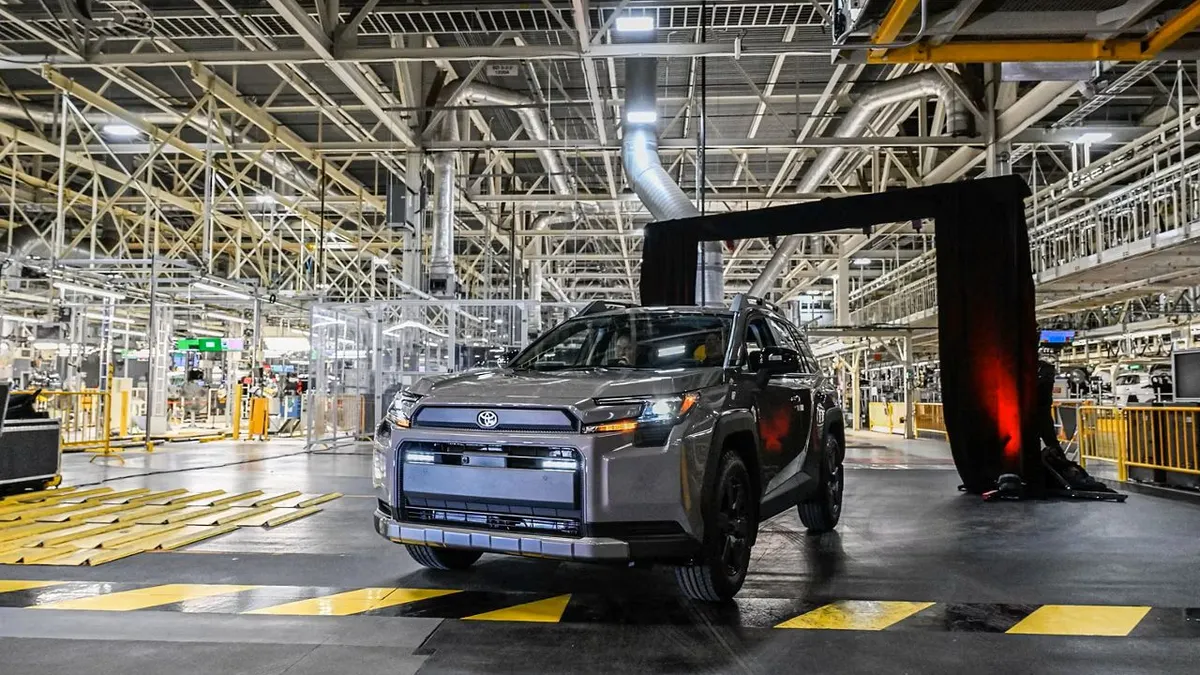
Toyota has three Canadian assembly plants, all in Ontario — two in Cambridge and one in Woodstock, making RAV4 and RAV4 hybrids, plus the Lexus RX 350 and the RX 350h and 500h. Honda’s two Alliston, Ontario, plants assemble the Honda Civic and Honda CR-V in both petrol and hybrid variants.
PMAC will be led by President and CEO Brendan Sweeney, the former managing director of Ontario’s Trillium Network for Advanced Manufacturing. He told WardsAuto the new association would focus on manufacturing and trade issues, as the July 1 deadline for reviewing the USMCA trade agreement looms large.
“We're all wanting a trade deal with the USA, making sure that gets sorted out, to build a globally competitive automaking industry in Canada," Sweeney said. "We're optimistic, but we’re realistic that we're going to get something done, but it won't be easy.”
With the Canadian government stressing in February that more than 90% of Canadian-made vehicles are exported to the U.S., Sweeney said PMAC wants Toyota and Honda "to access the USA market — that's where vehicles made in Canada get bought.” PMAC may also press for “import credits for companies making vehicles in Canada to get credit to offset the effect of the cost of tariffs.”
Another key focus, he said, was consultation over the Canadian government’s new federal automotive strategy, notably over planned new emissions controls.
The importance of these regulatory and policy issues in determining the commercial and industrial health of the Canadian auto sector inspired the desire to launch PMAC.
“The heart of it is, there's a lot of work to do,” he said: “There was a perceived gap in the association world [for] companies making three-quarters of Canada's vehicles, to have someone to go to who knows what's going on.”
Canada's auto associations welcome the move
Sweeney said PMAC plans to work alongside the Global Automakers of Canada and the Canadian Vehicles Manufacturers' Association in advocacy efforts.
That said, the existing Global Automakers of Canada will continue operating, with Toyota and Honda (and subsidiaries) remaining among its 15 voting members as of 2026, which represent about 25 different brands, including BMW, Hyundai, Jaguar-Land Rover, Kia, Mazda, Nissan, Porsche, Subaru, VinFast, Volkswagen, Volvo, and associated subsidiaries.
Outside of Honda and Toyota, GAC's members do not operate assembly plants in Canada, but they are active in sales and have some production investment, such as VW’s planned electric vehicle battery gigafactory in St. Thomas, Ontario.
GAC President and CEO David Adams told WardsAuto they welcomed the launch of the PMAC, saying: “There's an opportunity to clarify and refocus our efforts.”
As part of that refocus, GAC may concentrate more on consumer, technical and emissions-related issues. Adams stressed the relationship with PMAC will be "highly collaborative,” while understanding “there may be some areas where we differ from time to time.” GAC generally proceeds by consensus, he said, while noting rarely-used bylaws allow a two-thirds agreement to approve actions.
With PMAC's recent launch, Adams said GAC would now survey member companies “and glean what they see is a new set of priorities for the association to pursue,” predicting the PMAC would focus on trade and manufacturing and GAC researching and lobbying on other policy areas.
“We have a disparate group and we need to carve our own path,” he told WardsAuto.
Brian Kingston, president and CEO, Canadian Vehicle Manufacturers' Association, said the creation of a new association representing two major manufacturers is helpful since the industry "is under enormous pressure."
“We have the tariff threat; we have domestic challenges including electric vehicle mandates — federal and provincial; and other regulations driving costs,” Kingston said while explaining the pressures on auto manufacturing in Canada.
He noted the PMAC was not a new concept, given until 2021 there was Japanese Automobile Manufacturers Association of Canada, which closed after helping secure a range of trade deals, including the USMCA, saying it had secured its key mandate.
But with the Trump administration imposing tariffs on Canadian exports and potentially taking a tough line over the USMCA review, trade policy has re-emerged as a key industry consideration. Kingston said all parties in the Canadian auto sector were seeking the removal of U.S. tariffs, including those imposed under Section 232, which impacts Canadian exports of non-USMCA-compliant autos and parts.
"I have never seen a case where the industry in Canada is so well aligned, including unions and industry groups,” said Kingston, predicting talks would stretch beyond the review’s July 1 deadline. That said, he predicted: “It's a modern trade agreement, and there should not be many major changes needed."
But first: Setting up the new association
Sweeney has a sizable list of steps to take to set up the new association.
While a website is already active, Sweeney said he plans to develop it further, open bank accounts, and consider opening offices. He also has to hire staff, but Honda and Toyota employees are supporting in the meantime. For the time being, PMAC membership is limited to Japanese automakers with operations in Canada.
Sweeney also said he'll focus on building relationships, noting he plans to leverage federal, provincial and municipal government contacts developed through working with Trillium. The new industry group will also maintain a dialogue over common opinions with all associations, according to Sweeney, "and where there are nuances, we will keep the dialogue open."
"There will be frustrating moments and exciting moments," he told WardsAuto, adding later, "I look forward to building relationships.”
Correction: An earlier version of this story misstated which vehicles are assembled at Honda's two Alliston, Ontario plants.