Editor’s note: This is a reported column, in which Steve Finlay periodically explores the relationship between automakers and dealers for WardsAuto.
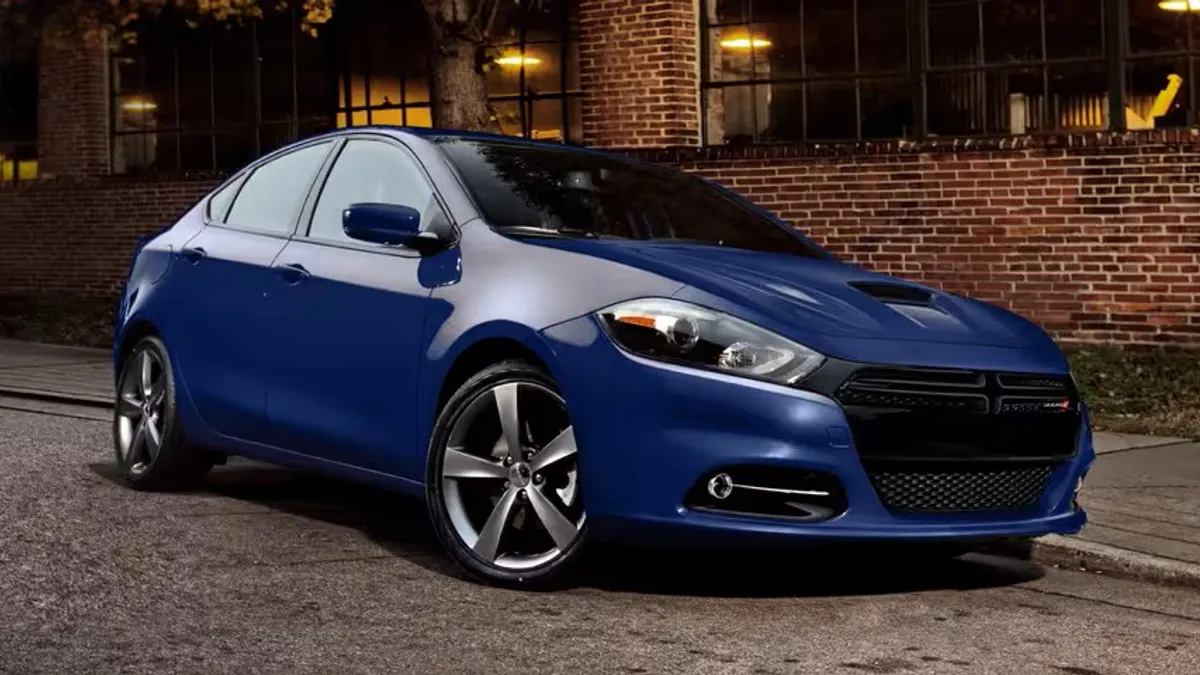
When Dodge resurrected its Dart sedan in 2012, it exhorted shoppers to visit an online configurator that let them build their own virtual vehicle, picking from a slew of features and options.
Those included six trim levels, 12 exterior colors and 14 interior colors, plus seven wheel, three engine and three transmission choices.
The idea was that after building their personalized virtual car, they’d beeline to the dealership to buy the real thing.
Sounded like a plan. After all, many Americans want a vehicle that reflects their personalities.
One big misconnect with the do-your-own-Dart project, though: It’s virtually impossible for a dealer to stock every conceivable configured vehicle.
That would cost a floor-planning fortune. It would also require a dealer lot the size of Rhode Island.
“People who customized a car on the configurator came in jazzed but then were disappointed when the car wasn’t on the lot,” said Wes Lutz, owner of Extreme Dodge, Chrysler, Jeep and Ram in Jackson, Mich. He’s also a former National Automobile Dealers Association chairman.
But Lutz said automakers have become better at not going overboard with configuration possibilities that create problems for them as car builders and for dealers as retailers.
“They’ve improved somewhat, with fewer options, fewer trim lines,” he told me. “It’s a timely issue, especially if you are talking about features people don’t want, such as onboard navigation. Car owners don’t use it. They use their phones. So why have a built-in nav system?”
J.D. Power data tracking shows a 66% reduction in vehicle configurations industry-wide from 2019 to 2025.
“The topic of vehicle complexity is not lost on OEMs,” said Jason Skerske, J.D. Power’s director of success. “They are taking action to reduce those configurations.”
There are many reasons for that effort.
“One of them is production efficiency. Imagine the headache for a plant if there are 10,000 ways to configure a vehicle,” Skerske told me. It goes to build issues, quality control and keeping track of all those parts.
On the retailing side, “a dealer cannot possibly stock all those options,” he said. “There’s a point of diminishing returns.”
There’s also a point at which customer frustration kicks in if dealer inventory doesn’t include something they fancy.
But a healthy level of vehicle configurations and package options is good for business, said Jennifer Bender, an associate partner at market research firm Ipsos. She spoke during a recent online presentation on her firm’s latest report on automotive customer behavior trends.
She posed these questions to automakers:
“Are you still building mass-market cars for a world that wants ‘me-market’ vehicles? Does your vehicle configuration process feel really unique?”
She advises auto companies to offer buyers “the exact features they want.”
Knowing ahead exactly what those features are might require a form of ESP. But crunching numbers helps.
“It comes down to smart data and analytics to figure out all-star configurations vs. ones that are putting an anchor on a particular model,” Skerske said.
Automakers and their dealers needn’t (or can’t) offer everything to everybody, he said. “But use data to figure out what the majority of people desire — and at what price points. Follow the data.”
Dealer Lutz agreed: “You can try to guess what people want. But you’re still guessing.”
He added: “Every dealer would be behind fewer configurations. You’re seeing fewer individual options and more packages. But dealers and automakers can bump heads on options.”
For example, it makes no sense to Lutz for automakers to send vehicles equipped with heated seats and steering wheels to dealers in warm-weather Florida.
“One size doesn’t fit all,” he said.
Graham Gordon, an Ipsos partner, told me, “Friction between dealers and automakers due to the rise of ‘me-marketing’ car configurations is definitely something I not only see happening within the industry, but something that will likely not go away.”
Yet, Skerske said reducing configuration complexity makes everyone a winner: automakers, dealers and customers.
J.D. Power offers automakers a data product that indicates, by region, which configurations sell well and which don’t.
And if the car a shopper particularly wants isn’t on the lot? Some patient ones might special order a vehicle that meets their exact specifications, then wait. It’s called build to order.
But those consumers account for only 9% of the U.S. market, according to J.D. Power data.
“Most people go to a dealer lot, and if the configuration they want is there, they’ll buy it,” says Skerske. “If not, they might go down the street.”
Other consumers are more flexible.
“Do you know how many people go to a dealership intending to buy a white vehicle and end up driving away in a purchased black vehicle?” Mike Jackson, the retired head of the AutoNation dealer group, once told a group of journalists in Detroit.
Consumers are nothing if not varied
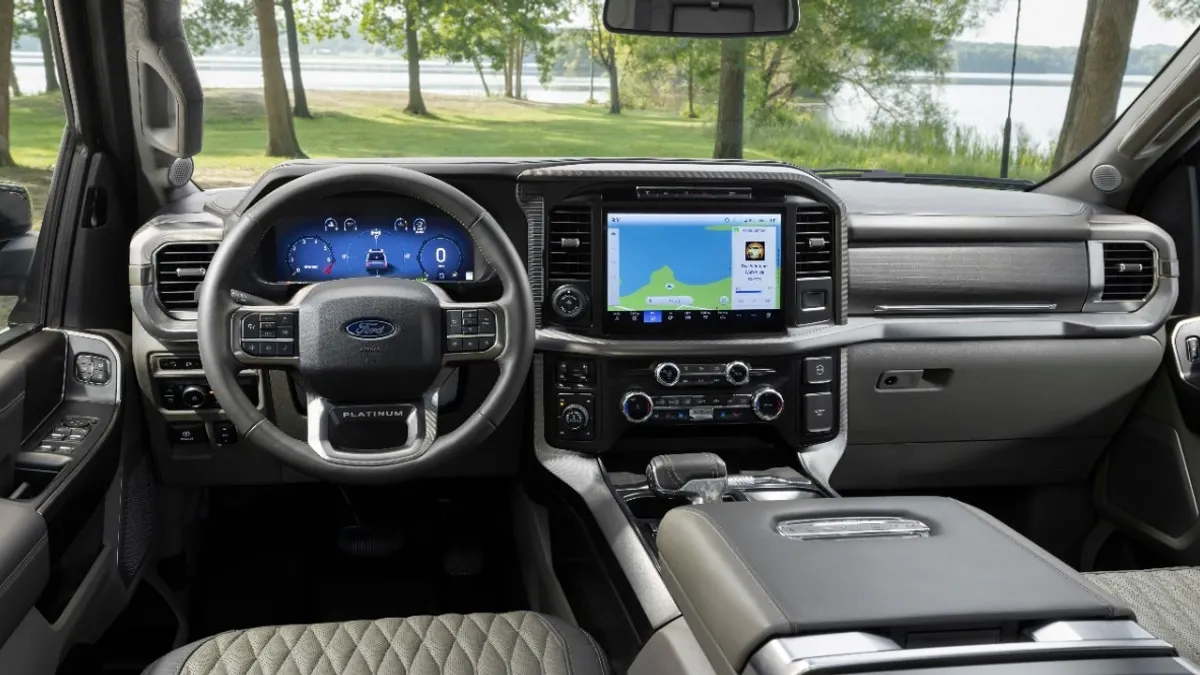
Some shoppers buy cars that they think reflect their personalities (ranging from a Ford F-150 full-size pickup truck to a tiny Mazda MX-5 Miata two-seater).
Others on a budget will buy just about anything as long as the price is right. It’s called basic transportation. A so-called “me” vehicle isn’t for them.
It is for Skerske.
He drives a Volkswagen GTI, a sporty pocket rocket. “My purchase was personality-driven,” he said.