Dive Brief:
- Stellantis announced a strategic initiative with technology consulting firm Accenture to advance the use of digital twin capabilities for the automaker’s assembly plants using Nvidia’s Omniverse development platform, per a May 18 press release.
- The project will tap Accenture’s physical AI and digital manufacturing expertise with the accelerated compute capabilities of Nvidia’s Omniverse to explore the development of a virtual manufacturing environment supported by real-time data from the automaker’s factories.
- “We are laying the foundation for the next generation of manufacturing at Stellantis,” said Francesco Ciancia, the automaker’s head of manufacturing, in a statement. “By combining digital twins, AI and advanced simulation, we are rethinking how we design, operate and continuously improve our production systems.”
Dive Insight:
The digital twin technology will allow Stellantis to evaluate and fine-tune vehicle manufacturing processes before deploying them to the physical machines on the factory floor.
The goal for Stellantis is to build a more adaptive and efficient manufacturing system that’s powered by AI and real-time data, per the release. The digital twin technology can also help the automaker identify potential assembly line bottlenecks in simulation and make changes to improve manufacturing efficiency.
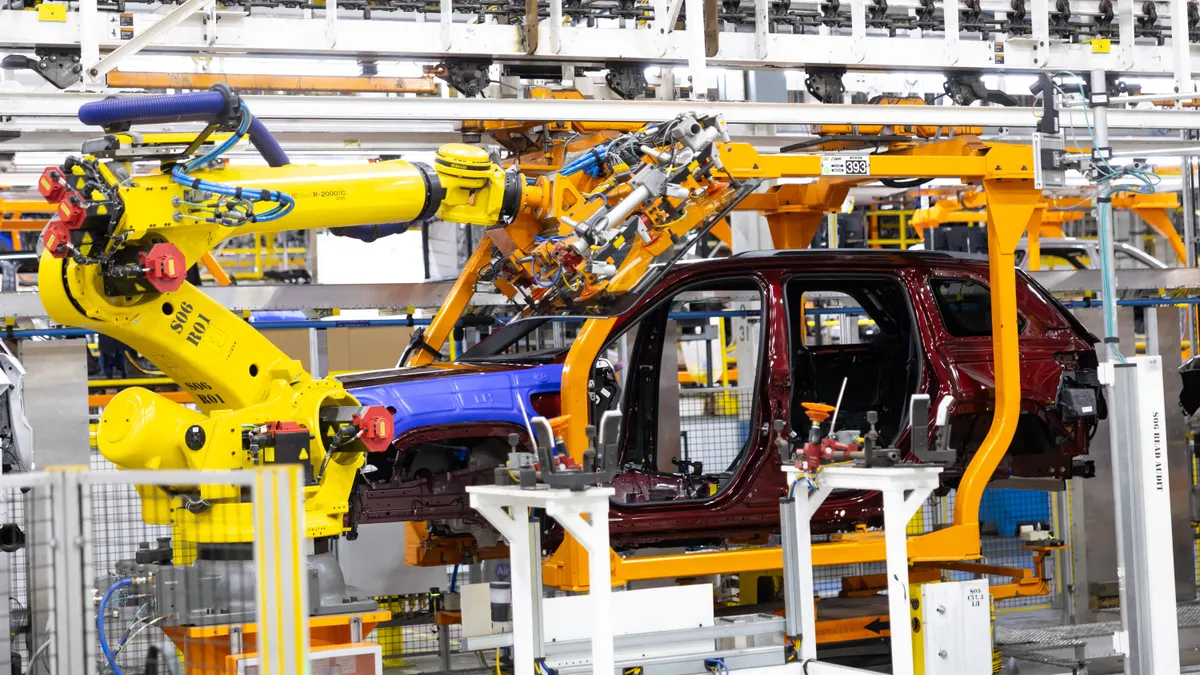
For example, if a robot welds a vehicle body component on the assembly line that’s deemed less than optimal, Stellantis engineers can fine-tune the operation using a digital twin. The automaker can test revisions and make changes in simulation, which will be mirrored by the physical robot on the factory floor.
Using real-time data from the automaker’s assembly lines, a digital twin model can evolve along with the physical machine it represents. The three companies will also explore how AI-integrated digital twins can enable closed-loop optimization, where both the virtual and physical manufacturing systems can improve over time, per the release. The AI-powered Omniverse platform also supports the training of robots, including those used for vehicle assembly.
“This initiative is designed to work hand in hand with our teams, enhancing their ability to anticipate issues, enabling faster decisions and continuous improvement,” said Ciancia.
The initial deployments of the digital twin technology are planned for select Stellantis plants in North America beginning this year. Looking ahead, the automaker aims to further support its broader vision of software-defined manufacturing, enabling faster innovation cycles and greater flexibility, according to the release.
“The opportunity in manufacturing today is to scale AI across complex industrial operations in ways that deliver measurable business value,” said Tracey Countryman, supply chain and engineering global lead at Accenture, in a statement.
Nvidia’s Omniverse is built on the Universal Scene Description open-source 3D framework originally developed by Pixar Animation Studios.
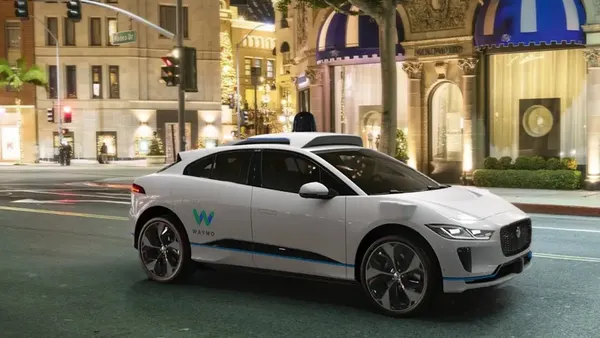
Outside of vehicle production, the Omniverse platform is also widely used for autonomous driving simulation. Rather than traveling millions of road miles to train perception models, developers can feed vehicle sensor data collected from real-world environments into Omniverse models, such as camera images, lidar or radar data, to evaluate how a autonomous vehicle may react to an unexpected road situation within the safe confines of a virtual world.
General Motors announced a similar partnership with Nvidia in March 2025 to utilize the Omniverse platform to create digital twins of its factories. Among the other projects the two companies are exploring is the use of Nvidia’s Drive AGX platform for the development of autonomous driving technology, vehicle hardware and AI-powered in-cabin experiences.