

As two industrial giants join forces in developing artificial intelligence across production processes to customer experience solutions, they must recognize the importance of staff training.
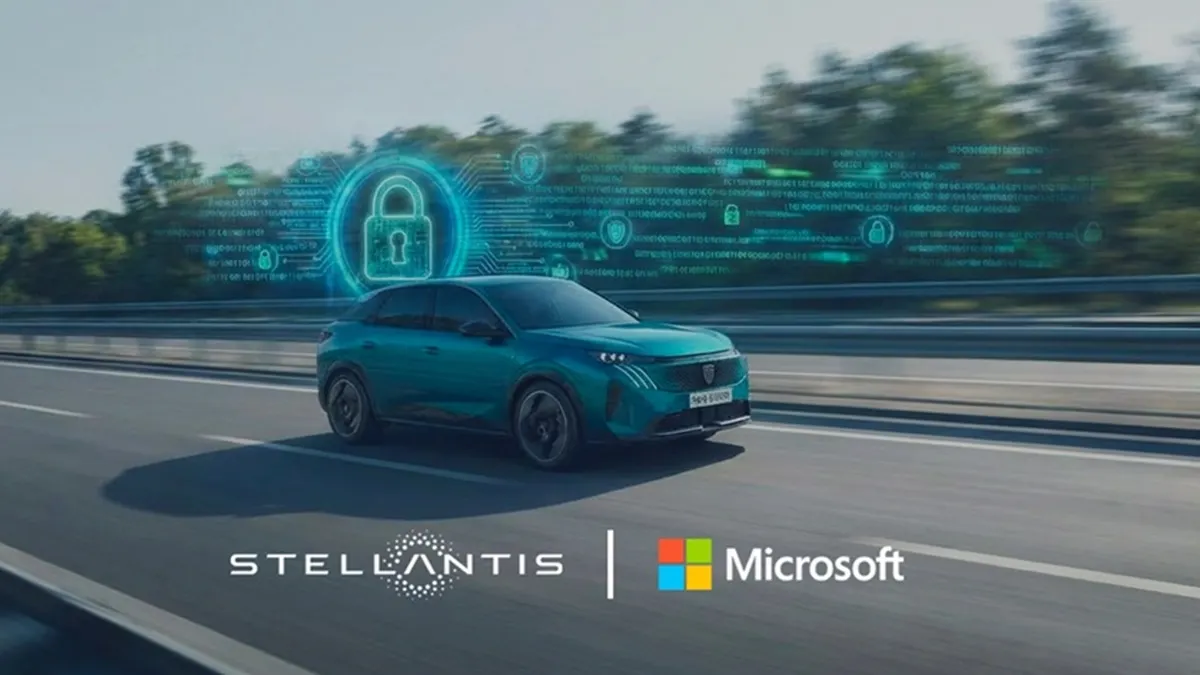
In an April 16 release, Stellantis announced a five-year strategic partnership with Microsoft to accelerate its digital capabilities through the use of AI.
The move has been welcomed by auto industry analysts as a way of grabbing the technological initiative in an ever-increasing competitive landscape.
In an emailed response to a WardsAuto enquiry, Third Bridge senior analyst Orwa Mohamad said Stellantis’s partnership could help it compete on a more level playing field with rapidly emerging auto brands out of China.
“Stellantis currently faces a significant competitiveness gap against Chinese OEMs, with our experts estimating a 20–25% disadvantage in total landed costs and a notable lag in software and infotainment capabilities,” he said.
“Experts say this gap cannot be solved through internal engineering alone. The partnership with Microsoft is aimed at accelerating its transition toward a software-defined vehicle model,” added Mohamad.
However, the importance of staff training to use the latest technologies is paramount to maintain levels of productivity, said Adam Ragozzino, Omdia’s principal analyst for batteries and electric powertrains.
He pointed to past observations in a Fortune article by economist about Robert Solow when studying the transformation of the workplace after the introduction of microprocessors in the 1960s. “Solow found that instead of the immediate boost in productivity that was heralded in the 1960s, what he found was a lag where productivity actually slowed down while people learned how to deal with the overflow of information produced,” Ragozzino said.
When approached for more details about Stellantis’s approach to staff training in AI, a spokesperson said its potential programs are at an early stage and more details may be released further into the partnership with Microsoft.
“Our training approach is embedded into everyday work rather than structured as a separate academy,” said the spokesperson. “We’ve developed a dedicated internal upskilling and reskilling program with multiple levels, starting from the basics of Copilot and AI tools and progressing to more advanced skills such as effective prompting and the use of enterprise AI capabilities in real business scenarios.”
This training program will be rolled out globally throughout the auto group to help employees apply AI to their roles within a secure enterprise framework, the spokesperson said, adding: “This is complemented by strong peer learning, with internal collaboration spaces and informal knowledge‑sharing moments that encourage the exchange of best practices and continuous learning across teams.”