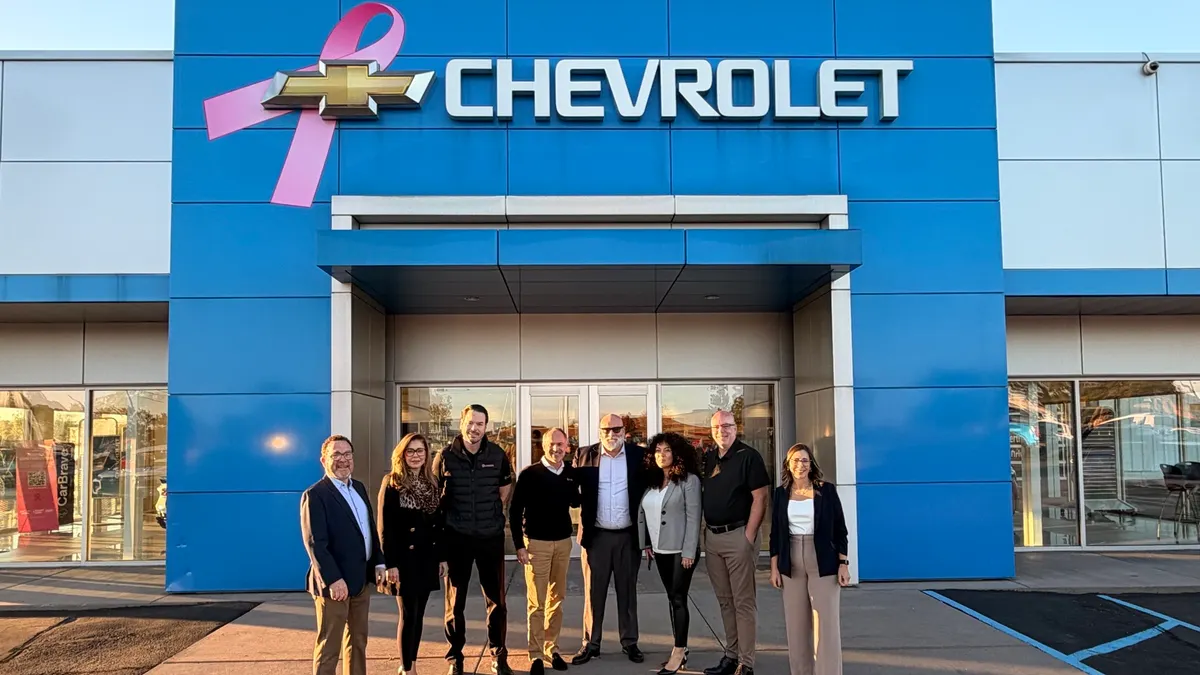
Groupe Olivier just bought its first dealerships in the United States, and they won’t be the last, Jacques Olivier, president of the Quebec-based dealership group told WardsAuto on a Zoom call.
But before it grows more here, Groupe Olivier will take time to understand the U.S. business environment, he said.
“From now to the next six to 12 months, we won’t purchase anything in the States,” Olivier said. “We want to make sure that we understand all the dynamics we can put into place, and the market and the way of doing business in the States.”
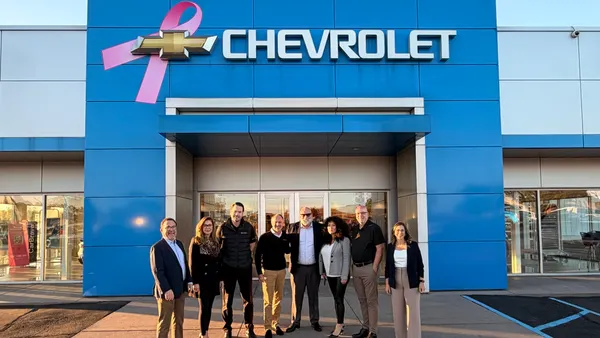
Groupe Olivier on Oct. 19 acquired Greg Bell Chevrolet Cadillac and Bell Ford Lincoln in Adrian, Michigan, as well as Knapp Chevrolet in nearby Blissfield.
All were previously owned by Matt and Laura Bell. Besides being the group’s first U.S. stores, the Chevrolet and Cadillac stores are also the first General Motors dealerships Groupe Olivier has acquired.
With the addition of these three stores, Groupe Olivier now has 26 rooftops. The majority (21) are spread across the province of Quebec, Canada. While Olivier acknowledged acquiring the Michigan stores would help diversify its portfolio, he said it was not the major reason.
Instead, he pointed to other opportunities he saw in the deal: bolstering the group's used car sales, the allure of volume brands in a large U.S. market, and the possibility for a cash return on the real estate investment.
Used car opportunity
A huge draw for the Canada-based group was the opportunity to sell more used cars at the U.S. dealerships, thus boosting new car sales at its Canadian stores, Olivier said.
The exchange rate means that used (and new) cars are more expensive in the U.S. than in Canada, he explained. Meanwhile, used vehicles on the road in Canada that were manufactured in the U.S. — including all Ford F-150 pickups — can be imported tariff-free back into the U.S.
That allows Groupe Olivier to offer better trade-in prices at its Canada dealerships, thus giving a boost to new sales, Olivier said. Those trade-ins can be brought to the U.S. and sold for a profit while still being lower priced than units sourced in the U.S.
“Car dealers like me are always based on volume,” he said. “It means that you can have one of the lower prices in the market [for used vehicles], and you can turn them faster.”
If Groupe Olivier succeeds at developing a strong used car business at its three U.S. stores, “that will help our retail also in the Canadian side because we will be chasing all the time the opportunity to get more vehicles, so that means that we’re going to pay a little bit more at the door,” Olivier said.
The group understands used sales well — it sells about 11,000 used units annually versus around 9,000 new, he added.
And while Chevrolet and Cadillac are its first GM brands, Groupe Olivier knows the Ford brand well because a Ford store was the first dealership Olivier acquired, in 2005.
“I know what to do to put more F-150’s on the road,” he said.
The sale-leaseback card for real estate
In the case of the Michigan stores, Groupe Oliver acquired the real estate then sold the property to a U.S.-based real estate investment trust, or REIT, then leased the property back. Olivier declined to say which REIT.
Many large dealership groups use this type of sale-leaseback arrangement to free up cash for operations or future acquisitions.
For Groupe Olivier, “every deal we approach, we call it a flip,” Olivier said, adding it is interesting to explore how much cash a sale-leaseback arrangement could generate. “So, we’re trying to see if we flip the real estate part, how much are we going to generate?"
If the return is good enough, “we do it,” he said. “When its not, we keep the real estate.”
The group aims to grow to 40 rooftops by 2030, compared to its current 26. Of those 40 rooftops, he said, perhaps 10 will be in the U.S. All are likely to be volume brands, however.
All of Groupe Olivier’s franchises – with the exception of the just-acquired Cadillac and Lincoln – are volume brands. That is by design, Olivier said.
If the group puts too much money into acquiring luxury brand franchises, that leaves less free capital to buy additional stores, Olivier explained.
“At the speed we want to grow, it will take too much of our capital on one store,” he said, “and perhaps I can buy two stores that will generate more EBITDA at the end of the day, and my return will be a lot better than if I just purchased the Mercedes store, where I will have to pay top dollar to get it.”
A deal that was long in the works
The deal took nearly a year to close, Mike Funk, regional director, Midwest USA at M&A advisory firm DSMA, told Wards Auto on a Zoom call.
DSMA, which is headquartered in Canada, represented both the seller and the buyer. Funk advised the Bell family; and Georges Theberge, an M&A associate with DSMA in Quebec, advised Groupe Olivier.
Funk said the number of details involved in a cross-border transaction drags out the time it takes to close. Some additional details to address include the currency difference, working with a Michigan law firm to set up a U.S. company, applying for visas and more, he said.
The U.S. offices of the manufacturers also asked for more information than was generally required when doing a buy-sell deal in Canada, Olivier said. For example, “in the case of GM, they did ask us for the numbers and results of all the stores we currently own,” he said.
They also asked for a copy of the lease, although Groupe Olivier had not yet acquired the franchises and signed a lease, he said.
However, despite the extensive time required to close a deal, he said acquiring U.S. dealerships is an attractive proposition to Canada-based firms for two reasons. For one, real estate costs are much higher in large Canadian cities, like Montreal, making U.S. storefronts more enticing. The other is the size of the U.S. market relative to Canada. The U.S. has a population of 343 million, more than eight times that of Canada’s 42 million.