Unifor, the union representing auto workers in Canada, is polling its members for possible strike action against Stellantis, hoping to force the company to reverse course on selling its idled Brampton site and offer guarantees on other Canadian operations, including the Windsor Assembly Plant.
Votes from a total of about 9,000 Unifor members at Brampton, including about 2,200 members on indefinite layoff, as well as workers at the Windsor plant and Etobicoke Casting Plant, are due on Oct.17-18, with results out Oct. 19. Unifor said in an Oct. 6 update that a positive vote could help breach an impasse in ongoing contract talks, with the union refusing Stellantis tying a pattern deal to its acceptance of Brampton’s closure and sale.
Unifor also claims it was worried about "broader job security of all union members and the future of Stellantis operations across Canada.”
Commenting on the vote, Unifor president Lana Payne and Stellantis master bargaining committee members James Stewart and Vito Beato said: “The ability to strike is an important part of collective bargaining and can help create the conditions for an agreement.”
At the launch of negotiations with Stellantis on Sept. 1 in Toronto, Stewart said that Brampton workers have “been living a nightmare — out of work for almost three years now.”
And tying the standoff to Trump administration tariffs, such as the threatened 50% tariff in Canadian autos from Jan. 1, Payne added: “We all know what is at stake here — an existential crisis for our auto industry. After all, the most powerful leader in the world has said he does not want us building cars, or trucks, or anything.”
Will strike vote succeed?
Any decision on whether to strike for a pattern deal without Unifor signing an agreement accepting Stellantis’ sale of the Brampton plant would need support from the 6,400 workers at Stellantis’ Windsor plant within the Unifor Local 444 branch. Those workers came off a two-week layoff on Oct. 5 and face further canceled production resulting in a three-week layoff starting Oct.19.
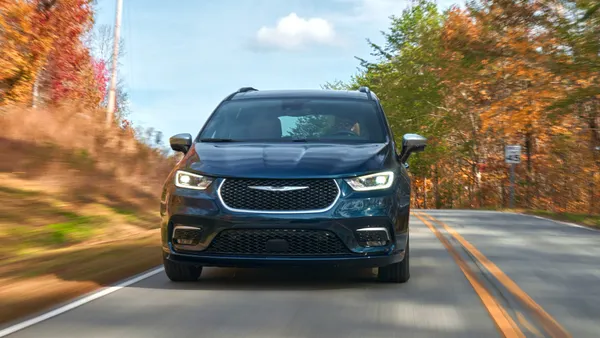
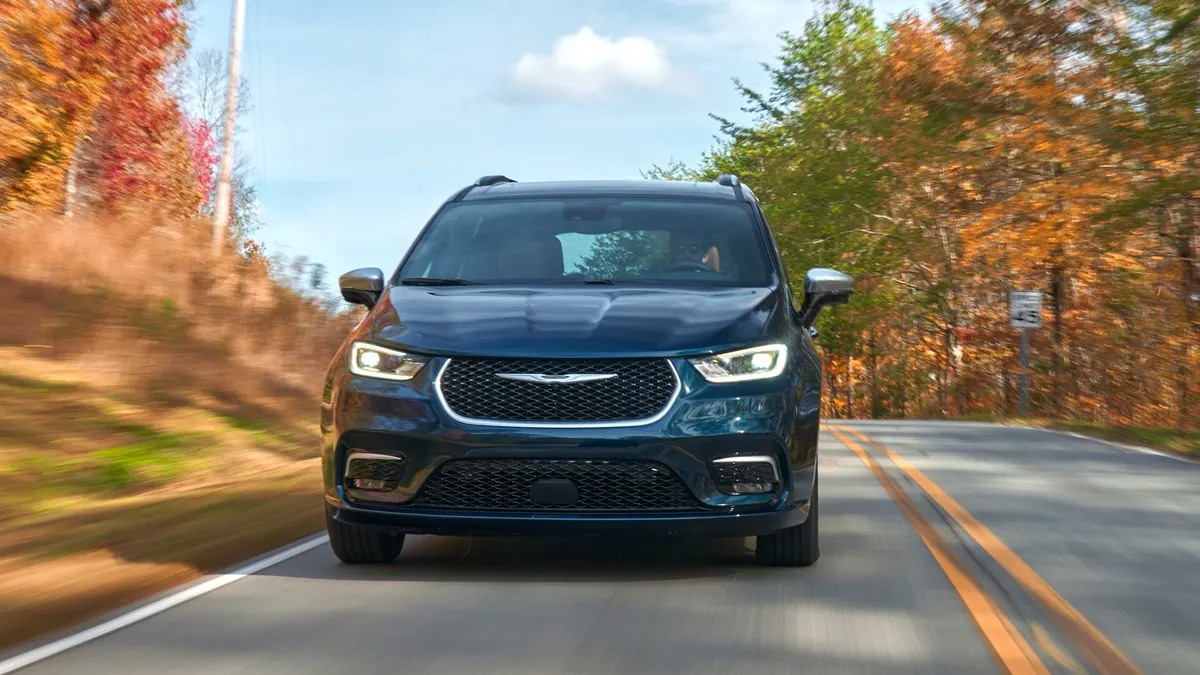
The company’s Windsor assembly plant is its North American home for minivan production, making the Pacifica and Pacifica Plug-In Hybrid, as well as the Grand Caravan for Canada. The layoffs come despite rising minivan sales. According to the Chrysler brand, Pacifica sales in the U.S. reached 101,611 units in Q1 through Q3 of 2026, up 13% year-over-year.
The Chrysler models remain Canada's best-selling minivan lineup, with 3,612 units sold in Q2, according to the company. Windsor also makes Dodge Charger muscle cars, which were up 22% in the U.S. in Q3 year-over-year.
Given such healthy volumes and the 50% tariff that President Trump has threatened for Canadian cars, trucks, auto parts and steel from Jan. 1, 2027, Windsor plant workers may be more focused on continuing production, said Ross McKenzie, former managing director of the Ontario-based Waterloo Centre for Automotive Research.
“The minivan segment is very popular across Canada and the United States currently,” McKenzie told WardsAuto.
“They’re more affordable than SUVs and pickups, easily switch between carrying multiple passengers and moving cargo in a dry, secure, enclosed space,” McKenzie added. “With the current high fuel prices, their fuel efficiency makes minivans cheaper to run.”
The Gordie Howe International Bridge, which opened in July, also gives Stellantis three infrastructure options to get its Windsor output into the U.S., alongside the 96-year-old Ambassador Bridge and the Michigan Central Railway Tunnel.
“Stellantis continues to evaluate and adjust its manufacturing operations in response to evolving market conditions, including consumer demand and the impact of tariffs.” the automaker told WardsAuto on Oct. 7.
And as for the Unifor strike vote, a Stellantis spokesperson said to WardsAuto: “Stellantis remains committed to bargaining in good faith and is prepared to continue discussions toward a negotiated agreement that recognizes the contributions of our employees while supporting the long-term competitiveness of our Canadian operations.”
Union must fight for members
Speaking to WardsAuto, Peter Sandor, a former Brampton plant production, process and operations manager, for more than 35 years, said there is a possibility Windsor workers will vote ‘no’ to a strike, and they are more numerous than laid-off Brampton workers.
If that happened, it might give the union more flexibility over accepting a closure deal, he argued.
“The union can point to the vote and say, ‘We did our best,’” said Sandor.
But the union has not given any indication of any flexibility over the proposed formal closure and sale to Canadian military vehicle manufacturer Roshel.
Sandor, now a professional author who has written about the Brampton plant, said the union needed to hold firm as long as it can.
“Unifor are looking after their people. They have to get them job security, wages and benefits,” he said. “If they say they are not going on strike, that means they are making an agreement with Windsor to sacrifice Brampton, that’s throwing one third of the people they represent to the curb. I don’t think Unifor has a choice but to fight it,” he added.
The company’s 2025 net revenues were down 2% year-over-year to 153.5 billion euros ($172 billion), with a net loss of 22.3 billion euros. Its 2025 annual report blamed resetting its product plan and EV supply chain, changes in warranty provision estimates and workforce reductions in Europe. CEO Antonio Filosa said the results were "the cost of over-estimating the pace of the energy transition" to EVs.
If Roshel buys Brampton, as per the unreleased memorandum of understanding struck between the two companies, Stellantis would look to tap proceeds from a defense utility vehicle contract with the Canadian government that could yield up to CA$5 billion.
Another factor: The value of the Brampton land
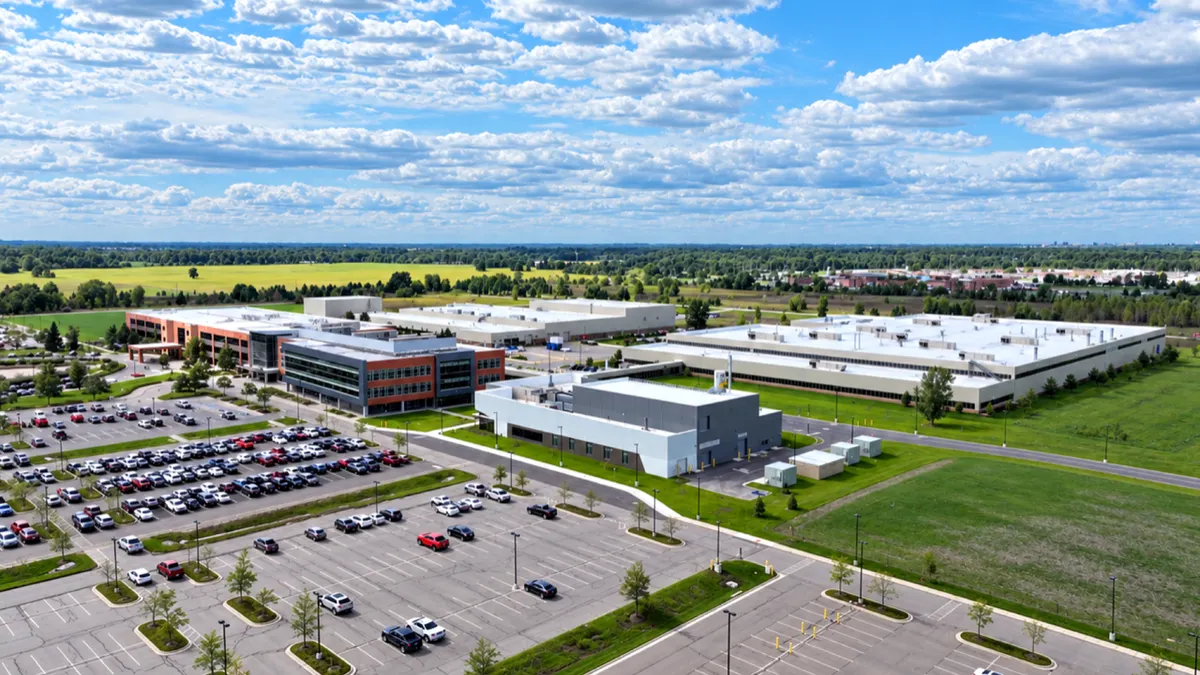
At 237 acres, the Branpton site is large, potentially allowing surplus land to be sold sale, including by Roshel, which might employ just 500 people and make three armored vehicles a day. There may be no need for the Brampton paint shop and extensive employee and new vehicle parking, said Sandor.
“The present plant size and lot size supports building 1,000 vehicles-a-day. If you are now only building three or four vehicles a day, you don’t need that capacity, and there is potential to sell off the excess land, Sandor said.”
The auto company sold 32 acres of the site for CA$80 million to the Dream Industrial Real Estate Investment Trust in January 2025. At that rate, a land sale of the entire remaining site might be worth about CA$590 million.
The Canadian government has also said it will demand the recovery of CA$222 million it paid Stellantis to retool the Brampton site for new Jeep production if the company abandons production there, as confirmed by industry minister Mélanie Joly in April.
Opposition to sale?
Flavio Volpe, president of the Automotive Parts Manufacturing Association, is one executive opposing the deal. He said via X: “Stellantis has four vehicles that it CAN put in Brampton. That's 500-1000 cars a day. It is choosing not to.”
While Volpe and Lana Payne are among the members of the Canadian federal government’s Advisory Committee on Canada – U.S. Economic Relations, will the Canadian government want to push hard for Stellantis to keep Brampton open?
McKenzie noted the challenge for the government to back a Roshel sale.
“Although the proposed purchaser of the Brampton plant would add military vehicle production, this could be realized only by sacrificing passenger vehicle production capacity,” he explained, and by paying back the retooling subsidy.