OTTAWA — The president of Canada's auto-sector union Unifor is optimistic the labor group will secure more wins amid contract talks with the Detroit 3 automakers, saying it remains important for all parties to play the long game amid industry turmoil.
Speaking after union workers on July 19 ratified a three-year new contract with Ford Motor Co., Lana Payne told WardsAuto she hoped the success bodes well as her attention turns to negotiations with GM and Stellantis. But, with the auto industry in turmoil, she knows it's far from guaranteed.
In an exclusive interview, Payne discussed the talks with Ford, what it means for union workers, and the roadmap it provides for the next set of negotiations. Here are some highlights from that conversation.
A 'comprehensive deal'

Payne told WardsAuto she welcomed the fact 74% of Unifor’s Ford members voted to back the deal, a significant increase from the 54% who backed the 2023 agreement.
The new agreement, which would last until September 2029, includes several significant provisions on pay and production investments. On pay, Unifor secured annual wage increases of 3%, amounting to just over a 9% pay increase over the term of the deal. The 2026-29 deal also includes commitments from Ford to not close or sell Canadian factories over the next three years, and invest $500 million (USD) into its Essex Engine Plant and $400 million into its Oakville assembly operation — both in Ontario.
“It's a comprehensive deal. If someone said we could — three months ago — achieve all of this, I wouldn't have foretold it,” Payne said.
That said, she stressed her union had been successful in creating its own leverage: “They have big product launches coming up. They wanted these launches to go smoothly. That's good for both of us to come out with a win.”
She stressed the experience of the Unifor negotiating team: “They know Ford. We have decent relations with Ford.”
And while there were “ups and downs, as in any bargaining,” Payne said she considered the deal “a strong agreement for good times” in the end. “And we are not in good times or even normal times.”
A shaky foundation for negotiations
Unifor is now preparing for talks with GM, hoping that automaker will forge a similar deal. However, both the union and automakers are negotiating on a shaky foundation, as tariffs and consumer demand shifts inject uncertainty into the equation. In turn, automakers have been actively reshaping their production footprint in Canada, at times backing out from previous commitments made to the government.
Unifor acknowledged the uncertainty in the materials it distributed to members while pushing for a “yes” vote.
“The ground is shifting in a big way and with North American trade talks held hostage by the White House, the future is as uncertain as ever,” a bargaining report said. “This is why we wasted little time getting to the bargaining table. Forecasts show an industrial crisis in this country potentially growing worse before getting better.”
Indeed, within a week of the Ford-Unifor deal, the Trump administration threatened to impose an additional 50% tariffs on many Canadian products, although not on Canadian vehicles and parts.
“They are not a dream set of circumstances. I don't sugarcoat these circumstances with our members, and the tariffs make everything more difficult,” Payne told WardsAuto.
A push for more production commitments
However, Payne said this collective pressure on the industry is part of what makes her optimistic GM and Stellantis will strike similar deals to Ford — with improved pay and investment commitments included.
“I remind the D3 these are a moment in time. We as a union must play the long game, and they should too,” Payne said. “They need to be producing market share in Canada [and] they do that by investing in the Canadian footprint.”
To illustrate the point, she pointed out Canadians buy around 2 million vehicles each year, saying: “We are an important part of their profit center.”
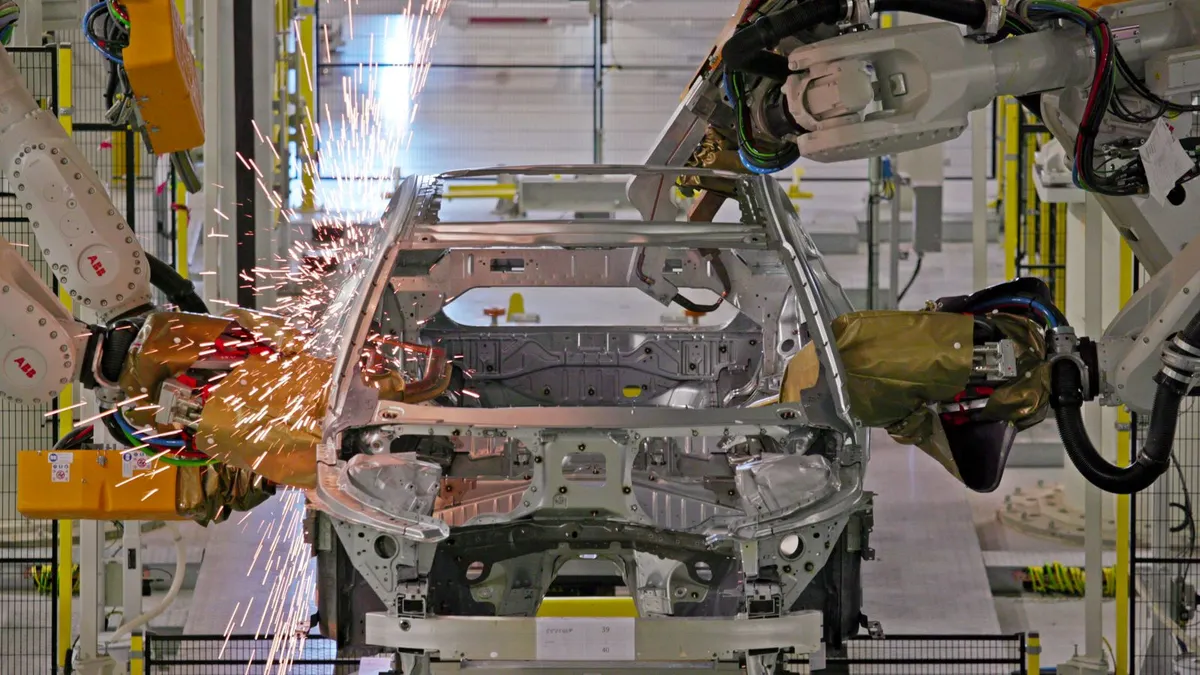
Payne also acknowledged the Detroit Three have a significant production footprint in Ontario, and that some are currently idled. Ford is retooling the Oakville facility to make Super Duty pickups, and renewed its commitment to that facility in the new contract. However, the future of General Motors' electric vehicle plant in Ingersoll and Stellantis' assembly operation in Brampton remains unclear.
“They are important facilities to these companies. They are a footprint that gives a competitive advantage for Ford, Stellantis and GM,” said Payne.
She hoped GM and Stellantis will use the pattern agreement to guide conversation on the technical and conditions part of the package, thereby creating more time to talk about issues such as idled plants, extended layoffs and the impact of the trade war. She added that the union had been a central part of earlier discussions with Ford that led to its current retooling at Oakville, even after the company had in 2024 shifted from earlier plans to build electric SUVs at the plant.
What can the government do?
Payne said the Canadian federal government could help the automotive industry more by backing auto companies making vehicles in the country — without necessarily imposing tariffs on exporters who do not.
She expressed concern over Canada’s agreement with China to import 49,000 EVs, saying it’s a problem that vehicles are imported into North America “by companies that don’t have a footprint in our countries.”
“Let's stop making it hard for companies who build in North America who want to be here,” she said, while proposing that companies making vehicles in Canada should “get preferential treatment if they are investing billions of dollars and employing workers” over companies exporting products into the country at a marginal tariff without supporting local supply chains or operating assembly plants.