The current U.S. automotive retail marketplace is like a split personality according to the latest market research from the buy-sell website CarGurus, whose release highlights outcomes found in its Q3 2025 Quarterly Review.
It suggested that, on one hand, price-conscious people on a budget are more inclined to buy high-mileage older used cars while, at the same time, big-spender premium buyers are eager for new product, according to Kevin Roberts, CarGurus’ director of economic and market intelligence, who told WardsAuto this is keeping the market strong.
“Certain groups are wealthy and happy to keep spending,” Roberts said. “For them, everything is great.”
Then there is a section of the U.S. population that is not feeling so buoyant and they are price-conscious people looking for older vehicles.
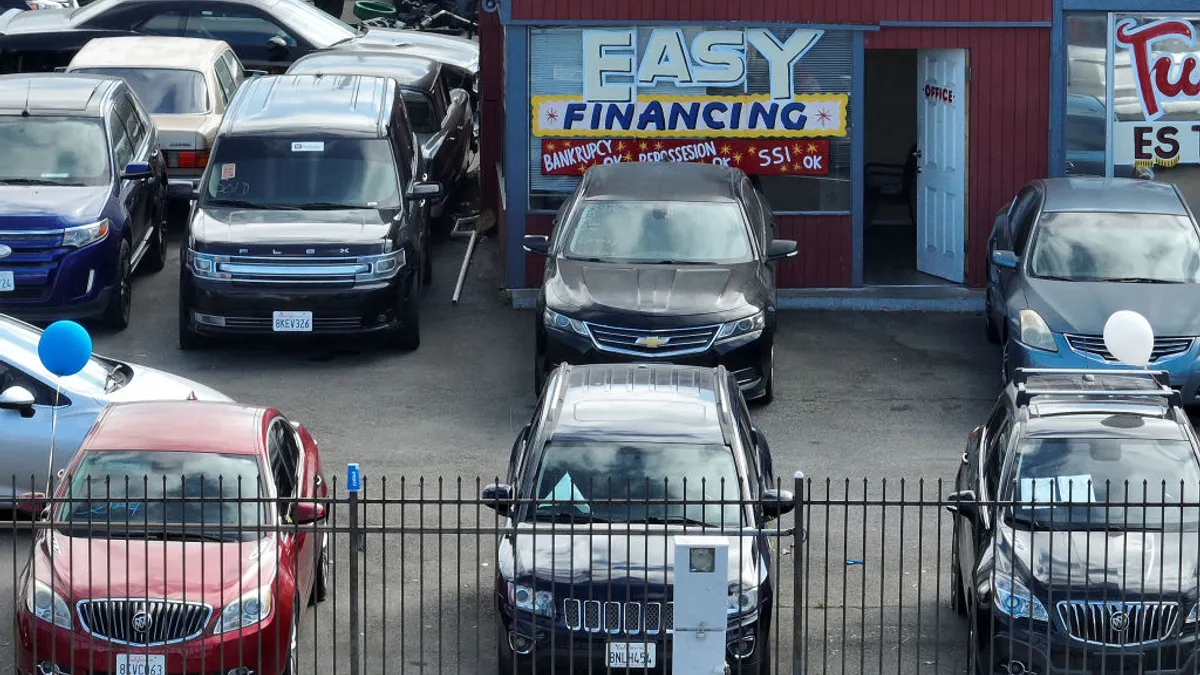
This buyer segment accounted for an increase of about 73% year-over-year, with under $30,000 sticker growth concentrated on vehicles aged seven years or older, according to the company’s release.
In September, nearly half of the listings in this price range were seven years or older, often priced around $13,000. They typically have six-figure miles on them and buyers increasingly accept the mileage to keep monthly payment in reach.
A big part of used-vehicle popularity is that today’s cars last longer, said Roberts. “Ten, 15 years ago, you wouldn’t see as big of a demand for older vehicles,” he added.
The automotive online marketplace iSeeCars latest study on the longest-lasting vehicles on today’s market. The base line for qualification had been 200,000 miles (320,000 km) on the odometer.
“But we had to up that to 250,000 miles (400,000 km) because so many cars were qualifying at the 200,000-mile mark, Karl Brauer, iSeeCars’ executive analyst, told WardsAuto.
S&P Global says the current average age of U.S. vehicles is 13 years, so a seven-year-old vehicle still is on the younger side.
“For used cars, the growth is really happening in under-$30,000 vehicles,” Roberts said. “Traditionally the used-car market concentrated on people looking for three-to-four-year-old vehicles. That was the sweet spot but, realistically, that’s the age group which is hardest to find right now.”
That’s primarily because auto production was hampered by the global computer chip shortage of the post-COVID era according the Association of European Vehicle Logistics (ECG). As a result, fewer new vehicles were built and sold back then and that affects the current used-car market.
Roberts advises dealers to keep an eye on what’s selling on their used-car lot. “Look to have a more diverse mix of vehicles than you might not have had in the past,” he said.
Here are highlights of the CarGurus’ latest automotive intelligence report:
- New-vehicle sales below $30,000 are under pressure because of a stock shortage in that segment. On the other end of the spectrum, new-vehicle luxury demand is up.
- Nearly 50% of the third quarter’s new-vehicle growth landed across models with prices between $70,000 and $90,000. That, of course, includes luxury brands but also many option-laden full-size pickup trucks.
Roberts also said sales were strong for cars priced $120,000 and above with European brands driving much of that upmarket volume.
On the electric-vehicle front, many consumers rushed to buy before EV federal tax credits ended last month.
Consequently, new EV sales jumped ahead, with a pronounced 47% quarter-over-quarter surge. For used EVs, gains occurred but were smaller.
Growth in the below $10,000 used-vehicle growth was driven by familiar and practical nameplates. Those include Toyota Corolla, Honda CR-V, Nissan Rogue, Chevrolet Equinox, Ford Escape, and Jeep Grand Cherokee. Many of these units carry 125,000 miles (200,000 km) or more and still turned in roughly 40 days, Roberts said.
Meanwhile the industry is keeping an eye out for tariff exposure, particularly in the luxury market, Roberts added.
Through summer into early fall, nearly 40% of luxury listings involved 2026 models and average list prices for those vehicles were about 5% above comparable 2025 models.
Consumers so far have been willing to pay that premium, Roberts said. “But if automakers pass through more tariff costs on imported vehicles and parts, that willingness could be tested.”