Dive Brief:
- Ford Motor Co. is rolling out its in-vehicle AI-powered assistant to 8 million more eligible vehicles, including for its luxury brand Lincoln, the automaker announced in an Aug. 10 blog post authored by Ford President of Integrated Services Mike Aragon Mike Aragon.
- The initial deployment of the AI assistant began earlier this year, and the automaker says it's now ramping up more broadly across other vehicle lines. It’s currently accessible via the Ford and Lincoln vehicle owner’s app, which is specific for each model.
- Ford said it's rolling out the technology to more vehicles gradually to help the company “learn, iterate, and quickly scale” the AI assistant to deliver the best user experience to customers.
Dive Insight:
With Ford’s AI Assistant, customers can immediately begin using it without having to know particulars such as the vehicle model year, powertrain and trim. The AI Assistant can quickly access information from the vehicle's owner’s manual without having to manually search for it.
Once the app is launched from a smartphone, customers can type a question or even upload an image to get an instant response. Users will see a “blue oval and spark icon” at the top right corner of the interface to launch the AI assistant.
Since the AI Assistant is tailored for each specific model, customers can ask detailed questions, such as what weight of oil the engine requires or how many bags of landscaping mulch can fit in the cargo area. The assistant can also help drivers understand vehicle features, including its BlueCruise hands-free highway driving, and receive instant, highly personalized responses, according to Aragon.
The AI assistant also serves as a live tool by connecting to a vehicle’s real-time telemetry via the app. It can analyze and provide guidance on current vehicle information such as tire pressure, fuel level or oil life remaining. Using location data, drivers can ask the Assistant if there is enough fuel remaining to make it to their destination.
Drivers can also receive step-by-step instructions for quick fixes, such as troubleshooting a power window or what specific instrument cluster warning lights mean. Ford says it will use feedback from customers via the app to help refine answer quality and improve the overall user experience.
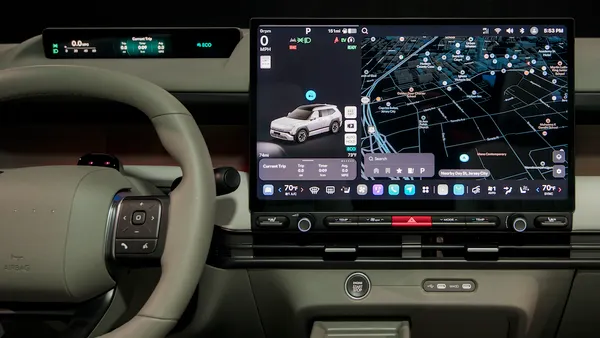
Ford plans to improve the technology further beginning in 2027 when the Ford and Lincoln AI Assistant will be embedded directly into the infotainment systems of select vehicles. Rather than mirroring a smartphone screen, the assistant will be tightly integrated into the driving experience, according to Aragon.
In the future, the embedded version of the Ford and Lincoln AI Assistant will layer in Ford data and services to build a custom experience for the vehicle.
In the meantime, Ford is rolling out upgrades to its current in-vehicle voice assistance, allowing customers to use Google’s Gemini as an alternative to Google Assistant for an even more natural conversation about their vehicle, according to Aragon. He said in the blog post to think of Gemini and Ford’s AI Assistant as “companion technologies” where Ford AI Assistant can help with vehicle-specific questions and Gemini can be used for more general help, like adjusting the cabin temperature.