Honda Canada’s May 14 announcement that it is indefinitely suspending work on building a 15 billion Canadian dollar ($10.8 billion) EV and battery plant in Alliston, Ontario has prompted questions from analysts and policy-makers about whether the value of Canada’s CA$52 billion or more in pledged or paid government EV industry subsidies will be realized.
These subsidies were paid by the federal, Ontario and Québec provincial governments into companies promising to build battery, battery component and related materials plants, especially during 2023 and 2024, the Office of the Parliamentary Budget Officer in Ottawa has reported.
But beneficiary companies have not yet built the comprehensive, minerals-to-autos, end-to-end EV supply chain envisaged by government officials providing support. Consider the following:
- Stellantis announced in February 2026 that it was selling its stake in the CA$5 billion NextStar Energy battery plant in Windsor, Ontario, to joint venture partner LG Energy Solution — as part of a $26 billion write-down over EVs.
- The Québec government terminated a deal with Sweden’s Northvolt in September 2025, halting work on a planned CA$7 billion EV battery plant near Montréal following the company's bankruptcy.
- Honda said that its indefinite suspension of the “Canadian value chain investment project” in Alliston, Ontario, for making EVs and batteries, is “in response to evolving business conditions, a change in external resource strategy and shifting customer demand” — while calling the suspension “appropriate at this stage.”
An industrial policy mistake, or smart for the future?
Economic analysts have raised skepticism about Canada’s industrial policy, given the investment shifts.
An Organization for Economic Co-operation and Development analysis released in March 2026 concluded that the "ambition to scale-up battery production and broader electric-vehicle (EV) manufacturing faces steeper headwinds” — than for biogas or carbon-capture-and-storage equipment, among alternatives. Canada’s share of global EV and battery exports, it said, is lower than its overall share of worldwide exports.
The OECD added that while Canada has unexploited critical mineral reserves and a strong automotive manufacturing sector, technological development and market competition posed formidable challenges.
“Its success, far from certain, will require a sustained, strategic industrial policy approach and substantial investment at each step of the development,” warned the OECD.
A September 2025 paper from Ottawa-based think tank, the Macdonald-Laurier Institute, warned the failure to create a sustainable EV market within Canada — versus, for instance, what Norway has done, has left subsidies without a local market foundation. “Canada's EV strategy risks becoming a case study in how not to do industrial policy,” it said.
Range anxiety, a lack of recharging facilities, and cost have trimmed sales in Canada, noted S&P Global. When federal and provincial purchase incentives were paused in 2025, EV sales dropped from 18.3% to 8.7% of new car registrations, compared to 95.9% in Norway for 2025.
However, speaking to WardsAuto, Vic Fedeli, Ontario’s minister of economic development, job creation and trade, stressed an end-to-end, critical-mineral-to-EV supply chain in the province was being established, even if demand for EVs, while growing, had not hit the “astronomical growth of before.”
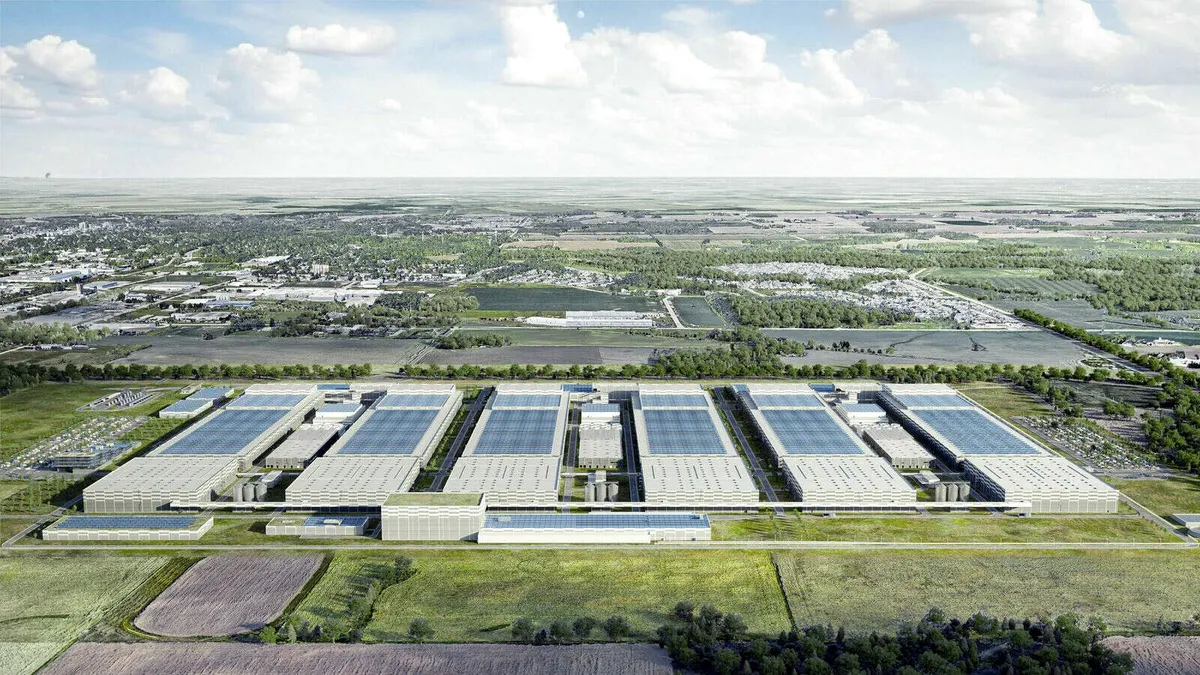
Fedeli cited the CA$3.2 billion investment by Norway’s Vianode into building a synthetic graphite production facility in St. Thomas, Ontario, with a CA$670 million loan from the Ontario government. Meanwhile, construction continues at the Volkswagen Group and PowerCo battery plant, also in St. Thomas, with potential production volume of up to 1 million batteries annually.
“It's a massive active construction site,” Fedeli said.
Further, Asahi Kasei will continue to build a CA$1.56-billion Honda-partnered battery separator plant in Port Colborne, Ontario, while the Ontario government offers a CA$500 million Critical Minerals Processing Fund to processors of lithium, cobalt and nickel and other key battery minerals, stressed the minister.
Will there be a market to support the supply chain?
Brian Kingston, president and CEO of the Canadian Vehicle Manufacturers' Association, a trade group representing Ford Motor Company of Canada, General Motors of Canada, and Stellantis, said a better recharging network was needed to boost demand, and improve customer experience.
“Charging takes more time, so you have to have charging places near services instead of having them in parking lots near big-box stores,” said Kingston. "That's not much fun when it's minus 20 in February.”
Kingston welcomed how the Ontario government has looked at installing charging points at ONroute plazas on highways, and at the federal government's commitment to build a national EV charging network, investing CA$1.5 billion through the Canada Infrastructure Bank.
Should that happen and charging prices become competitive with gas prices, demand may rise. But for now, Kingston assessed that “mass adoption is not on the horizon.”
That said, hybrid sales are increasing in Canada, with non-plug-in hybrid vehicle sales growing by 61,000 from 2024 to 2025, compared to growth of 33,000 from 2023 to 2024.
Hybrids, said Fedeli, will be a key element of expanding Canadian demand for auto batteries made in Ontario, giving consumers not wanting to buy full EVs "some comfort” over range and recharging.
Recently retired Global Automakers of Canada President and CEO David Adams said where battery manufacturing and supply plant projects had been mothballed, preparatory work was not a waste. “If you have already got some construction done and all the [administrative and regulatory] approvals out of the way, if you have contractors and suppliers who are in position, it's easier than starting from scratch.”
That includes when, as with LG, battery plants also produce stationary energy storage batteries.
And he stressed that upstream critical mineral projects are still making headway. For example, a commercial electrochemical lithium refining facility was opened in Delta, British Columbia, by Mangrove Lithium in April 2026, with the company promised federal public investment of up to CA$21.9 million.
But Adams said a robust North American EV market is needed to underpin supply chain projects, stressing the expense of exporting heavy and chemically volatile batteries overseas.
Given the importance of the U.S. market for Canadian EV batteries and materials, the “about-face turn” by the Trump administration from EV subsidies and tax benefits, plus soft American demand means that “it is difficult for Canadian manufacturers’ to make major EV supply chain investments,” Adams added.
Despite a dampening of the market compounded by American tariffs and the loss of government consumer subsidies have dampened EV markets, Kingston remains “bullish” about Canada’s end-to-end EV supply chain prospects and its overarching strategy, given its mineral endowment good for battery-making. The strategy “is correct but it will take longer,” he said.