Dive Brief:
- Unifor, which is Canada's largest private-sector union and represents autoworkers at Detroit Three manufacturing plants in Canada, has announced a tentative three-year labor agreement with General Motors covering roughly 4,600 hourly workers across four plants, according to an Aug. 22 press release.
- The tentative deal covers workers at GM’s Oshawa Assembly, CAMI Assembly, St. Catharines Propulsion Plant and Woodstock Parts Distribution Center.
- “We entered this round of talks in the midst of tariff uncertainty and relentless U.S. trade aggression,” said Unifor GM Master Bargaining Chairperson Trevor Longpre in a statement. “Thanks to the hard work of every member of our negotiating team, we emerged with a deal that secures the pattern set by our union with Ford.”
Dive Insight:
Negotiations between Unifor and GM began on Aug. 10, and the new labor agreement has been fully endorsed by the Unifor General Motors Master Bargaining Committee, the union said. Additional details of the deal will be released to members at ratification meetings scheduled for Aug. 29-30.
“Our bargaining committee worked diligently to reach these agreements, which deliver strong income and benefit gains, amid some of the most challenging times in our history,” Unifor National President Lana Payne said in a statement.
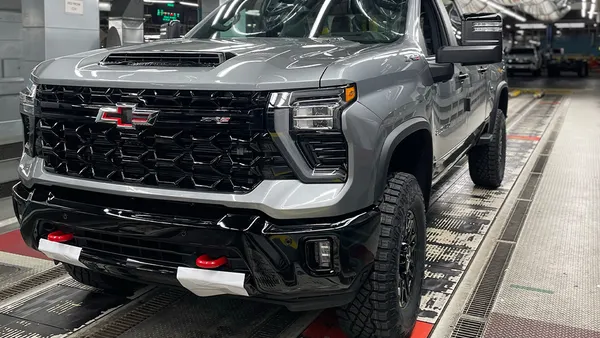
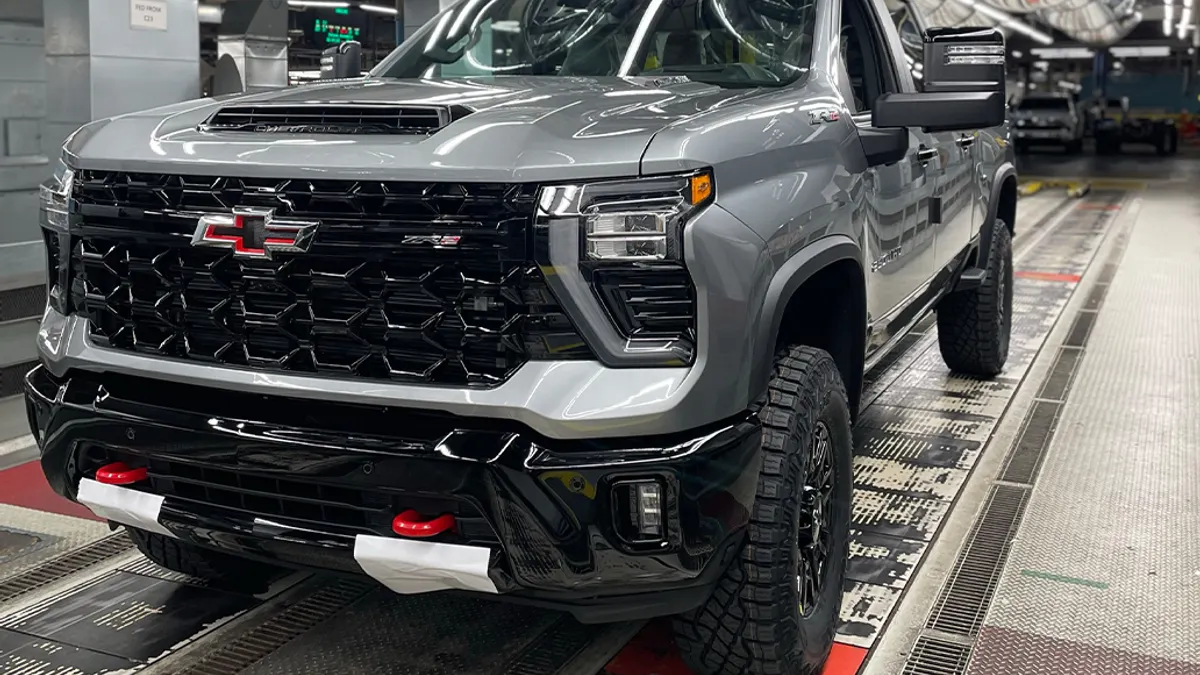
GM’s Oshawa Assembly plant currently builds the Chevrolet Silverado light and heavy-duty pickups on two shifts. It’s the company’s only North American facility producing both models on the same line, the automaker said in February.
In Unifor’s first round of negotiations with Ford last month, the union secured annual wage increases of 3% for workers in Canada over the next three years. It also includes commitments by the U.S. automaker not to close or sell any Canadian plants in the next three years. Ford also agreed to invest $500 million into its Essex Engine Plant and $400 million into its Oakville assembly plant to produce Super Duty F-Series trucks. Both plants are located in Ontario.
Unifor will now begin labor negotiations with Stellantis as its current three-year agreement is due to expire on Sept 20.
However, in an Aug. 14 bargaining update, Unifor said that Stellantis informed the union of its intent to open discussions with another firm about the potential sale of its Brampton Assembly Plant in Ontario. Around 2,200 Unifor members previously employed at the factory have been on layoff since the plant was idled in December 2023, to retool for the production of the Jeep Compass electric SUV, which has since been delayed due to slowing EV demand.
In October 2025, Stellantis announced that future production of the Jeep Compass would be relocated to the U.S. as part of a $13 billion manufacturing investment, idling the Brampton plant indefinitely. The plans may impact the union’s negotiations between Unifor and Stellantis.
Unifor said under the terms of its collective agreement, the automaker must provide no less than one-year’s notice of any plant closure or sale in Canada.
Unifor’s initial negotiations with the Detroit Three have also been clouded by tariff threats and trade tensions with the U.S., which have prompted some automakers to reassess their previous manufacturing commitments in Canada.
A week after the Ford-Unifor deal was reached, the Trump administration threatened to impose an additional 50% tariffs on many Canadian products. Those tariffs went into effect on Saturday after the two sides failed to reach an agreement, then on Monday Trump vowed a new round — to install a 50% tariff on cars, trucks, auto parts, and steel imports starting Jan. 1, 2027.
In a statement released on Aug. 22, Canada Prime Minister Mark Carney said that the country would “match those tariffs dollar for dollar” and introduce additional measures in the coming days. He said that retaliatory tariffs would go into effect on Sept. 8, although he did not say what the duty rates would be.