

In-cabin artificial intelligence agents will become among the most powerful attractions for car buyers but could also expose automakers to risks of dependency on third-party providers.
That’s the view of automotive connectivity software supplier Cubic3’s vice president of data and AI, Steven Cochrane, who spoke to WardsAuto about the opportunities and challenges that AI agents will present to the auto industry.
For the consumer, the use of AI agents can only be a good thing with its ability to liberate the downtime they will be spending in what for many is the third space of today’s lifestyle, Cochrane said.
“So, the expectation is there that people want to do more while driving,” he said. “The big challenge then that represents for me is the interface.”
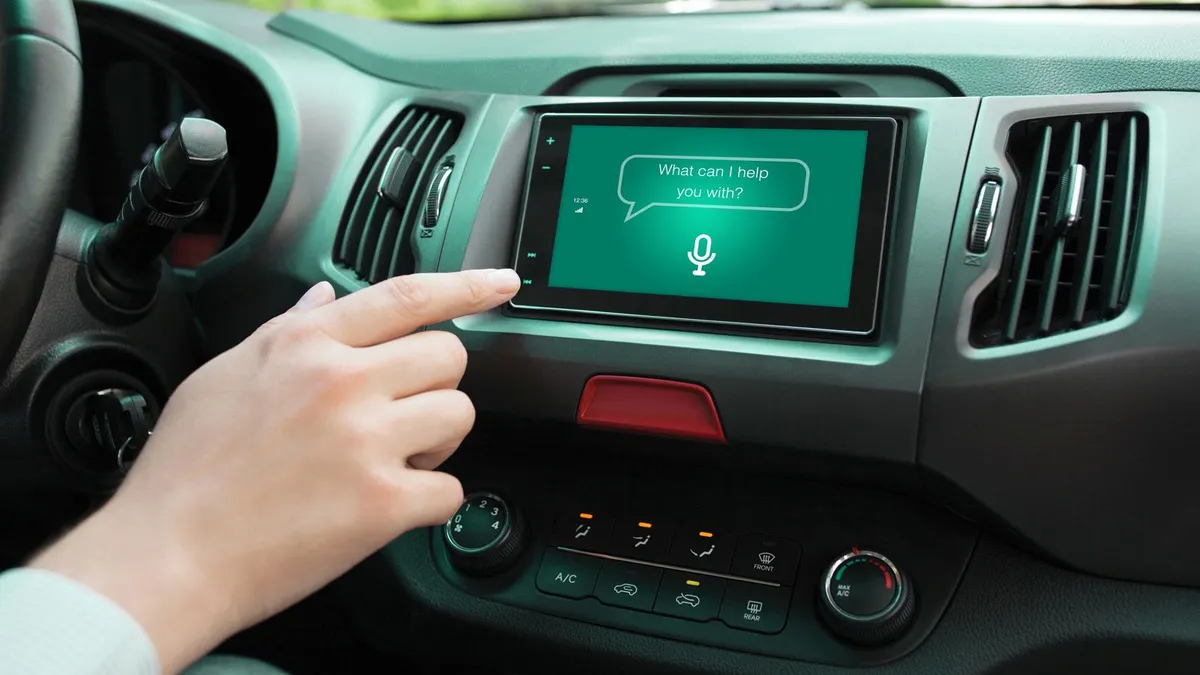
At present, with autonomous driving in its infancy, the interface must be through voice instructions, he said. “But the interface has to be really clean and simple because it's voice,” Cochrane explained.
He believes this will be through having a conversation with the AI agent about what the driver, or other cabin occupants, want from the vehicle’s services.
One such example of that is Cerence’s AI-powered chatbot, shown to WardsAuto at the IAA Mobility 2025 auto show.
But productivity is the goal, not just conversation, Cochrane said, pointing to Microsoft’s investment into in-car productivity suites to help vehicle occupants make the most of the time spent on a journey, essentially creating an office environment.
Even personal and family activities can benefit from a powerful AI agent, said Cochrane.
“I need to order flowers to my wife for a wedding anniversary, or I want to book a restaurant,” he said. “People want to be able to have a requirement, interact through voice and get it done, not just getting a list of restaurants in a 5-km radius.”
With people becoming used to having AI enhance their lives at home, they are now demanding it in their cars, said Cochrane.
He highlighted ABI Research’s estimate that AI-driven occupation of the cabin will rise from 5 million vehicles today to 70 million by 2035.
However, the challenge for automakers is getting the technology working the way consumers require, Cochrane said.
“The capability now needs to catch up, so that consumers aren't left disappointed and, most importantly, not tempted to pick up the phone,” he added.
Dependency, latency, and the cloud
Another, possibly more thorny, challenge facing automakers is the potential dependency risks they will face when connecting AI agents to external digital ecosystems.
According to Cochrane, the automakers, who currently have complete control over the cockpit, will have to cede control to third-party operators when the control goes off into the internet.
“So now you've broken out beyond your controllable environment,” said Cochrane. “You're now dependent on the connectivity quality (and) the latency and speed of your connection, which then makes you dependent on the mobile network operator and dependent, ultimately, on where that cloud service is residing,” he explained.
This means automakers would have to negotiate fragmented distribution architecture, and that creates potential fragility and failure points, said Cochrane.
To offset these risks, a robust mobile network connection is vital and must be able to cross borders seamlessly, especially in the multi-nation continents such as Europe.
This is only achievable with strong partnerships, said Cochrane. “So, again it's about partnerships, and it's how do you build resilience into these interconnected services?”
The need for strong partnerships between automakers and network providers and other interested parties is a perennial topic covered at the annual Mobile World Congress in Barcelona, said Cochrane.
“No one can possibly own the whole ecosystem across what's in the vehicle, in the network and in the cloud,” he said.
Cochrane believes partnerships backed by industry standards are the only safe and commercial way forward for the technology to ensure a frictionless delivery to consumers.
“Standards generate openness, which then accelerates innovation,” he said. “But doing it is very difficult.”