Editor’s note: John McElroy is the president of BlueSky Productions, which produces Autoline Daily, and a longtime opinion columnist for WardsAuto. Views expressed here are his own.
It’s a topic they really don’t want to talk about. Automakers have seen their warranty and recall costs explode over the last decade. It’s a global issue, affecting all automakers in the U.S., Europe and Asia, and it looks like it’s getting worse.
Based on information gleaned from their 10-K and 20-F financial reports, twelve of the top global automakers spent over $67 billion on warranty and recalls last year. According to a 2024 report by Warranty Week, automakers worldwide set aside $140 billion in warranty reserves for 2023 alone.
Those numbers correlate with U.S. data that the National Auto Dealers Association collect collects every year on the amount of warranty and recall work dealers perform. In 2025, U.S. dealers billed automakers more than $30 billion in warranty work.
The impact on earnings is profound. Warranty claims now account for 3% to 4% of total revenue of most OEMs. That is money that isn't going into developing solid-state batteries, autonomous software, or next-generation electronic architectures. It’s money getting torched to correct past mistakes.
The complexity trap
So, what’s driving the spike? There doesn’t seem to be any one culprit, but the top suspect is complexity.
We are currently living through the most volatile engineering transition in a century. Automakers are trying to manage significant shifts simultaneously: the move to high-voltage EV powertrains, the use of digital-twins, the integration of massive software stacks, the move to zonal/centralized electronic architectures, and the rollout of advanced driver assistance systems.
At the same time, automakers are trying to slash the time it takes to develop new cars, and they’re building fewer physical prototypes to save time and money.
Take the EV transition. We were promised that EVs would be simpler because they have fewer moving parts. But in the U.S. alone, many major brands have recalled EVs and PHEVs due to battery defects and potential fires. While newer chemistries are mitigating this problem, when a battery cell fails, you don't just replace a spark plug, you swap out a $15,000 battery pack.
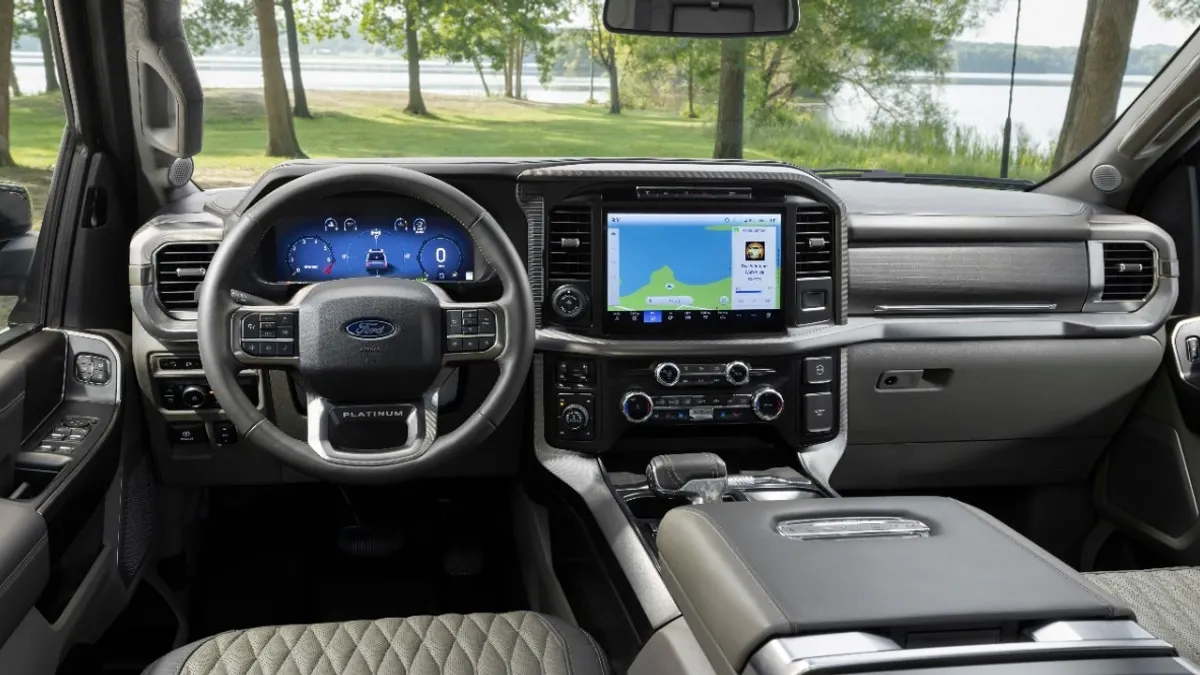
Then there’s the software. Today’s cars have about four times more lines of code than the most advanced F-35 fighter jet. Since the start of the year, Ford recalled millions of vehicles to fix software issues — a pace that would have been unthinkable a decade ago.
But it can’t all be blamed on new technology. Downsized engines, with tighter tolerances and thinner engine oils, have ushered in a spate of recalls in the U.S. involving millions of engines from a wide range of brands, including GM, Ford, Honda, Nissan and many others. And those recalls can be costly: GM’s V-8 engine failures cost between $10,000 and 12,000 apiece to replace, according to Automotive News.
OTA and AI to the rescue?
Automakers aren't sitting on their hands. They’re fighting back three powerful tools: over-the-air updates, “variation-aware” computer aided engineering, and predictive analytics.
Tesla blazed the way with over-the-air updates, showing that you can "fix" a recall while customers are sleeping at home. The rest of the industry is finally catching up. In 2025, we saw a record number of recalls resolved via software downloads rather than physical dealership visits. This is the ultimate cost-saver; a physical recall can cost hundreds of dollars per VIN, while an over-the-air fix costs pennies in server time.
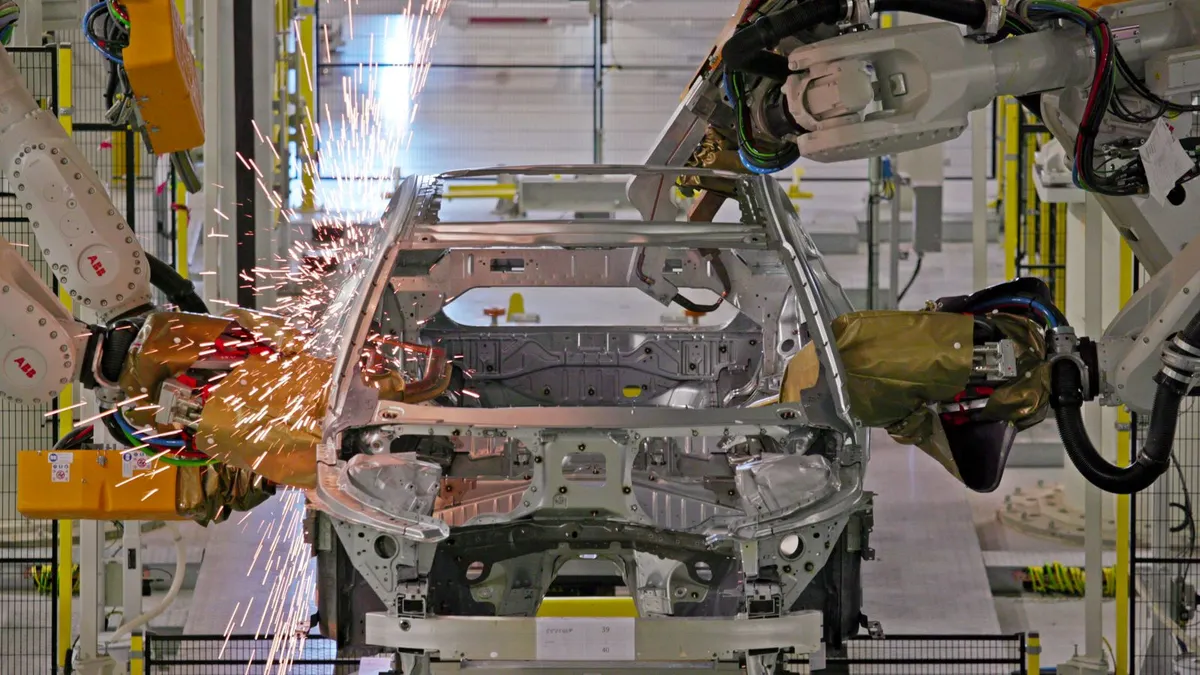
Automakers are also turning to computer aided engineering that doesn’t just evaluate how a design is expected to perform under perfect conditions. Instead, it’s “variation aware,” meaning it can take manufacturing variation, tolerance stack-ups, supplier variability, assembly conditions, and operating environments into account to evaluate a design. Predictive analytics can then estimate when a design will fail if it falls outside certain design parameters.
For vehicles that are already in the field, AI-driven predictive maintenance can identify component failures before they happen. If you can tell a customer to come in for a $50 sensor swap today, you can potentially avoid a $7,000 engine failure a few months from now.
The winners of the next decade won't be the ones with the biggest screens or the fastest 0 to 60 mph times. They’ll be the ones who can master the "un-sexy" art of software validation and hardware durability. And they’ll do it as a routine part of their new product development process. Because at the end of the day, a high-tech, software-defined vehicle that won't start is just a very expensive brick.