In response to the current slowdown in new-vehicle demand, Asbury Automotive Group is staying the course and continuing to invest in moves to become more efficient and profitable in the long run, even if the payoff is down the road.
“Overall, we believe any short-term headwinds are outweighed by the benefits to come,” Asbury CFO Michael Welch said in a first-quarter earnings conference call April 28.
Welch was speaking specifically about the benefits of switching to a new dealer management system — but the same could be said of other actions Asbury took in the first quarter of 2026.
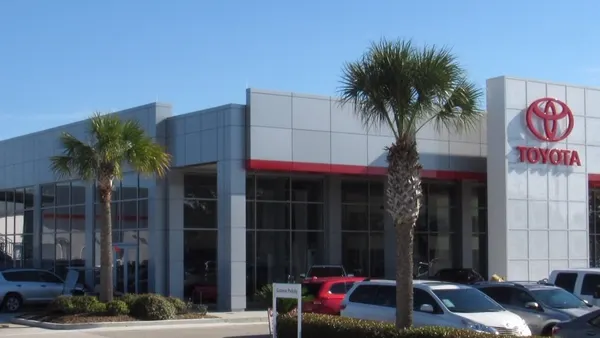
Asbury, based in the Atlanta metro area, sold off a total of 10 dealerships in Missouri, South Carolina and Indiana, and terminated another three dealerships in Massachusetts and Rhode Island. The latter group included an Infiniti franchise, plus Asbury’s only Alfa Romeo and Maserati franchises, Asbury reported. Asbury didn’t say so, but across the industry, all three brands tend to be underperforming brands.
Welch said the stores Asbury dropped in the first quarter generated an estimated annualized revenue of $625 million. Asbury said that as of March 31, the group still had 158 new-car dealerships. Selling the dealerships reduced capital expenditures and freed up money to be invested profitably somewhere else, the company said.
Overall, Asbury reported revenue of about $3.5 billion on a same-store basis in the first quarter, down 9% from the first quarter of 2025. Along with the rest of the industry, Asbury sales got a shot in the arm in the year-ago quarter as buyers tried to beat a deadline for new tariffs. That year-ago bump in sales made for a tougher comparison this year.
First-quarter 2026 net income was $187.8 million, an increase of 42% versus the first quarter of 2025. Adjusted net income, not counting items such as a one-time gain on divestitures of $94 million, was $102 million, down 24% from the year-ago quarter. Most of the gain on divestitures was spent on repurchasing shares, the company said.
Asbury has chosen Tekion to provide its DMS. It’s replacing CDK Global, which suffered a service outage due to a cybersecurity incident in parts of June and July 2024 which all but halted operations temporarily for many dealership groups, including Asbury.
To date, Asbury has more than 50% of its dealerships running on the Tekion Automotive Retail Cloud DMS and digital commerce platform, the company said.
Asbury reported $6.1 million in Tekion implementation expenses in the first quarter of 2026.
So far, Asbury’s experience shows it typically takes up to six months for dealerships to get used to the new platform. Welch said in the conference call dealerships actually become “slightly less efficient” than non-Tekion dealerships for the first two months.
“In months four to six, we see the stores become more efficient — it is encouraging to see our team members lean into the tool, and embracing the operational improvement as the new platform can provide,” he said.
Asbury expects to complete the nationwide rollout of the new platform in the fall of 2026. Greater efficiency due to the new system should start showing up noticeably in the second half of 2026, but it could be 2028 before all dealerships in the group can fully “harvest” the resulting operating efficiencies, the company said.