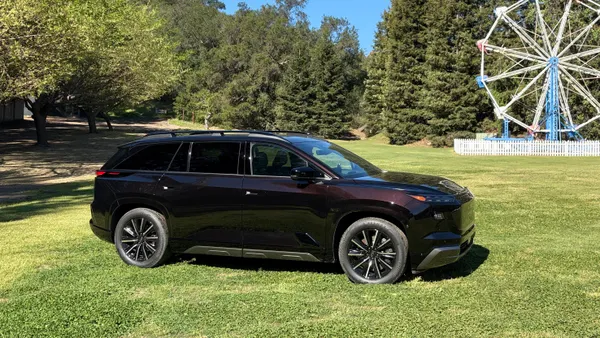
With the three-row Subaru Getaway electric SUV that was unveiled this morning at the New York Auto Show, the Japan-based automaker will soon have a total of four distinct fully electric vehicles on sale in the U.S.
Unlike Subaru’s three other EVs, the Uncharted, Solterra and Trailseeker, which are each built in Japan, the Getaway will be Subaru’s first U.S.-built EV and it won’t be heading to Europe, Subaru confirmed.
How Subaru will manage to get a total of four EVs to market, each a different size, each with unique sheet metal, in less than four years since the start of the rollout with Solterra, is a minor miracle. It wouldn’t be possible without Toyota and a project that pools EV development resources, Subaru is quick to admit—even though it quickly circles back to the point that it is working on EVs entirely its own, as well.
Subaru’s biggest vehicle
The Getaway isn’t just the largest of the EV cohort, but Subaru’s largest passenger vehicle yet. It measures 198.8 inches long, 78.3 inches wide and 68.9 inches high—all numbers that peg it slightly larger than Subaru’s three-row gasoline Ascent SUV, or around the same size as the Kia EV9, Hyundai Ioniq 9 or upcoming Toyota Highlander EV.
The Getaway shares extensively with the Toyota Highlander EV, and the two vehicles are set to be built together at Toyota’s plant in Georgetown, Kentucky starting this year. The battery cells will come from an LG Energy Solution plant in Michigan.
That said, Subaru has put in some extra work on the Getaway, and it emphasizes that it’s the quicker, sportier and more off-road-capable of the two vehicles.
While both of these EVs have dual-motor all-wheel drive, the Getaway makes a combined 420 hp, versus the Highlander EV’s 338 hp. That allows the Getaway to dash to 60 mph in less than five seconds and tow 3,500 pounds. And it should still manage more than 300 miles of EPA range, according to Subaru.
The Getaway’s higher horsepower comes and the way power is delivered. Instead of one larger motor at the rear wheels and a smaller one up front like the Highlander EV, Subaru opted for the larger motor front and rear.
Ready for mountain roads — and trails
“Since we felt that Subaru customers are more likely to take these out and drive on mountain roads, go skiing, do Subaru things with them, we thought they would appreciate the improved driving dynamics and the additional power,” said Garrick Goh, car line planning manager at Subaru of America. “For families that do want an EV, it’s something that’s very practical, it’s very quick, and it holds all your gear.
“We built upon what we learned with Trailseeker, Uncharted and Solterra so that we tuned them all very similarly,” Goh told WardsAuto. As with the Solterra and the closely related Toyota bZ4X, Subaru emphasizes that its buyers are quite different.
Citing data from Ipsos’ New Vehicle Customer Study, Subaru notes that buyers of its Solterra are far more likely to go off-road than buyers of the Toyota bZ, Hyundai Ioniq 5, Tesla Model Y or Kia EV6. The study also points out that owners also cite a roof rack as a purchase reason for Subarus above any other brand—including Rivian, Jeep and Land Rover.
While Subaru is still finalizing specs, Goh said the static load capacity of the Getaway’s roof rack should be in the range of 700-800 pounds—plenty to accommodate rooftop tents.
The Getaway also features Subaru’s Dual-Function X-Mode, that delivers enhanced traction and stability with torque distribution split between the front and rear wheels. A Deep Snow/Mud setting allows for higher levels of wheel spin. According to Goh, the Getaway’s 8.3-inch ground clearance, standard all-wheel drive and Dual-Function X-Mode will satisfy Subaru customers’ needs with all-season tires rather than all-terrains.
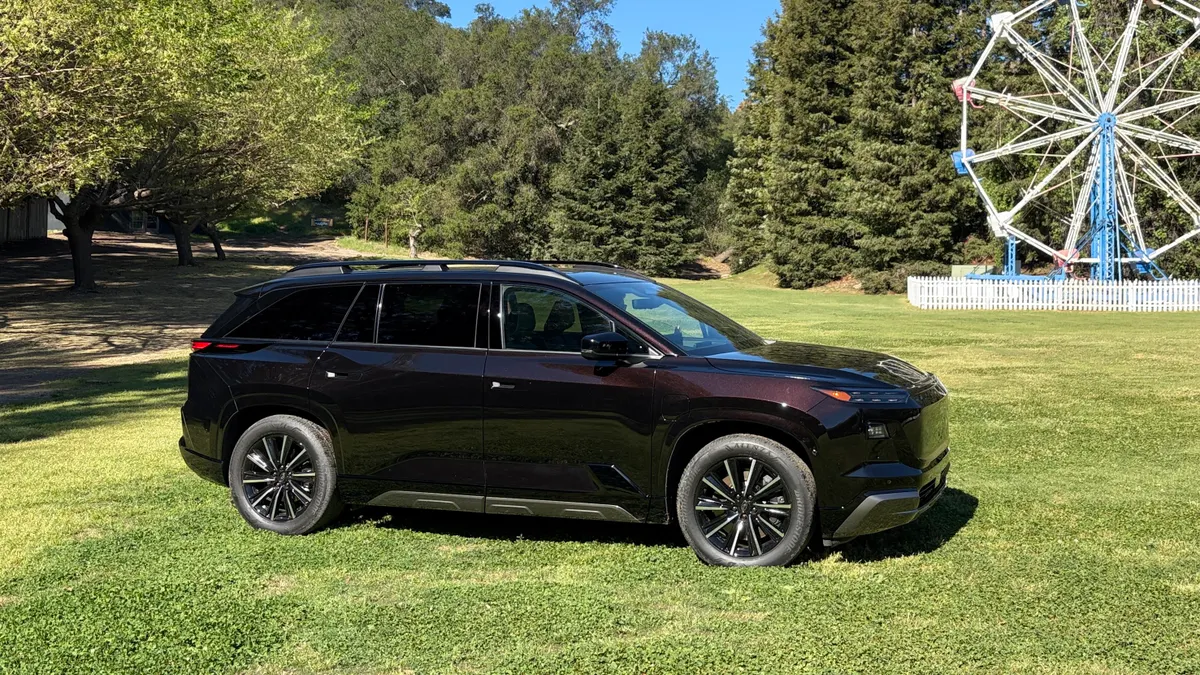
WardsAuto got a couple hours of up-close time around and inside two prototypes of this upcoming three-row EV earlier this month, and while Subaru won’t let us ride in the prototypes while they were moving, we did get plenty of time to take in the design and roomy interior.
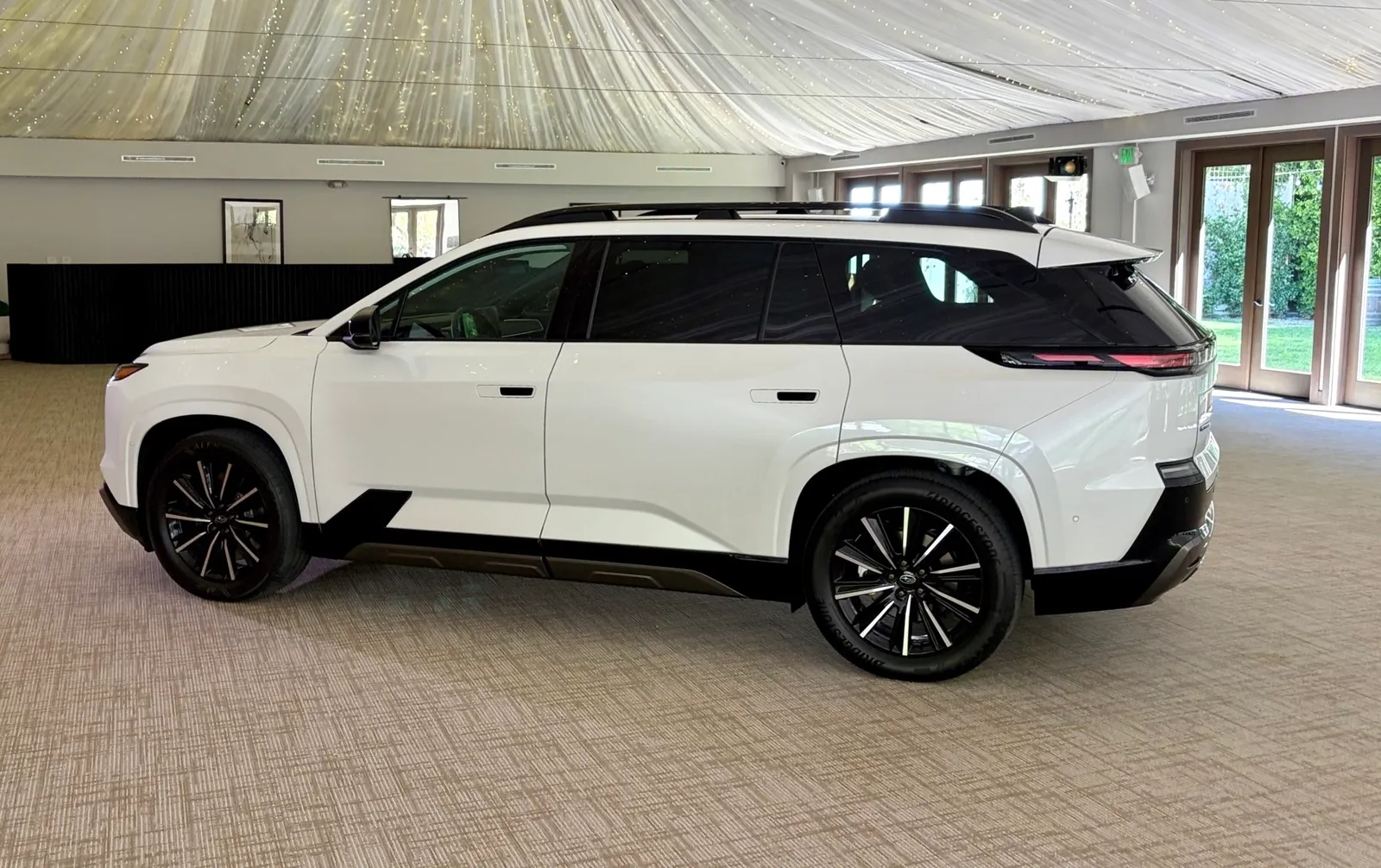
The design is understated, with a conventional soft-SUV profile that will fit right in alongside other Subaru models. The exterior door handles might be the Getaway’s most distinctive feature and remind us of those on the BMW iX.
With its long list of standard and luxury features, cabin materials and safety and connectivity features, the Getaway does impress as a flagship. Lamps illuminate the soft-touch armrests and its Nappa leather upholstery is plus. There is a clear view outward from its large windshield and the doors close with a much more muffled thunk compared to the rest of Subaru’s gasoline lineup with thicker door and window insulation. The Getaway will be very quiet inside, Goh confirmed — and it won’t have simulated propulsion sounds.
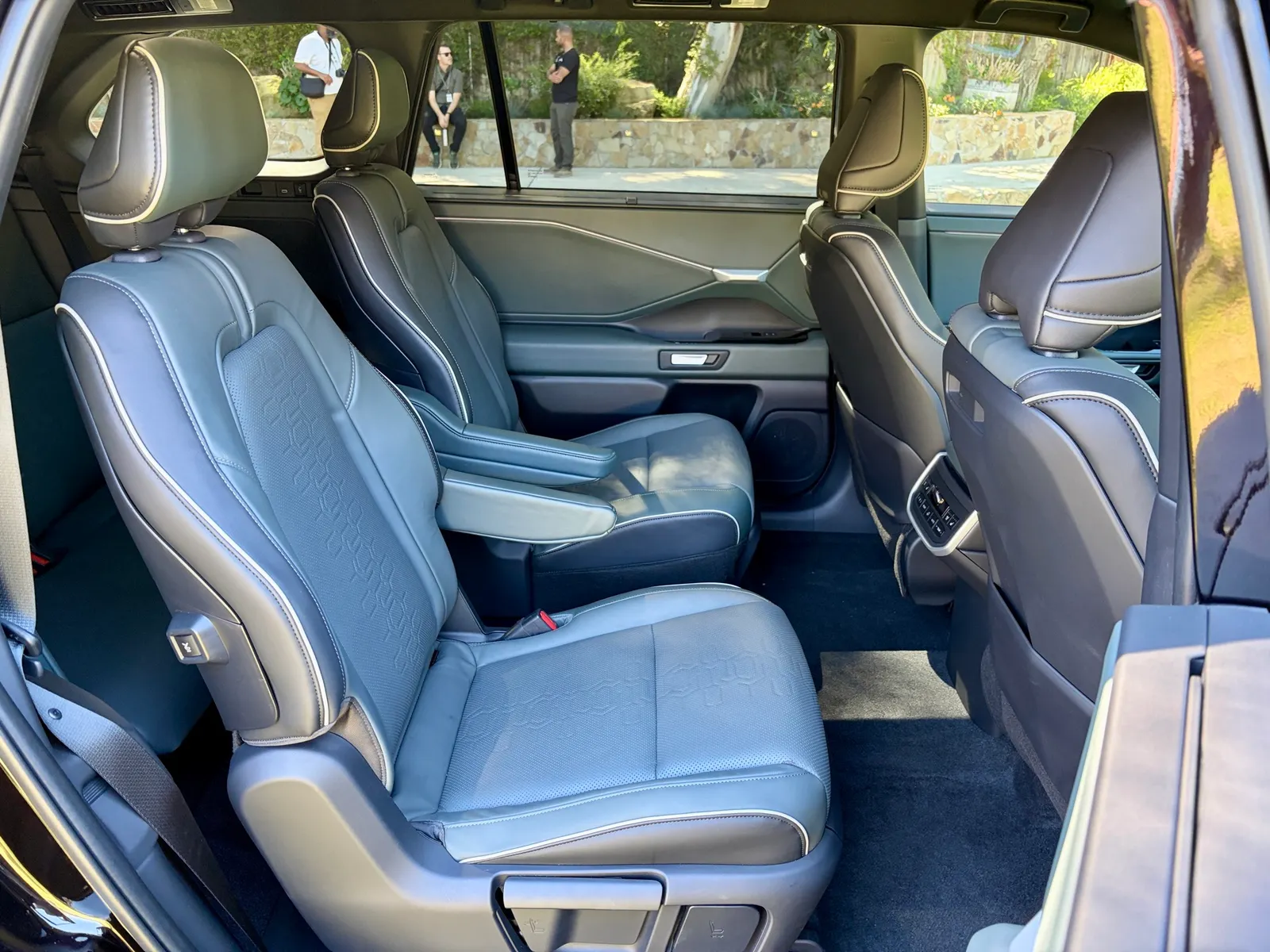
Subaru notes that the Getaway’s 45.6 cubic feet of cargo volume is more than the Kia EV9. With the rear seats folded, it offers 80.6 cubic feet of space. The Getaway’s longer rear doors also make getting in and out easier, while the sliding range of the second row balances legroom for passengers in the third row.
The Getaway is due to launch in October in Premium, Limited and Touring trim all-wheel-drive versions. All models feature a 95.7-kWh battery pack, but a standard-range version with a 77-kWh pack will be offered for the Premium trim in the first half of 2027.
Premium versions get a power-folding third-row seat and synthetic leather upholstery, plus headlight washers and a rear wiper. Limited versions step up to 20-inch wheels, roof rails, heated second- and third-row seats, heated steering wheel and a 360-degree camera system, while an option package will bring in six-passenger seating and a panoramic sunroof. Top Touring versions add Nappa leather seating, a Harmon Kardon audio system, digital rearview mirror and available two-tone paint.
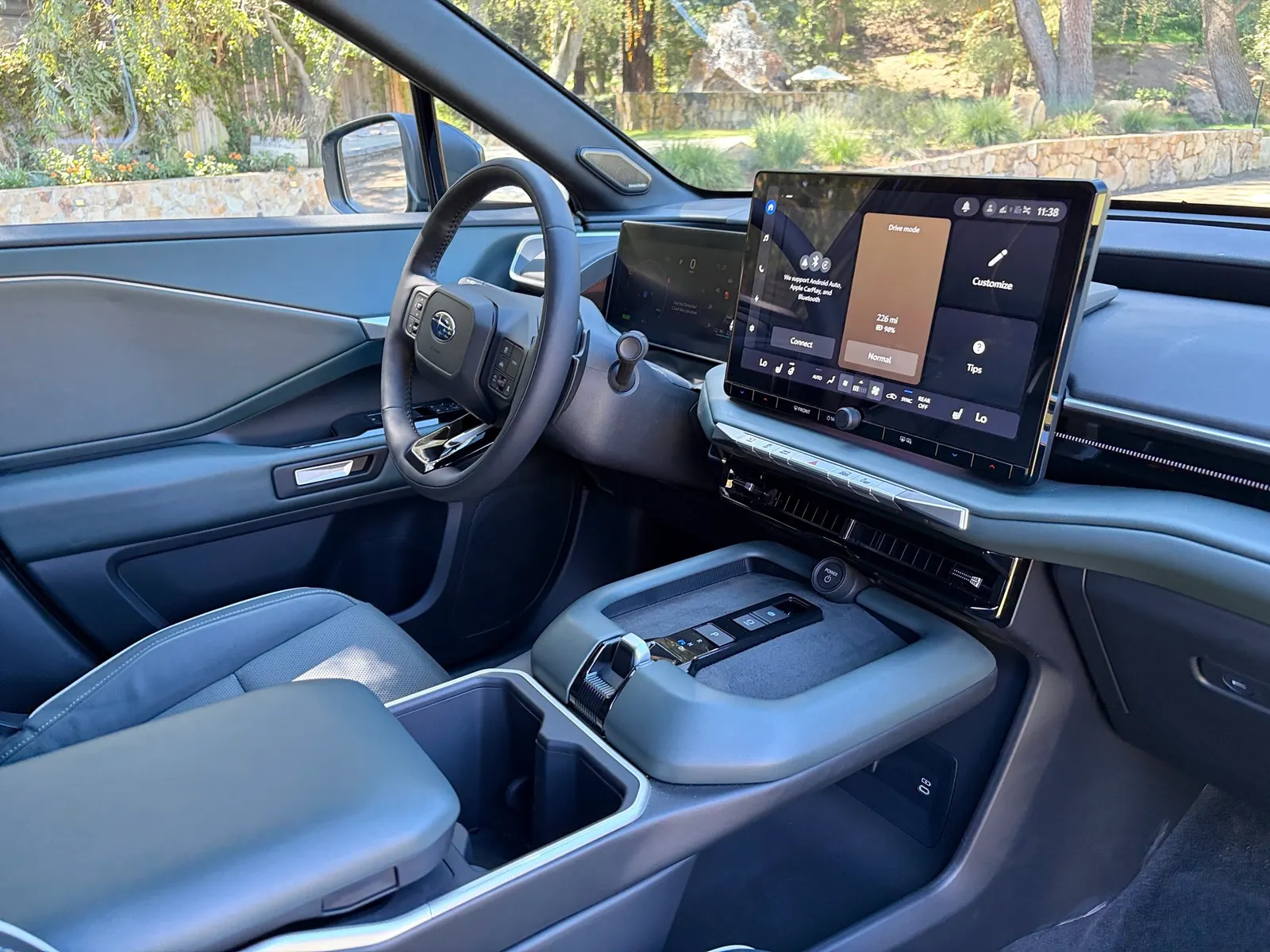
The Getaway’s 14-inch infotainment screen is mounted high and well within reach of the driver. The infortainment system also offers wireless Apple CarPlay and Android Audio compatibility.
Lots of power ports
The Getaway will also be capable of bidirectional charging with a Subaru-approved home hardware kit that’s yet to come. In addition to a 1500-watt AC outlet located in the cargo area, the automaker also promises a vehicle-to-load accessory later next year that plugs into the vehicle’s NACS port, allowing owners to power campsite needs or tools.
Subaru deflected all questions about production and sales volume for the Getaway, but it expects it to be a top-selling EV. Goh said that Subaru can accelerate deliveries if the market is receptive.
“We want to keep it flexible because we have a lot of customers that are looking for EVs,” he said.