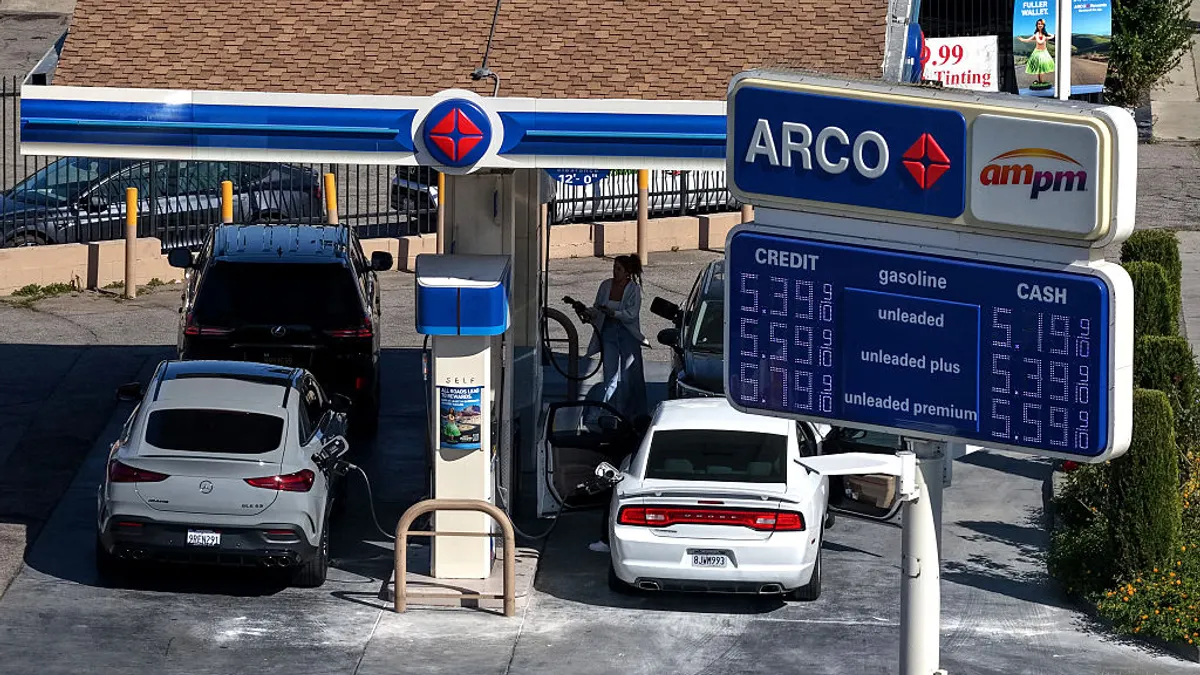
Even though Cox Automotive sees serious threats to its projection from the possibility of sustained, sky-high gas prices due to the Iran War, the automotive services and technology provider has stuck to its 2026 U.S. light-vehicle sales forecast of 15.8 million new cars and trucks.
“Sustained” is the key word here, because history shows that while gas prices can change quickly, it can take several months before consumer behavior gets seriously affected, explained Jeremy Robb, Cox Automotive chief economist.
“At least right now, we’re not seeing a big slowdown from what has happened with the Middle East conflict yet,” he said, in a March 25 conference call to review first-quarter results to date, and to revisit Cox Automotive full-year 2026 forecasts for new and used auto sales. “That could happen any week. Really. So, not trying to downplay that, but we haven't seen it yet.”
Cox Automotive’s new-vehicle sales projection for 2026 remains even with its previous forecast of 15.8 million units published in December 2025 — long before the Iran war was on the radar. However, its estimate is down 2.6% compared to last year.
For used vehicles, Cox Automotive slightly raised its retail sales forecast to 20.4 million units, up from 20.3 million from original forecast in December.
Factors supporting higher used-vehicle sales in 2026 include an expected increase in tax refunds this spring, and an increase in lease maturities in the second half, according to deputy chief economist Mark Strand.
Lease returns, which are typically three years old, are a favored source of certified pre-owned cars. Cox Automotive on March 25 also increased its 2026 forecast for lease penetration to 22%, versus a December forecast of 21% lease share.
Robb said his forecasting team is keeping an eye on multiple threats to the 2026 U.S. light-vehicle estimate. Besides gas prices, those include ongoing affordability issues, and consumer willingness to spend.
Even without the Iran war, U.S. auto sales were expected to decline due to the loss of battery-electric vehicle tax incentives last year, elevated interest rates and higher transaction prices, according to Charlie Chesbrough, Cox Automotive senior economist. It’s hard to predict how much more auto sales could fall in 2026, versus previous forecasts, but it’s unlikely they’ll improve, he said.
“Our forecast for 2026 remains unchanged at 15.8 million, down 2.6% from last year. However, the current Middle East conflict adds tremendous amount of uncertainty to the vehicle market. We assume the war and the resulting oil price volatility will only last a few months. A prolonged conflict could create a much more negative outlook, but we aren’t there yet,” Chesbrough said.
In a separate presentation on March 18, General Motors CFO Paul Jacobson made similar remarks. “So far as we have seen at the retail level, we haven’t seen any meaningful shift,” due to gas prices, he said at the Bank of America 2026 Global Automotive Summit in New York.
Historically, Jacobson said, it takes four to six months of high gas prices to affect a noticeable share of consumers in their fuel-purchasing habits and ultimately their vehicle purchases.
Robb noted that Cox Automotive’s forecasting team is mindful that over time, positive and negative market factors can effectively cancel each other out. In 2025, waves of buyers purchasing EVs due to tariffs and the phase out of the federal EV tax credit were followed by troughs. In 2026, high gas prices would be bad overall for auto sales, but higher fuel costs could also promote interest in hybrids and EVs, including for used models, which could partly offset any sales declines, he said in the conference call.
“There’s a lot of moving factors,” Robb said. “We just don’t know exactly which way this path down the road is going to lead us to right now, and so we’re stuck with making the best judgment call that we have, using all the data that’s available to us right now.”