Dive Brief:
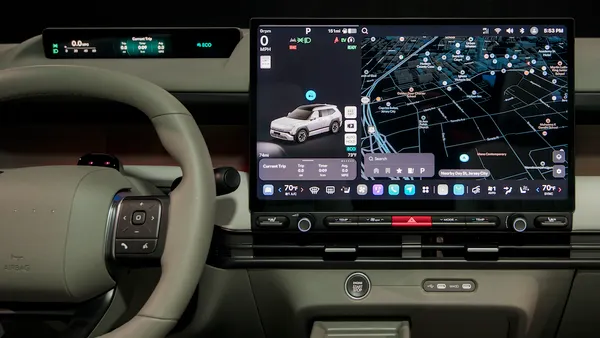
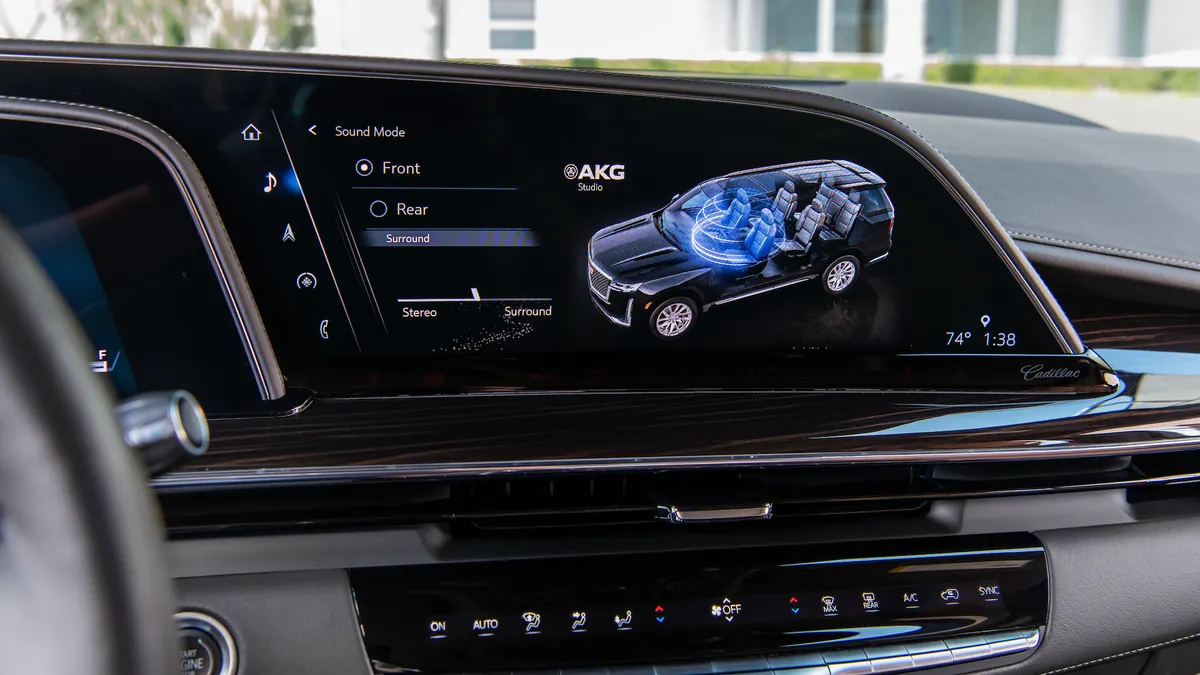
- Vehicle infotainment systems are the most problematic vehicle category for drivers, according to JD Power’s new 2026 U.S. Multimedia Quality and Satisfaction Study released Sept 9.
- The study found that as overall vehicle quality improves, multimedia-related problems were the five most frequently reported vehicle complaints, with 42.4 problems reported per 100 vehicles, according to JD Power.
- “The industry continues to make progress improving overall vehicle quality, but multimedia remains a persistent challenge,” said Lisa Boor, director of customer success, OEM solutions at JD Power, said in a statement.
Dive Insight:
The study was based on responses from over 78,000 purchasers and lessees of new 2026 model-year vehicles after 90 days of ownership. It was fielded from June 2025 through May 2026.
JD Power found that vehicle infotainment was the only category to worsen year-over-year, accounting for 25% of all reported problems in new-vehicles.
Many of the infotainment issues are software-related and other issues related to connectivity, as vehicles become more complex and rely more on software and touchscreens to control various systems.
“As vehicles become increasingly software-defined, quality issues are leaning less toward hardware failures and more toward system complexity, software performance and connectivity,” said Boor.
The addition of more software in vehicles has been a challenge for automakers, and software glitches played a role in a significant number of the millions of vehicles recalled in the U.S. in 2025, and automakers are at work on solutions that should make ongoing fixes seamless in future vehicles. For example, Hyundai Motor Group recently announced plans to build a “data flywheel” to enhance its software-defined vehicle capabilities, in which it will continuously collect and analyze data from its global fleet to deliver over-the-air updates, including software to continuously improve its vehicle infotainment experiences.
Outside of infotainment, other vehicle features have improved, including navigation systems, JD Power found. Overall satisfaction with navigation increases by 17 points to 933, based on a 1,000-point scale. The study found that the improvements were driven by a decline in usability and accuracy complaints.
Customer satisfaction also improved for multimedia and speakers, which JD Power said shows that OEMs are making progress in these areas.
“Customers expect these technologies to work seamlessly every day,” said Boor. “Brands simplifying the experience while delivering reliable execution are best positioned to improve quality and satisfaction.”