Dive Brief:
- Stellantis announced a new vehicle platform dubbed STLA One at its Investor Day event held at its North American headquarters in Michigan on May 21, according to a press release.
- The modular architecture is designed to shorten time to market, strengthen supplier stability and improve cost efficiency up to 20%, per the company. It brings together five different Stellantis platforms into a single, scalable version offering reduced complexity and expanded coverage across global B, C and D segment vehicles.
- The STLA One architecture was designed to support different powertrains and battery pack configurations, including hybrid and electric. The automaker plans to launch STLA One in 2027 and sees it becoming a “mega platform” underpinning over 30 Stellantis models totaling 2 million units by 2035.
Dive Insight:
The STLA One platform will be a key part of the automaker’s new “FaSTLAne 2030” five-year strategy to accelerate growth it announced at the Investor Day event last week, which includes a planned €60 billion (approximately $70 billion) investment by Stellantis. CEO Antonio Filosa said 60% of the funds will be put towards promoting its global brands and products and the remaining 40% into launching new vehicle platforms, technologies and other common assets.
According to Stellantis, the STLA One platform is intended to be a key step in the automaker’s push to compete on cost, simplify its manufacturing operations and boost competitiveness.
The automaker previously detailed its STLA Medium platform in July 2023 and the STLA Large platform in January 2024. That built on a 2021 plan to consolidate everything from small city cars to big pickups and vans under four STLA platforms.
STLA One is the first vehicle platform designed to integrate three core technologies into a single technology stack — the STLA Brain, STLA SmartCockpit and steer-by-wire technology, which are being developed with the help of industry technology partners, including Applied Intuition and Qualcomm.
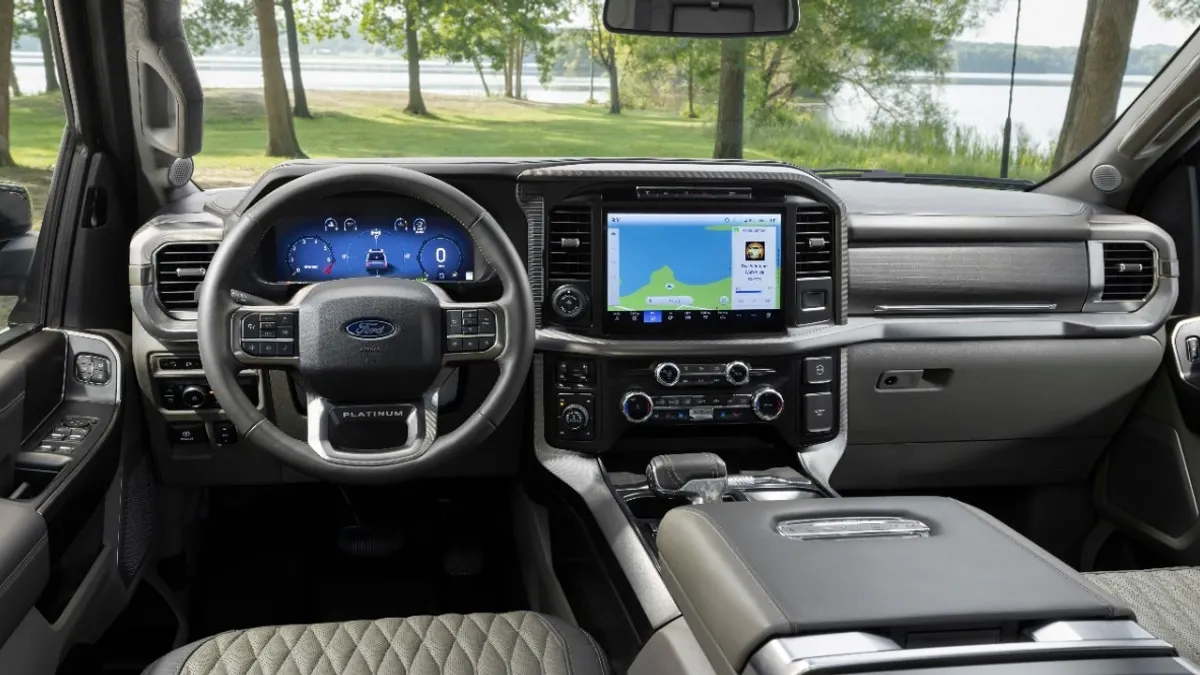
The STLA Brain is Stellantis’ new vehicle software platform designed to simplify integration and support over-the-air updates for the life of the vehicle. It connects all of a vehicle's electronics systems. The AI-powered STLA SmartCockpit supports voice, touch, gesture and glance controls for vehicle infotainment, including navigation.
The STLA One platform’s modular design increases the number of common interfaces, which will also be engineered to deliver the best possible performance of each respective powertrain, per the release. By 2030, Stellantis aims for 50% of its vehicle volume to be built on one of three platforms, with up to 70% of component reuse across models.
“STLA One is a clear example of a truly modular strategy, giving us the flexibility of a multi-energy platform without carrying inefficiencies from one propulsion system to another,” said Ned Curic, Stellantis chief engineering and technology officer, in a statement.
Stellantis also plans to adopt an “intelligent battery strategy” for the STLA One platform that’s intended to improve economies of scale and reduce costs over time, along with simpler integration.
The automaker says it will scale up its use of lithium iron phosphate cells to lessen its reliance on critical raw materials. The STLA One platform will utilize a “cell-to-body” integration with battery cells integrated directly into the vehicle’s structural components. It will also be capable of utilizing an 800-volt system architecture for faster charging speeds and what Stellantis calls “a better real-world BEV experience.”