

Growth was the buzzword during Stellantis’ recent Investor Day presentation, with a five-year strategic plan including a new modular STLA One architecture, a series of technology partnerships and a fresh focus on reducing complexity and improving quality.
Amid this strategy change that will usher in new experiences for drivers and new revenue opportunities for the automaker, the most important thing for dealers is the arrival of many more vehicle options. And this vastly expanded array of new models, backstopped by a “freedom of choice” approach to powertrains, applies to its core American brands — Jeep, Ram, Dodge and Chrysler.
“North America represents about 40% of Stellantis’ revenue today,” said CEO Antonio Filosa. “We have some of the strongest and most iconic brands in the industry, some of the most iconic products in the market, and we have a very strong dealer network.”
“There are attractive segments of the market where we are not fully participating today, and that is our opportunity to leverage our strong brands and to drive deeper market penetration,” said Filosa.
Filosa’s approach shows how Stellantis plans to grow sales 35% by 2030 when the industry itself is expected to be flat through then — by expanding its market coverage by 50%.
In 2025, Stellantis was at No. 5 of 41 brands in the industry, with a 7.6% market share; but in segments where it competes, the automaker claims it’s No. 3.
“So without doing anything different, we can grow by just showing up in more segments, and that’s key,” summed Tim Kuniskis, head of American brands, North America marketing and retail strategy. “Our plan for the American brands is to focus on the one absolute truth in this industry: Product is king.”
Filosa promised that the automaker would enter five new segments “where we are currently not participating,” including a new midsize pickup, a new compact pickup and a new small van. But as Stellantis went into detail about all the products on the way for its North American markets, it became clear the expansion goes well beyond that and brings back the much-missed Hemi V8.
“Most competitors give you one brand, one identity. We give you four. So, when you walk into a Stellantis dealership, it's not a showroom, it's like an auto show,” said Kuniskis.
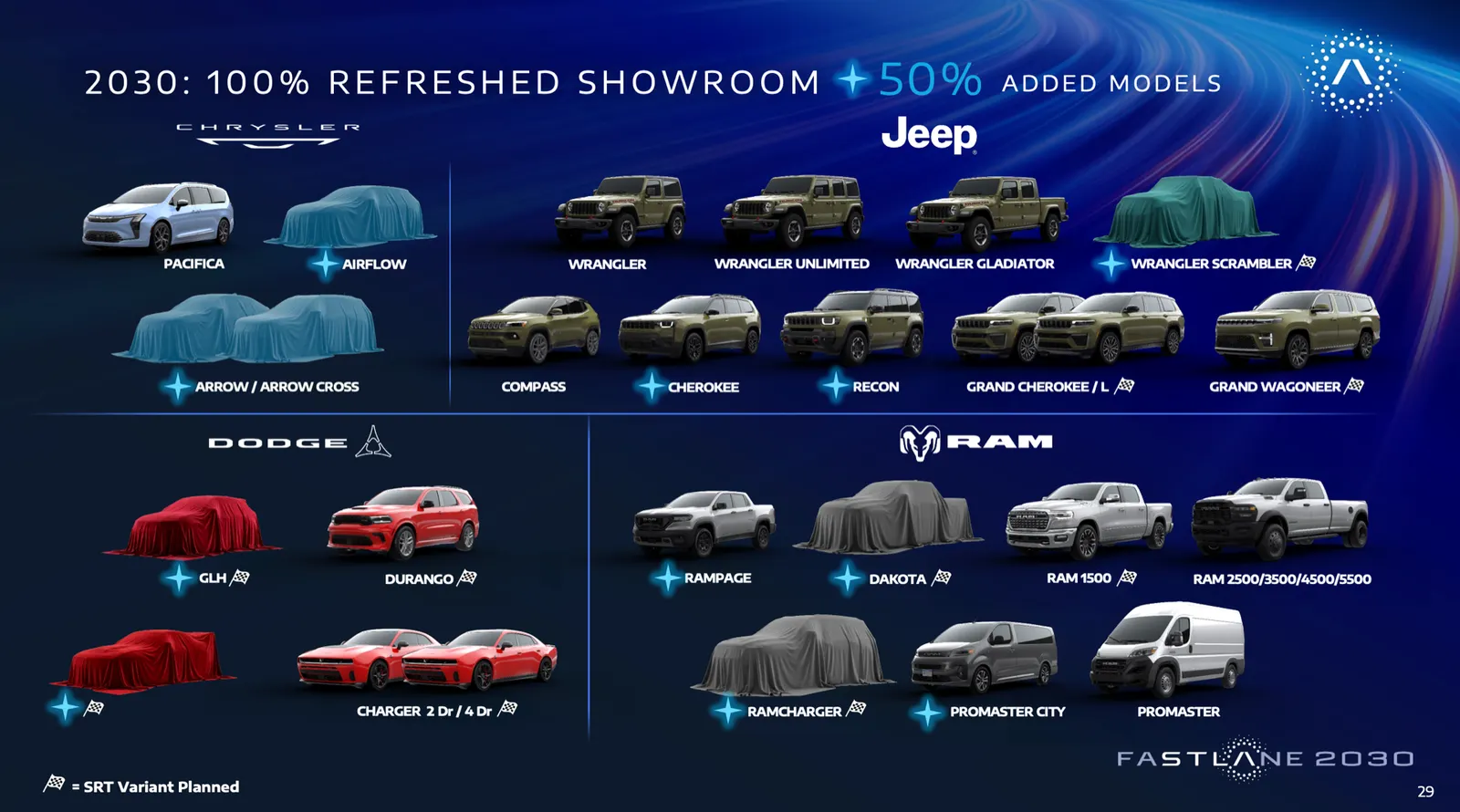
In North America, it adds up to a 100% refreshed showroom by 2030, with the number of models increased by 50%.
On a brand-by-brand basis, here’s how that transformation is going to take form:
Chrysler
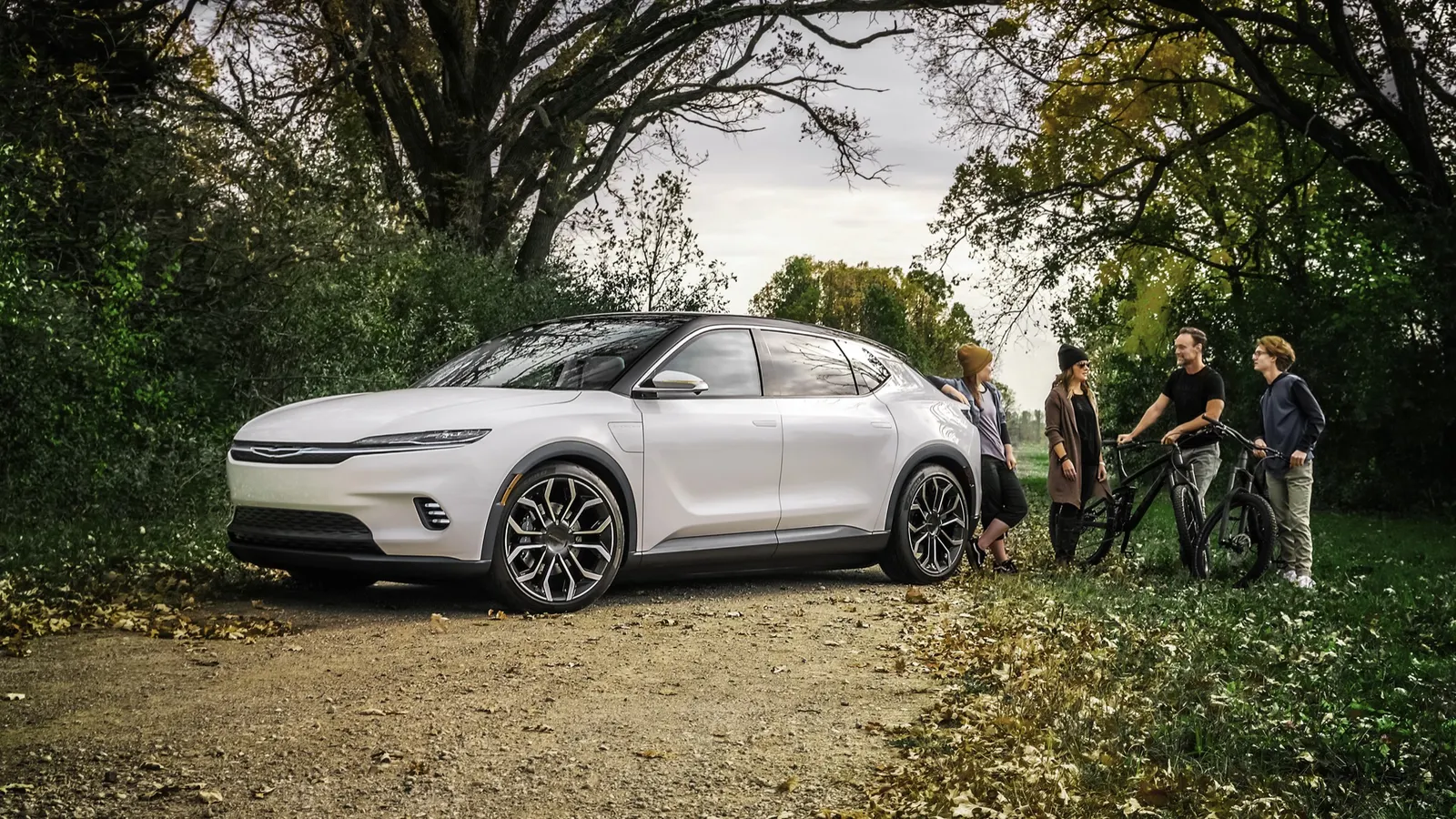
The Chrysler brand will no longer be running on the Pacifica and Voyager minivan families, as it has for the past few model years, or positioned as a premium-priced brand. Stellantis plans to make huge inroads on affordability with Chrysler with the introduction of three “value by design” compact utility vehicles and sub-$30,000 entry prices for some of the product line.
First comes a new midsize crossover called out as Airflow and built on the STLA One platform. Then come two other compact crossovers, called Arrow and Arrow Cross, based on “shared improvement platforms out of Europe, allowing Chrysler to compete in the $25,000 to $35,000 space,” underscored by Kuniskis. These models will also deliver “multi-energy options for freedom of choice,” the automaker noted.
According to Stellantis, 35% of buyers are looking for functionality and practicality first, and those are the shoppers it hopes to target with this repositioning of Chrysler.
That’s the type of shopper this new Chrysler is seeking — those who look for efficiency and durability. “The Chrysler customer isn't trying to impress the valet with their key fob,” said Kuniskis. “They prioritize other things, and their choice of transportation reflects that.”
With the remake, Stellantis sees North American sales volume for Chrysler rising 60% from 2025 to 2030, to 225,000 annually. While that’s still well behind decade-ago levels, the automaker emphasized it will mean zero overlap across the showroom with other Stellantis brands today.
Ram
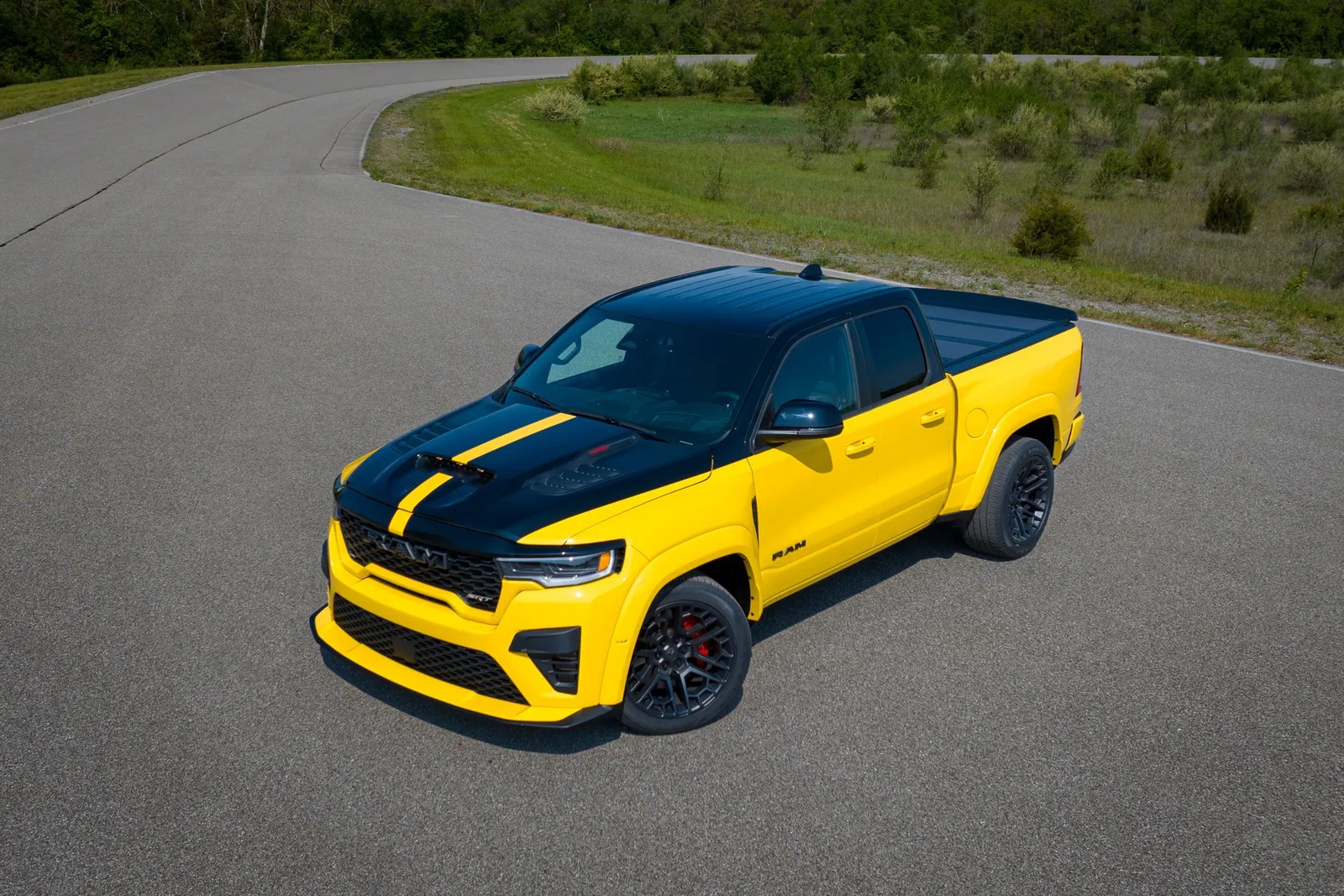
Stellantis also sees 60% sales growth for Ram over five years, with an expansion coming from new models as well as new variants for work and play, nudging the truck brand toward a No. 2 market position, by volume.
Currently Ram has three products, a light-duty pickup, heavy-duty pickup, and commercial cargo van, adding up to about 500,000 sales a year for North America. Prior to the new trucks, it aims to boost sales by relaunching the Ram ProMaster City, adding sporty, cost-conscious Express models, bringing Hemi V8 versions back and reviving the TRX performance model, as well as a Ram Rumble Bee muscle truck for 2027.
“We have been pushing hard on Ram the last 15 months, rebuilding the positioning and the product portfolio, and as some of you have pointed out, growing our inventory levels as we balance our mix and prepare for growth, not maintenance — not just because we love trucks, but because we love the profitability that they drive.”
To that point, the full-size pickup segment in North America represents 16% of industry sales but 40% of Stellantis’ profits, according to the automaker. Over the next several years Ram will add a full-size Ramcharger SUV, the range-extended pickup that’s already been delayed, a new heavy-duty truck and a new ProMaster van.
Smaller and midsize trucks are part of the plan, too. A compact Rampage pickup for North America will be built on a shared platform, and the automaker is targeting a start of production in 2028. A midsize Dakota pickup is set to arrive that same year and will return to the segment that the brand abandoned with the model’s discontinuation about 15 years ago. It claims the new midsize truck will be the most powerful one of that size on the market.
By 2030, the Ram lineup will be “100% refreshed and 50% all-new and incremental,” Kuniskis claimed.
Jeep
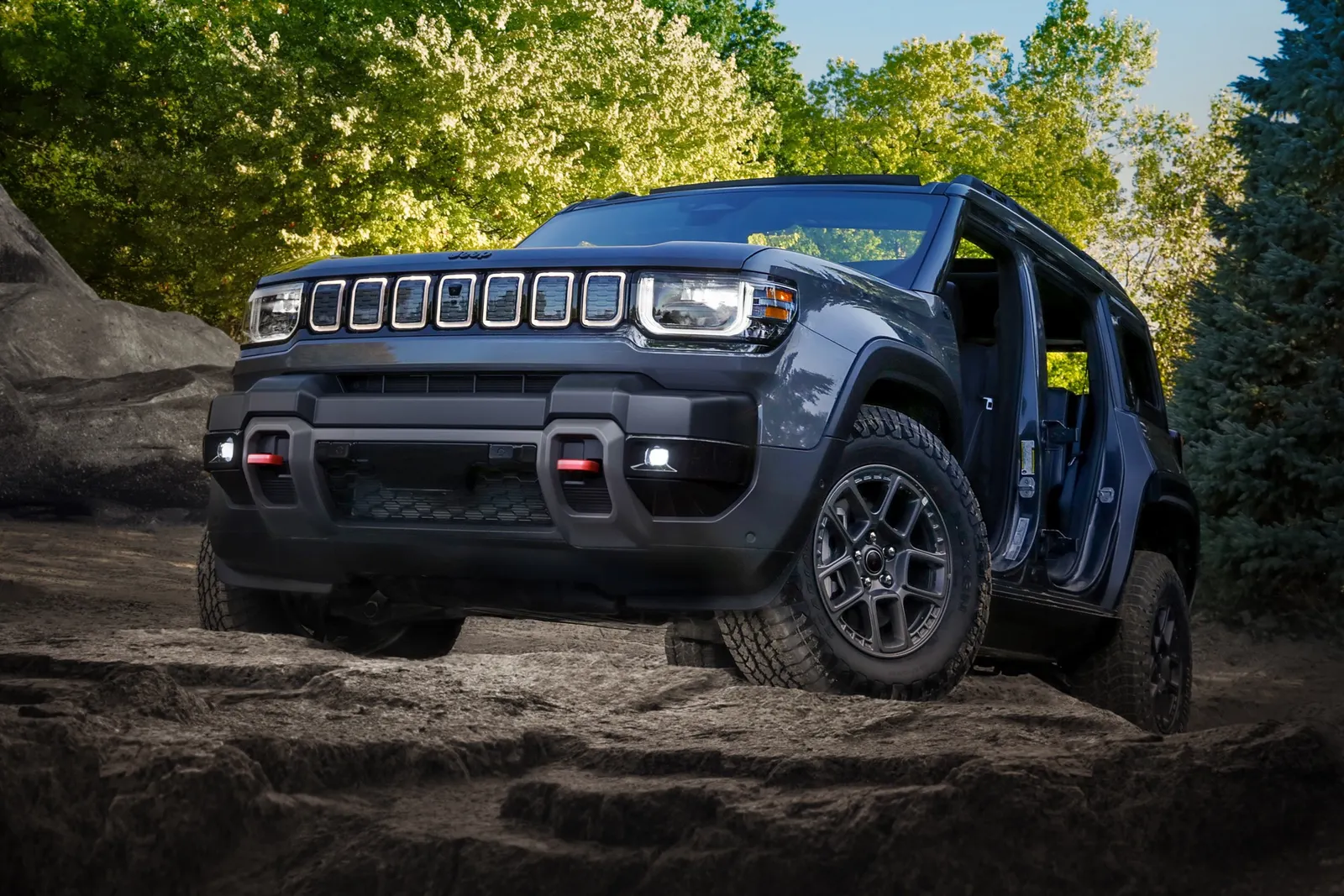
By 2030, Stellantis is eying a 15% sales boost for Jeep in North America from 2025 levels, and it says Jeep “will regain market leadership.”
The Jeep brand is “right now” launching four new products, according to Kuniskis: the fully electric Recon, the Jeep Cherokee, a refreshed Grand Wagoneer and a refresh of the Grand Cherokee are part of the new slate, as well as a new variant of the Wrangler launching every month. Over the five-year plan period, Jeep will add a gasoline powertrain to the Recon, a new Compass, a refreshed Grand Wagoneer and another refresh of the Grand Cherokee, plus heritage-oriented redesigns of the Wrangler and Gladiator. It also shows a Wrangler Scrambler as a new separate model.
Dodge
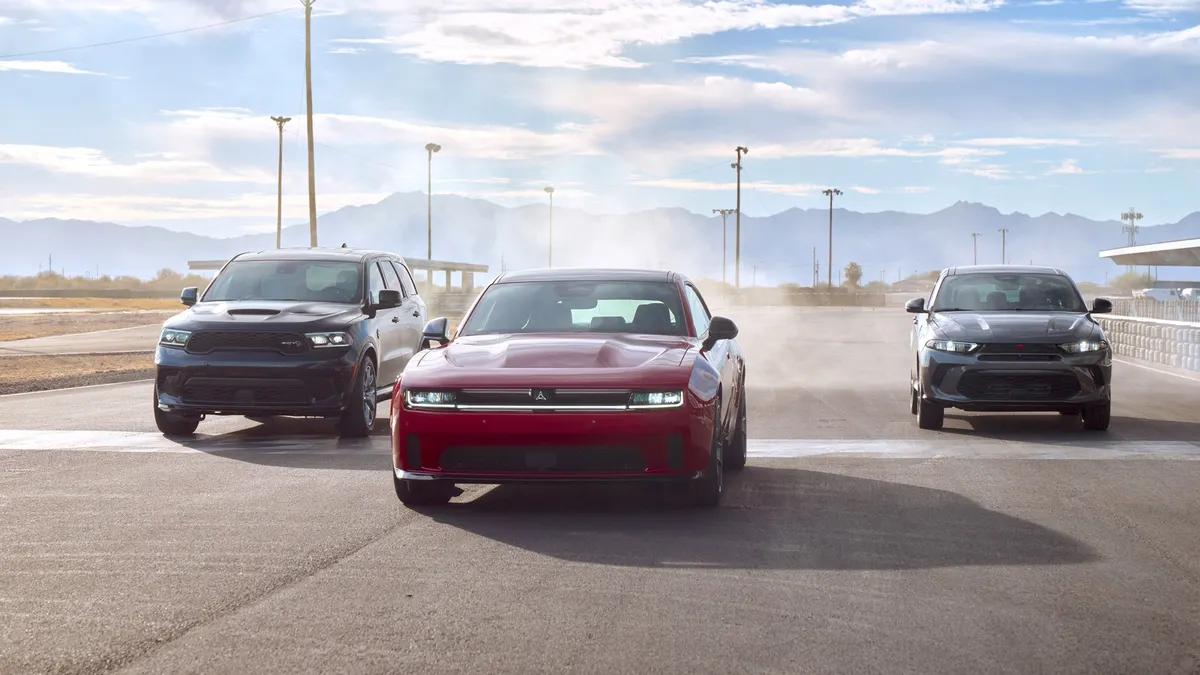
As part of the strategy change, the brand will be “returning to the formula that made Dodge iconic,” Stellantis said. It’s targeting 10% growth from 2025 to 2030, with the lineup including the two- and four-door Charger, along with a refreshed Durango SUV — plus a new, smaller SUV. The presentation deck suggests that a halo sports car is on the way as well.
Across its brands it seeks 35% growth from 2025 levels to 2030, expanding its market coverage from 60% of the market today to 90% of it then.
“The big news, though, is that we're going to be adding a true entry-level performance vehicle, a gateway into the Brotherhood of Muscle,” said Kuniskis. “Think of it as the next generation of Hornet, but the way we should have done it the first time.”
The compact crossover will carry the name GLH, for Goes Like Hell, which was originally used in the 1980s for a go-fast version of the Dodge Omni tuned by Carroll Shelby.
SRT
Stellantis will continue to produce a range of models for its American performance division, SRT, which will over the next few years include more top-performance models and a motorsports presence. It says SRT has the opportunity to deliver two to three times the margin relative to its core models, while pulling in younger, more affluent customers.
Suggesting versions of vehicles from the Dodge, Ram and Jeep brands, Stellantis noted in presentation materials that it sees growth from in the vicinity of 3,000 sales in 2025 up to 50,000 in 2030.
“It’s not a brand, it’s a multiplier; it turns great products into halo products,” said Kuniskis.
Fiat
Stellantis considers Fiat one of the four global brands that will together get 70% of future investments, yet it gave no similar product update on the brand’s future in North America. Specific to Europe, Fiat will introduce five new products by 2030, including a new EV, expanding its coverage out to about 50% of the market. DS and Lancia, which are prominent in France and Italy, will be “managed by Citroën and by Fiat and developed as specialty brands.”
Alfa Romeo
Stellantis’ plan positions Alfa Romeo as a regional brand focusing on Europe, rather than one aiming to make inroads in the North American market. While Stellantis noted the brand will add a new compact SUV and specialty model to its existing lineup, it offered very little detail on how the sporty brand fits into America moving forward.
Maserati
Maserati, which has been doubling down as a performance brand in recent years and repositioning to take on Porsche, Aston Martin, BMW M and Mercedes-AMG. will be recast as a “pure luxury” brand, Stellantis confirmed. Its current lineup will continue, but Stellantis plans for the brand to get two new E-Segment vehicles — roughly the size of the Porsche Taycan or BMW M5. Those two models are set to be revealed in December in Modena, along with an update on the brand.