

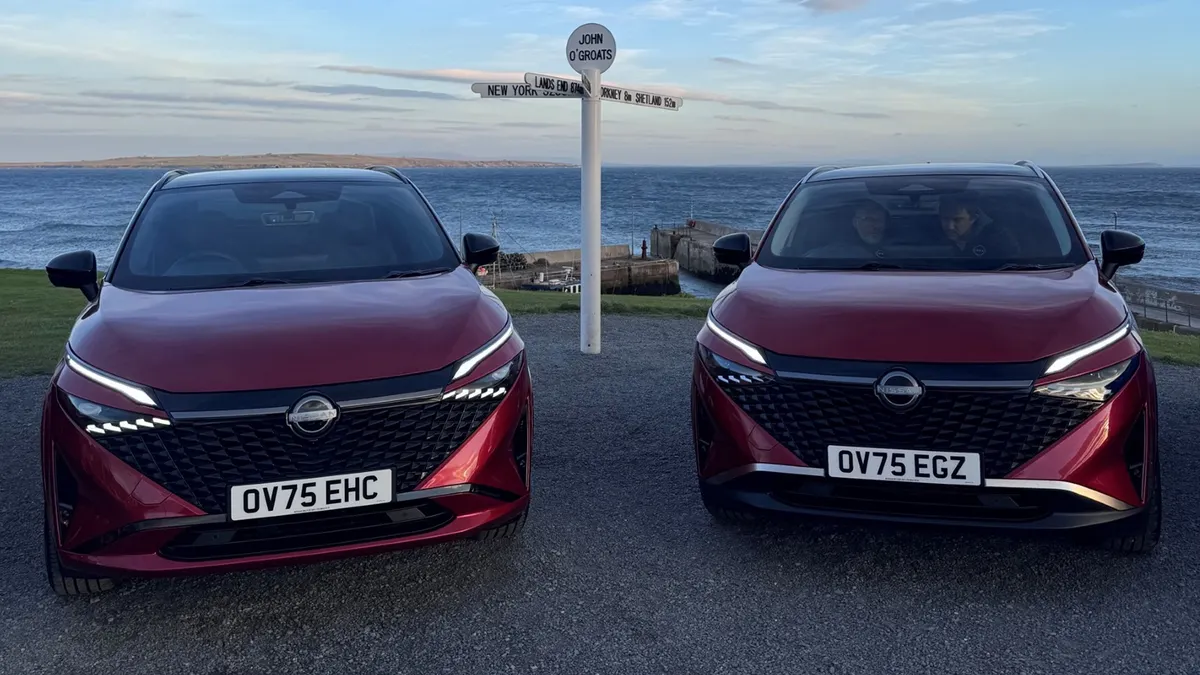
Nissan has not denied rumors that it is shelving plans to build an electric version of its best-selling Qashqai at its European production hub in Sunderland, U.K.
A story published by Reuters claims factory insiders have said Nissan is scrapping the plan as part of the automaker’s cost-cutting under the Re:Nissan business strategy.
Hopes had been high that the company would follow through on a 2023 promise to invest in EV production at Sunderland coupled with support from the U.K. government.
Nissan had pledged to invest 1.12 billion British pounds ($1.4 billion) into building three battery-electric vehicles at Sunderland.
However, similar government backing for a battery production facility to be run by Nissan’s vehicle transmission business unit, Jatco, at the plant fizzled out last month.
In response to a WardsAuto enquiry, a Nissan spokesperson would not deny the claims that the expected Qashqai EV would be shelved.
Instead, the spokesperson said in an emailed statement that Nissan’s current EV lineup includes the Micra, Leaf and Ariya and that Sunderland would get not only the Juke EV by early 2027, but also an entry-level A-segment EV to be announced later this year.
“Qashqai is a global best-seller, and we will continue to build on our rich history of electrifying our products – we’re excited to share future plans, so watch this space,” added the spokesperson.
Covering bases in an EV market shift
There has been a broad shift in new-vehicle buying patterns in recent years. The U.S. Federal Reserve Bank of New York has just released the results of its Survey of Consumer Finances which shows 20% of the wealthiest consumers are responsible for 60% of purchasing, Adam Ragozzino, principal analyst for Omdia, said in an email to WardsAuto.
“With that said, I think not covering your price points leaves you open to competitors that can provide value for less,” he added, pointing to the cheaper products imported into Europe by China brands.
“So, honestly, it was probably smart for Nissan to not develop the BEV Qashqai yet if they know it can't compete,” said Ragozzino. “I think the bigger risk for Nissan right now is losing investor confidence, not being late to the BEV market.”
All automakers are working to reduce manufacturing costs, including powertrain complexity and variants, if they are going to compete with China’s automakers, said Ragozzino.