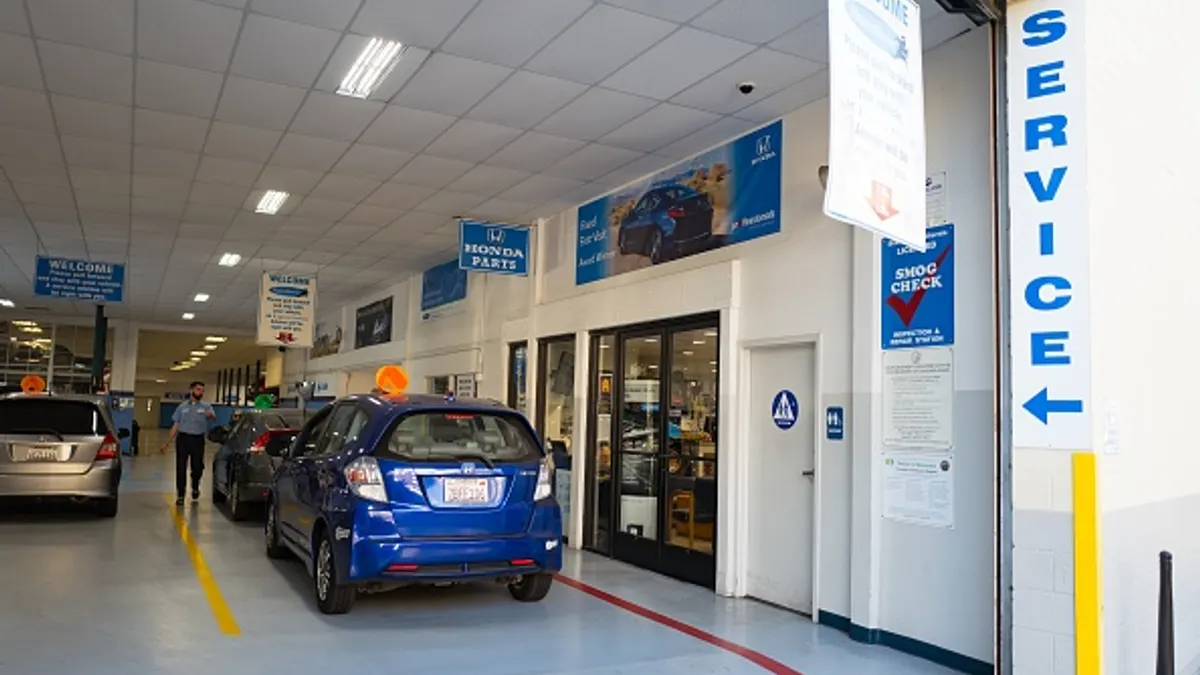
Group 1 Automotive is going all-in on a cluster strategy, coupled with rebranding its U.S. dealerships and dropping legacy names.
The cluster approach is part of a trend where consolidators acquire a heavy footprint in the markets they occupy, retaining sizable, high-performing dealerships that add to profits right away — no fixer-uppers — and without an urgent desire to cover the country coast to coast. Acquired dealerships that don’t fit the profile get sold.
“At Group 1, we believe our business is local. Our business model works when we sell and service customers locally,” Daryl Kenningham, Group 1 president and CEO, said in a conference call July 30.
In the second quarter, Group 1 said its total revenues were $5.2 billion on a same-store basis, down 3.3% compared with a year ago. Net income from continuing operations was $103 million for the quarter, down 26.5% versus a year ago.
Year-ago comparisons were difficult compared with strong year-ago results, fueled by customers trying to beat new tariffs, the company said.
Group 1’s heavy market presence and the rebranding are aimed at greater brand awareness, positive word of mouth among consumers and a bigger “share of garage” in households with multiple brands in the driveway, Kenningham said in the call.
On the business side, Houston-based Group 1 is looking for volume discounts for marketing and advertising, Kenningham said.
In addition, having a large number of dealerships in the same market gives employees more opportunities to move between dealerships and stay with Group 1, and that should help reduce employee turnover, he said.
“Let me give you an example in Houston. I think we had five different brand names on stores in Houston,” Kenningham said. “We spend $1 million a month in marketing in Houston. We can use that $1 million on one brand name or on five. We can certainly get better leverage out of that $1 million on one brand than five. That’s certainly how we expect to get the leverage on it,” he said in a Q&A with Wall Street analysts.
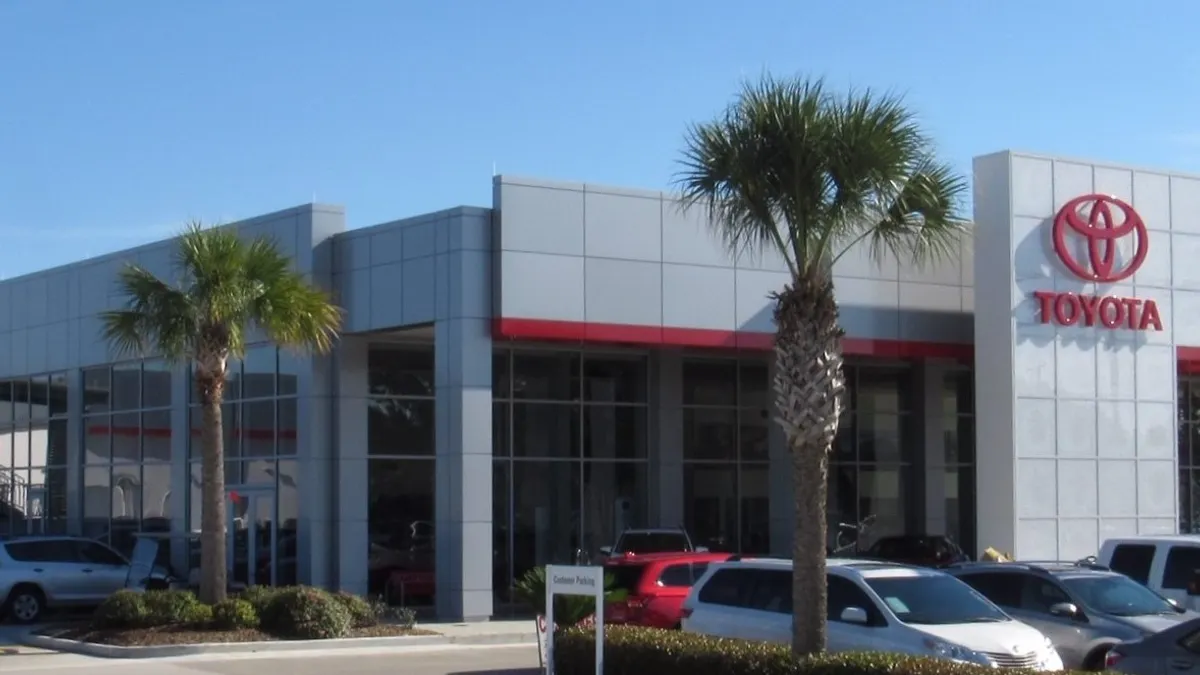
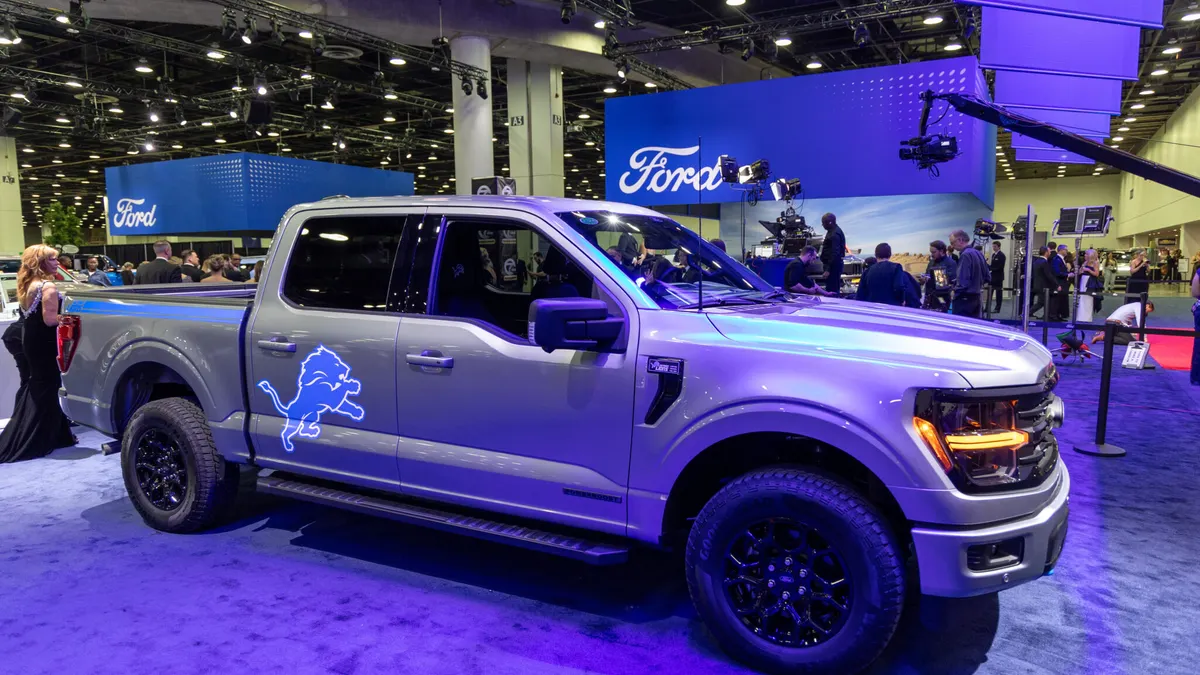
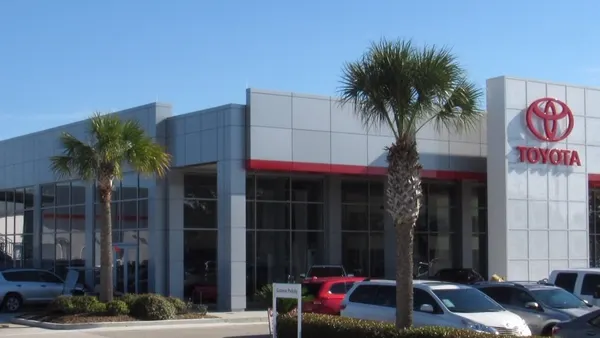
“What we ran into, again, in Houston, is we’d own the Ford store, and the Toyota store and the BMW store — all within three or four miles of each other — and customers didn’t know the same company owned all of them,” Kenningham said.
A Ford-150 customer who was happy with Group 1 might not be aware they could also buy a BMW or a Toyota from the same ownership, he said.
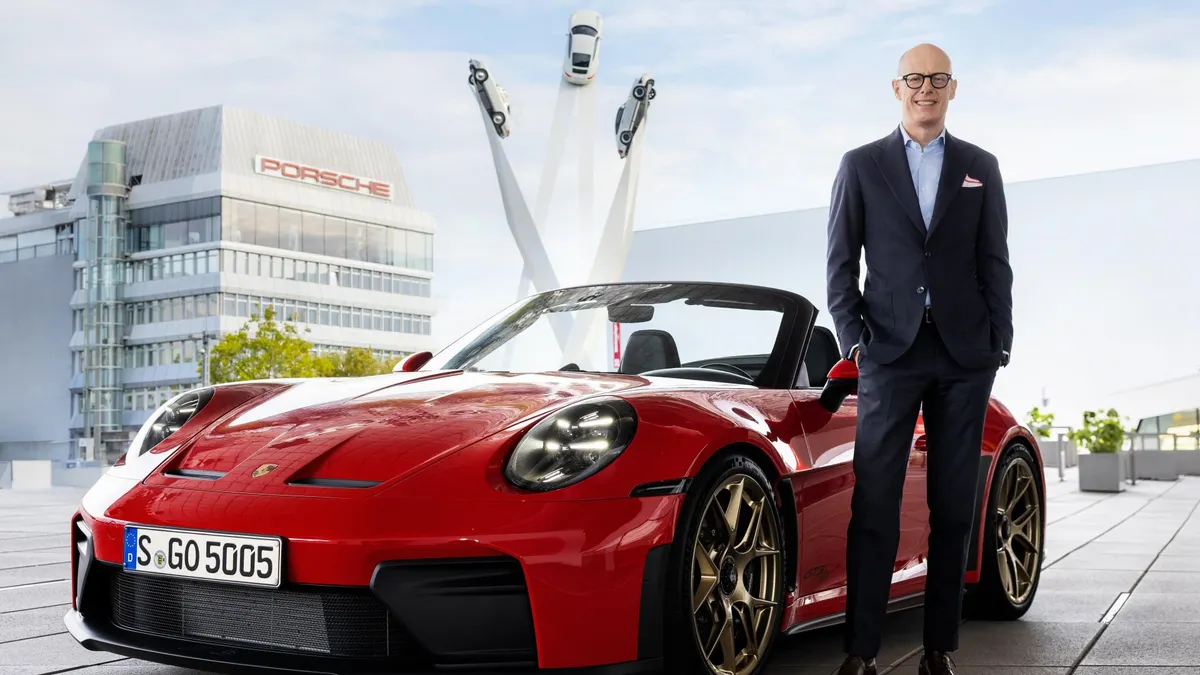
Group 1’s newest cluster market is Atlanta. The company announced, also on July 30, that it acquired 10 dealerships in the Atlanta metro area from Hennessy Automobile Companies, including two Lexus stores, three Land Rover stores and two large Porsche stores, plus one Honda, one Ford and one Cadillac store.
Together, the acquired stores represent combined annual revenues of about $1.7 billion, Group 1 said. The transaction is expected to close by the end of 2026.
Together with the recent acquisition of two other dealerships, Group 1 has in a short time expanded from three dealerships in the Atlanta region to 15, Kenningham said in the call. “Atlanta will become our second-largest market in revenue and our ninth cluster market in the U.S.,” he said.
Parallel with the cluster strategy, Group 1 has already rebranded more than 60 U.S. dealerships with the Group 1 brand, representing more than half its annual U.S. sales volume, Kenningham said.
On Aug. 4, Group 1 announced it had completed rebranding its dealerships in the Texas metro areas of Lubbock, Dallas-Fort Worth, San Antonio, El Paso, Houston and Austin.
Some luxury brands, notably Mercedes-Benz, insist on keeping the OEM brand on the dealership and won’t be changed, Group 1 said in press releases about the rebranding.
Not counting the Hennessy stores, Group 1 said it had 145 U.S. dealerships as of July 30. Its portfolio now extends to nine metro areas where it has at least five stores, the company said.
The metro area with the biggest number of Group 1 dealerships is its hometown of Houston, with 19, followed by Boston, with 18. Prior to the rebranding initiative, Kenningham said Group 1 had more than 40 different brand names on its stores around the country.
Conversely, Kenningham said research shows the legacy brand names didn’t represent a lot of value, so dropping them is a small loss compared with the potential gains for a single brand.
“Most customers buy from the store closest to them, and service at the store closest to them. The most important name on the store is the OEM brand and the location,” he said. Still, Kenningham said rebranding is worth it: “There's absolutely no consideration to not continue.”
Dealership M&A specialist Kerrigan Advisors, headquartered in Incline Village, Nevada, advised Hennessy Automobile Companies on the transaction with Group 1.
The cluster approach is a change in emphasis among some dealership consolidators, said Ryan Kerrigan, managing director and head of real estate advisory for Kerrigan Advisors.
“It is new in the following sense,” Kerrigan said in a phone interview July 31. “There was a time, I guess maybe five years ago, there was a lot of talk about national coverage. Lithia talked about having all the major brands in the regions across the United States — they wanted to have a dealership within so-many miles of such-and-such percent of the U.S. population,” he said.
In its second-quarter results, Lithia Motors, Medford, Oregon, said on July 29 its network is within 220 miles of 95% of the U.S. population. Four years ago, in the second quarter of 2022, Lithia said its goal was to acquire enough dealerships to be within 100 miles of 95% of the population, with “a domestic, import and luxury franchise in each key market.”
Lithia’s coast-to-coast strategy reduces the distance customers ordering through its Driveway digital commerce platform need to ship cars, and the average distance for all customers to visit a Lithia brick-and-mortar dealership for service.
The idea behind coast-to-coast distribution is to be “broad, not deep,” Kerrigan said. In contrast, the cluster approach is to be deep, but not necessarily broad.
In a separate earnings call on July 31, Michael Manley, CEO of Fort Lauderdale, Florida-based AutoNation, said “density” in a market offers a lot of value — sometimes in business segments that are not immediately obvious, like wholesale parts sales across a wide range of brands.
“What we want to do is to build density in our clusters,” Manley said.
AutoNation CFO Thomas Szlosek said in the call, “You compete for properties that are attractive to you — and for us, that means they are generally in brands that we are strong in, and in locations and areas where we have density. We feel like we can create the most value with those types of conditions.”