Lucid Motors on Tuesday told investors it needs to shore up its margins and leverage autonomy better if it's to succeed as a company.
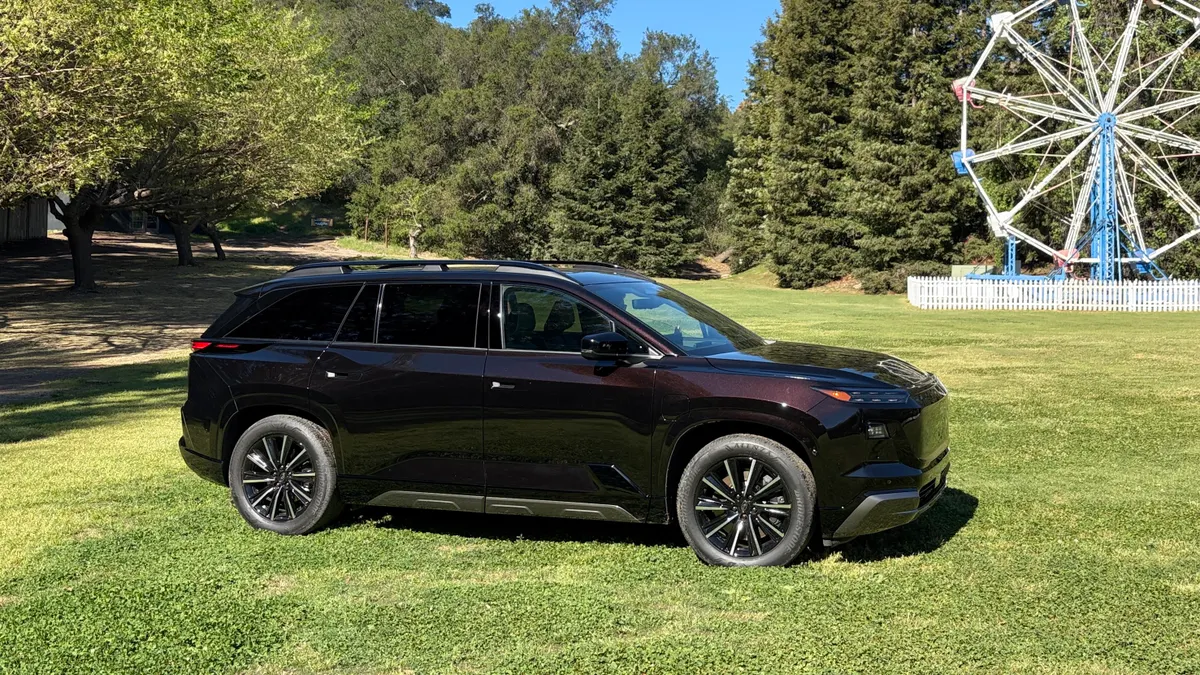
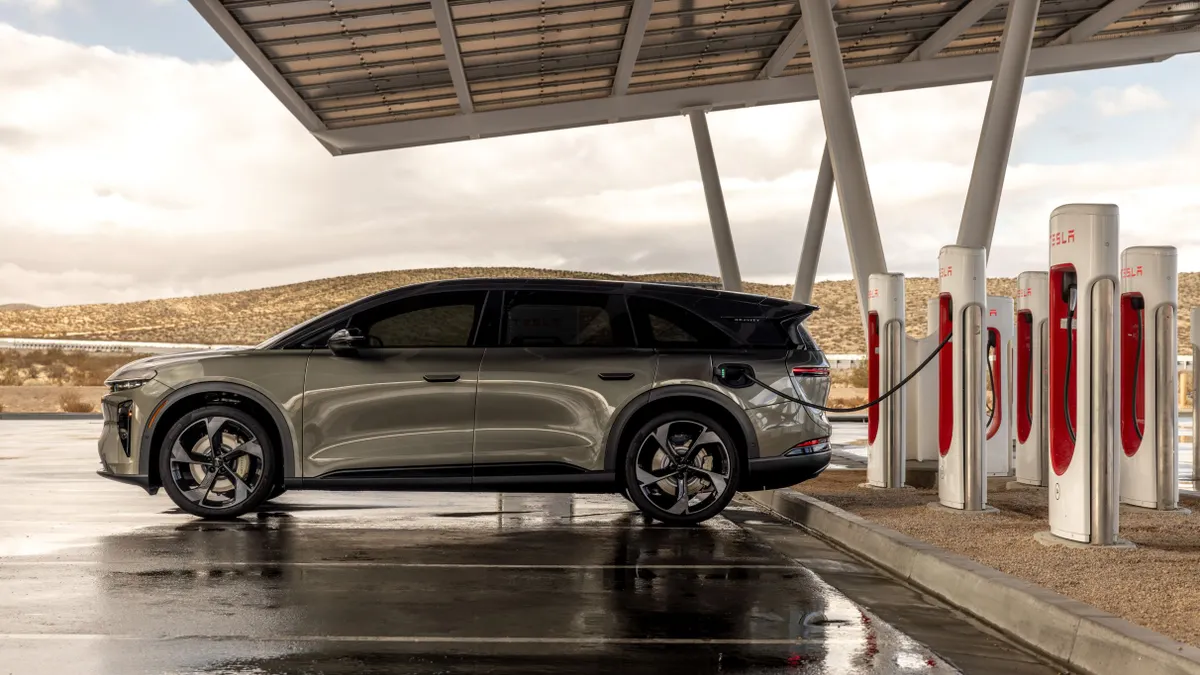
Despite continued losses and hundreds of U.S. layoffs last week, the EV maker argued that its $4.6 billion in liquidity gives it flexibility to fund its operations through the first half of 2027. Lucid aims to scale up Gravity SUV production and invest in future platforms, including a midsize electric SUV set to arrive in late 2026.
The job cuts represent a change of focus but, it stressed, don’t relate to manufacturing or quality.
“Last Friday we executed the reduction of our workforce by approximately 12% to reallocate resources following the launch of Gravity and to support the next stage of execution,” explained Chief Financial Officer Taoufiq Boussaid, who underscored that the move will save Lucid about $500 million over the next three years.
But before then, as the automaker emphasized in its fourth-quarter 2025 earnings update Tuesday, it needs to shore up its margins.
Lucid reduced manufacturing cost per vehicle by approximately 27% in 2025, Boussaid said in the earnings presentation, but the company is targeting roughly an additional 20% reduction in manufacturing cost per unit by Q4 2026.
Although Lucid’s operating loss in was roughly $3 billion in 2025, including $1 billion in Q4, it reflects “meaningful improvements” in margins, according to Boussaid.
“We are streamlining operations, managing costs, and protecting the balance sheet while positioning the company for profitable growth,” Lucid interim CEO Marc Winterhoff said on its earnings call.
Room for Lucid EV sales to grow
Lucid says it was one of just two manufacturers to report an increase in EV deliveries in the fourth quarter of 2025. According to Lucid, the Air was the third-highest-selling model in the entire large luxury car segment, including internal-combustion vehicles. The EV maker continues to ramp up Gravity SUV production while expanding its service network and retail store count.
“The ramp-up of Gravity gives us ample opportunity to further grow production and deliveries in 2026,” said Winterhoff.
The company reported that Gravity sales helped accelerate revenue in Q4 to $523 million — more than twice the revenue of Q1 or Q2, and up 123% versus the same period in 2024.
Lucid aims for higher volumes with its upcoming midsize EV platform, set to arrive before the end of the year at a price starting below $50,000. It’s currently building production and validation versions, which will feature a radically simplified electrical architecture and a modular design, around a new lower-cost Atlas drive unit that it describes as “delivering class-leading efficiency at scale,” the company said.
“Full-year gross margin improved meaningfully as well, though it remains below our long-term targets,” said Boussaid, adding Lucid is “on a journey of scaling.” The executive pointed to progress made through higher production volume, more Gravity production, lower scrap and optimization of materials costs.
Lucid pointed out that its total cost of source components is below initial cost estimates and in comparison to competitors. “We remain disciplined; we will not chase volume at the expense of margin,” said Boussaid.
Lucid aims to produce 25,000 to 27,000 vehicles in 2026, around 50% more than the17,840 vehicle it produced in 2025. Total deliveries in 2025 were 15,841 units, a 55% year-over-year increase.
Is autonomy the bigger play?
Lucid is also betting big on autonomy, and it spent a portion of its earnings presentation laying out plans for what it sees as a significant future revenue stream.
“Today, many of our customers are using our Drive Assist feature, and we expect that in the future the majority of our customers will want to be able to choose whether they want to drive themselves or be(ing) driven autonomously in the moment,” said Winterhoff.
The executive promised point-to-point autonomy for the Gravity by later this year, with L3 targeted for 2028 and L4 by 2029, starting with its midsize vehicles. Winterhoff said it will enable new revenue streams in a total addressable market that’s estimated to reach $700 billion by 2035.
Lucid in July announced a $300 million investment from Uber Technologies to add robotaxis to its ride-hailing platform, in a deal that could bring up to 20,000 Gravity SUVs equipped with SAE Level 4 autonomous-vehicle technology from the startup Nuro to various global markets.
The automaker revealed its production-intent design for the Gravity robotaxi at CES. It had delivered its first engineering validation vehicles in Q3 and began road testing the robotaxis in the San Francisco Bay Area in Q4.
Lucid promised more about software, autonomy and powertrain improvements soon — perhaps detailing how the company intends to weave together all of its in-house strengths.
“What you’re seeing is a company with valuable assets that we are only beginning to leverage,” said Boussaid, who promised more about Lucid’s path to profitability at its Investor Day on March 12.