


European ride-hail service provider Bolt Technology has chosen the U.S. electric vehicle manufacturer Lucid Motors to launch autonomous robotaxi operations across major cities.
It plans to deploy at least 25,000 autonomous Lucid vehicles on a platform expected to utilize Nvidia Hyperion technology, according to a joint Sept, 17 release.
The companies aim to combine Lucid’s software-defined vehicle platform with insights from Bolt’s European data, operating infrastructure, and mobility expertise, they said, on the way to providing autonomous mobility services at scale.
Driverless services are largely currently operating as test trials in Europe. They include Bolt’s most recent tie-up with Pony.ai and the Luxembourg pilot program with Stellantis’ Peugeot e-Expert midsize light commercial vehicle.
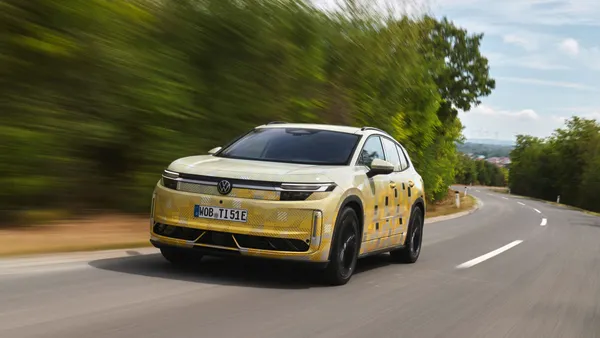
Another early-year pilot saw Volkswagen deploy its Gen.Urban test mules in Wolfsburg, Germany, to assess levels of trust among the service users.
Bolt’s Europe-wide service anticipates using Lucid’s upcoming vehicles on its midsize platform. Bolt’s target is to have about 100,000 driverless units operating on the Continent by 2035.
“Shared autonomous mobility offers the perfect opportunity to extend our unique technology beyond consumer vehicles," said Lucid CEO Silvio Napoli in a statement. “Bolt's reach and operating expertise make it an ideal partner to scale autonomous mobility across Europe,” he added.
“Autonomous driving in Europe requires data, software, vehicles, and operations to work as one system built for European roads and regulation," said Markus Villig, founder and CEO of Bolt. “Lucid brings a world-class platform, and together, we will co-design the vehicle and software based on our data and more than a decade of operating experience across more than 850 cities,” he added.
Analyst view
While Europe is rolling out autonomous vehicles more slowly than the U.S., plans to target a driverless fleet, tens of thousands strong, is ambitious, said Mark Fitzgerald, Omdia’s senior principal analyst, ADAS and autonomous vehicles, in an emailed response to WardsAuto.
Waymo, for instance, had announced a similar expansion plan with Jaguar Land Rover in 2018 promising 20,000 vehicles in the first two years of production. But it ended up with a fleet of less than 4,000.
“Scaling AV operations is not easy or quickly achieved in the EU,” Fitzgerald said. “Europe's fragmented regulatory environment makes scaling robotaxi services difficult and expensive,” he added.
It's also worth noting that Bolt hasn't placed a binding order yet, and the vehicles depend on Lucid's mid-size platform, which has been delayed to the second half of 2027, he pointed out.
“That said, the partnership represents a serious long-term commitment to European autonomous mobility, even if the path to 25,000 vehicles will likely take longer than initial ambitions suggest,” concluded Fitzgerald.