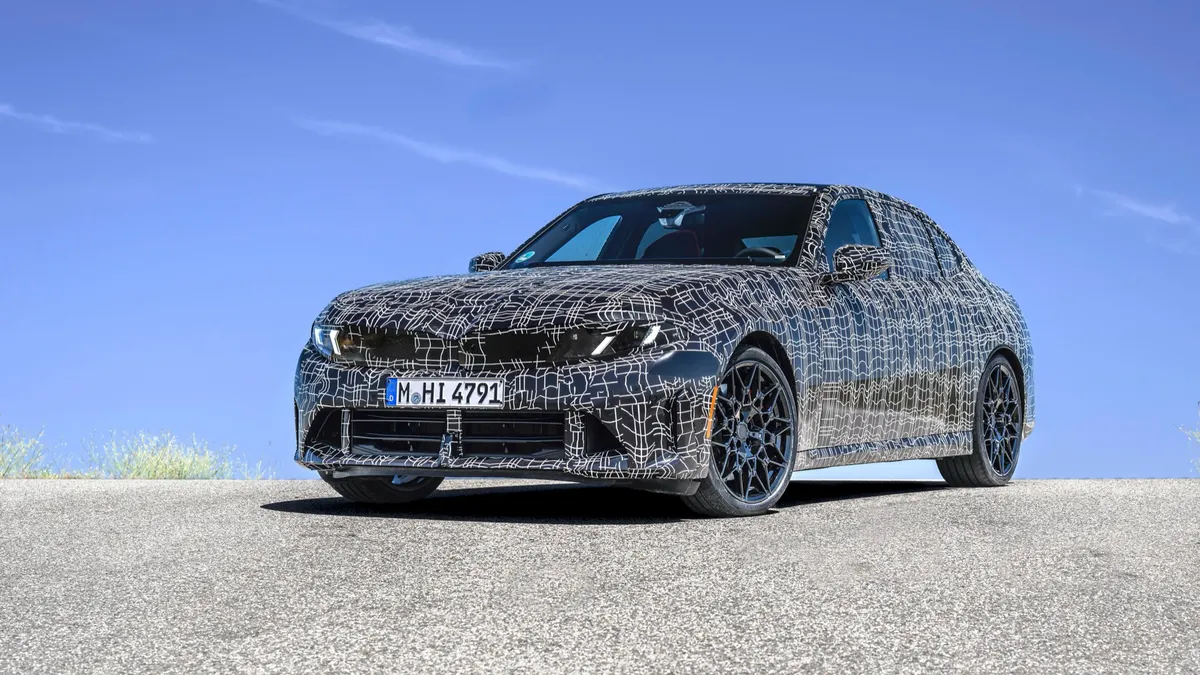
BMW Group is keeping the internal combustion engine at the heart of its next-generation 2027 3-Series lineup, despite reformulating its brand-defining sedan for the electric era with the new i3.
The German automaker is currently putting the finishing touches on what will be the eighth-generation 3-Series, which BMW itself describes as the “essence of the BMW brand.” And more than 50 years after the original series was launched, BMW clearly isn’t finished with the formula that has brought it so much success.
Going forward, the lineup will offer consumers a choice of drivetrain well into the next decade: alongside its electric i3, it will continue to offer gasoline, plug-in hybrid, and even diesel drivetrains, the automaker confirmed to WardsAuto. And rather than allowing the new internal combustion engine model to quietly play second fiddle to its electric sibling, BMW is giving it a distinctly traditional performance flavor in the form of the new M350 xDrive.
Building an internal combustion model for speed and performance
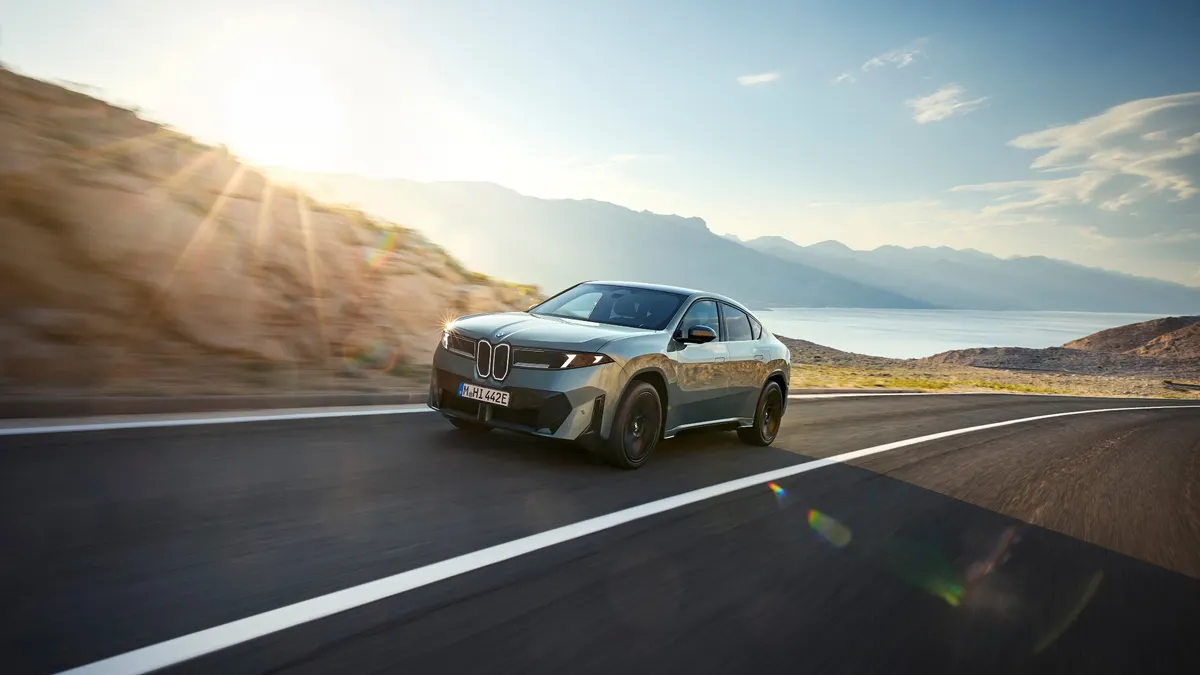
With a 443-hp straight-six M350 xDrive, a function that can send all of its power to the rear wheels, and another six-cylinder M3 on the way, BMW has made clear it still serious about its ICE-powered models.
Set to replace today's M340i xDrive, the new M350 xDrive combines a turbocharged 3.0-liter inline 6-cylinder gasoline engine with a 48-volt mild-hybrid system, an 8-speed automatic transmission, and all-wheel drive.
BMW is also giving the 2027 M350 xDrive a new Drift Moment function. Activated through the central display, it sends the engine's drive entirely to the rear wheels, working with the AWD system’s multi-disc clutch and with the stability control switched off.
It is the first time such a function has been offered on a 3-Series M Performance model. Drift Moment will become available during 2027 and can also be activated through a Remote Software Upgrade on cars delivered before its introduction.
The automaker is also setting its gasoline version up to be quicker.
The new all-wheel-drive i3 50 xDrive, revealed earlier this year, uses an electric motor at each axle to develop 463 hp and 476 lb-ft of torque. BMW quotes a 0-62 mph time of 4.7 seconds.
Yet the i3 50 xDrive has about 20 hp more than the gasoline M350. As the M350 weighs hundreds of pounds less than the i3 EV, BMW has engineered this gasoline sedan to be quicker, with BMW quoting 4.1 seconds. Top speed of the M350 is limited to 155 mph.
It won't be alone for long. A new M3 is also under development with 6-cylinder power, a move that will leave it and the M350 as the only remaining 6-cylinder members of the next 3-Series range.
The strategy effectively splits the future of one of BMW's most important model lines in two.
The i3 is the first electric 3-Series and only the second production model to use BMW's Neue Klasse architecture. Its sixth-generation eDrive system operates at 800 volts, supports DC fast-charging at up to 400 kW and offers an anticipated EPA range of up to 440 miles in U.S. spec.
From design cues to interface, BMW merges worlds
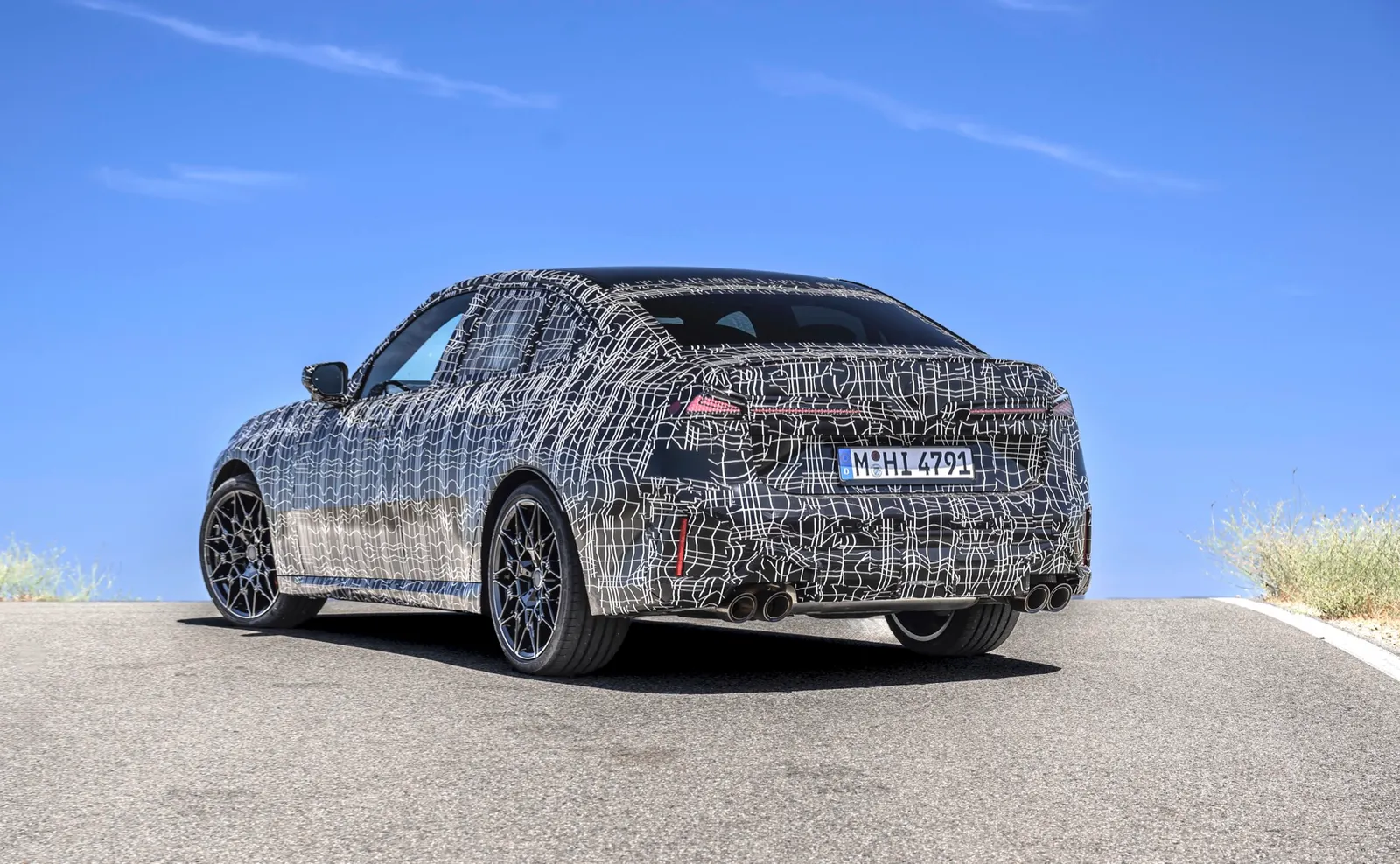
Visually, however, BMW is deliberately closing the gap between these two different takes on a key product for the German automaker. Both adopt a new interpretation of BMW's traditional kidney grille and headlamp treatment, with the company saying differences between the i3 and the upcoming new 3-Series are largely dictated by their respective drivetrains.
The common approach extends inside, where the new 3-Series is set to receive the same Panoramic iDrive display system and so-called Operating System X software stack as the i3.
The new 3-Series gains a longer wheelbase and wider front and rear tracks than its predecessor, and the broader range will continue to offer rear- and all-wheel drive, depending on the model. BMW says it has also upgraded the braking system and altered the steering ratio in an effort to provide more precise handling. Adaptive dampers will be among the performance options.
The automaker says it is currently carrying out final chassis development on the new 3-Series. Although the model has been set for a 2027 arrival, a U.S. launch timeline and pricing for the 2027 BMW 3-Series haven’t yet been revealed, so look for more details soon.