Dive Brief:
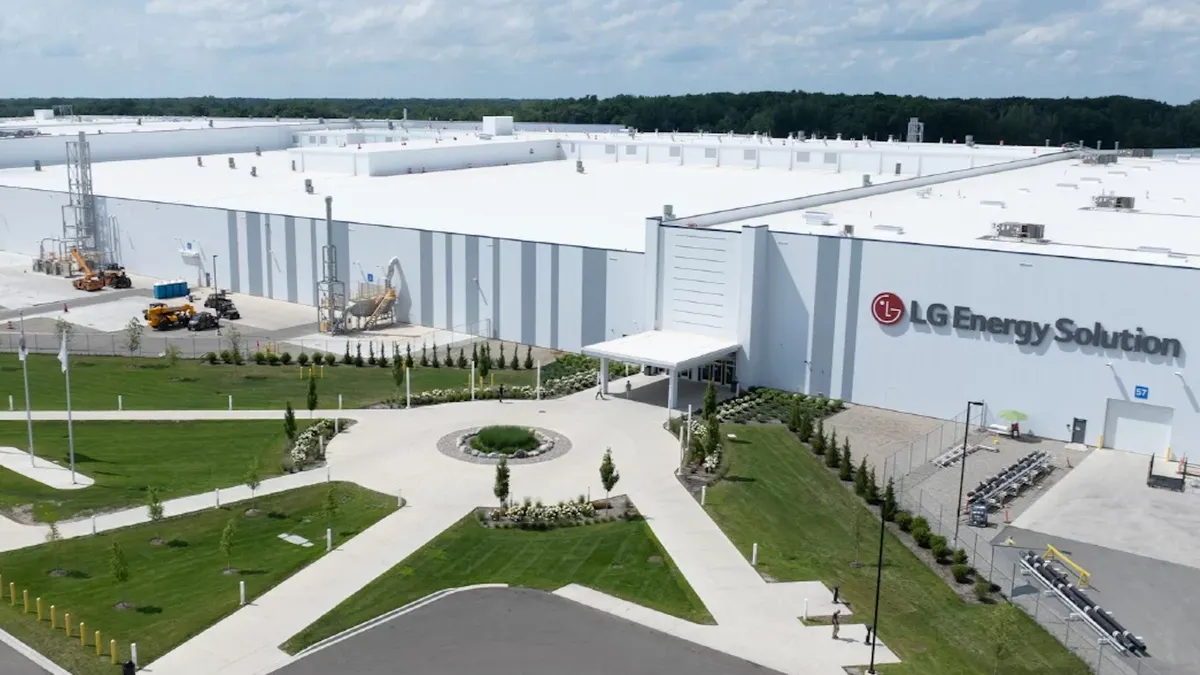
- Battery maker LG Energy Solution has started production at its new battery manufacturing facility in Lansing, Michigan, the company announced in an Aug. 18 press release.
- The plant will produce large-format batteries for both energy storage systems and electric vehicles, including energy-dense nickel-manganese-cobalt cells for Toyota, with a target annual capacity of 35 GWh and 1,700 jobs there once fully operational.
- “Today marks a defining milestone for LG Energy Solution. Lansing will produce advanced batteries that support not only the future of mobility, but also America’s growing energy infrastructure and digital economy,” said David Kim, CEO of LG Energy Solution, in a statement. “We are strengthening America’s battery ecosystem, expanding our manufacturing footprint and reaffirming our long-term commitment to the United States.”
Dive Insight:
The Lansing plant was originally one of three U.S. facilities that General Motors planned to operate as part of its Ultium Cells LLC joint venture with LG Energy Solution. But in December 2024, GM entered into a non-binding agreement to sell its stake in the plant to its JV partner in order to strategically adjust battery manufacturing capacity to align with EV demand.
Since 2010, LG Energy Solution has invested more than $5 billion total in the state of Michigan, per the release. The battery maker also operates a research & development facility in Troy. With the new Lansing battery plant, LG Energy Solution now operates two manufacturing facilities in Michigan; the other is located in Holland.
“Michigan is uniquely positioned to help lead this effort with its skilled workforce, manufacturing expertise and the industrial capabilities needed to strengthen America’s domestic battery supply chain,” Secretary of the Interior Doug Burgum said in a statement.
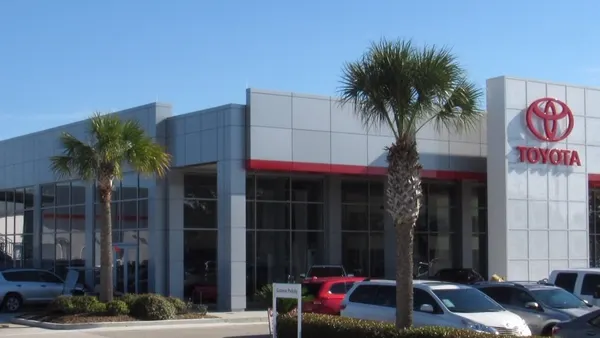
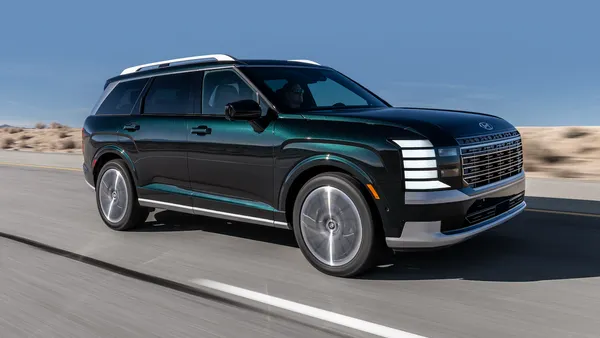
The NMC battery cells produced in Lansing for Toyota will be used in the forthcoming 2027 Toyota Highlander EV, which will be assembled in the U.S. at Toyota Motor Manufacturing Kentucky. LG Energy Solution says it will help strengthen the automaker’s U.S. supply chain by producing battery cells domestically for its next-generation vehicles.
As many automakers have scaled back their mid- to long-term electrification strategies, including GM and Ford Motor Co., LG Energy Solution and other battery makers have pivoted to manufacturing large-scale stationary battery systems, which are in high demand.
The LFP battery cells produced at the new Lansing plant will be integrated by the company’s U.S. energy storage division LG Energy Solution Vertech to build complete large-scale energy systems for utility, grid-scale storage and other commercial and industrial applications, per the release.
In March, Tesla and LG Energy Solution reached an agreement to build a $4.3 billion facility in Lansing to supply lithium iron phosphate prismatic battery cells that will be integrated into Tesla’s Megapack 3 energy storage systems that the company assembles in Houston.
Declining demand for EV batteries across the industry has also impacted LG Energy’s other automaker battery partnerships.
Last December, Ford terminated its multi-billion-dollar supply deal with LG Energy Solution for 75 gigawatt hours of battery cells after it updated its electrification strategy. The deal, which was for Ford’s European-market EVs, was estimated to be worth roughly $6.5 billion. In May, Ford launched its wholly owned subsidiary, Ford Energy, that will manufacture battery energy storage systems for data centers, utilities and large industrial and commercial customers in the U.S.
Also last December, LG Energy Solution agreed to sell its stake of its JV battery plant building in Ohio to Honda Development and Manufacturing of America for $2.85 billion. Honda and LG Energy Solution planned to produce lithium-ion batteries at the plant for Honda and Acura EV models for the North American market.
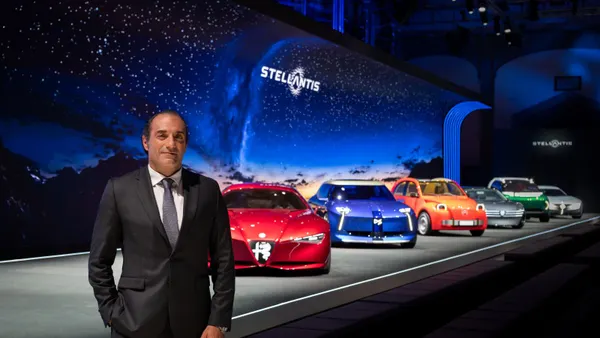
In February, Stellantis announced it was selling its 49% equity stake in the NextStar Energy battery JV in Canada to LG Energy Solution for just $100, allowing the company to take full ownership of the plant in Windsor, Ontario. LG Energy Solution aims to fully utilize the facility to produce lithium iron phosphate energy storage batteries.