

Lexus is on a roll in the U.S., where it originally launched in 1989. Year-over-year sales for Toyota’a luxury brand were up 11.4% in September, and the brand is on path to reach its all-time annual sales record of 370,260 vehicles, which it acheived in 2025.
Further underscoring the importance of sales volume in the U.S. market and the luxury brand’s importance in Toyota’s portfolio — Lexus has managed to redirect about 35,000 vehicles from other markets to stay on track, executives told dealers at its annual dealer meeting last month.
Just ahead of the dealer meeting in Atlanta, WardsAuto spoke via Teams with Dejuan Ross, group VP and general manager of the Lexus Division at Toyota Motor North America. Ross oversees all U.S. sales, marketing, customer service and dealer operations for Lexus.

Last year, Lexus took the event as a chance to brighten its halo, showing its dealers the direction of a new LS flagship and an LFA supercar, and confirming plans to bring its Century prestige luxury cars to the U.S.
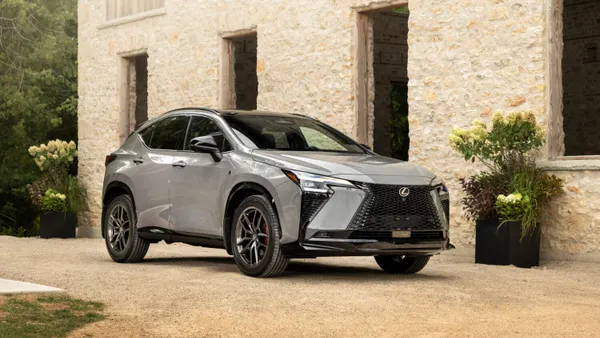
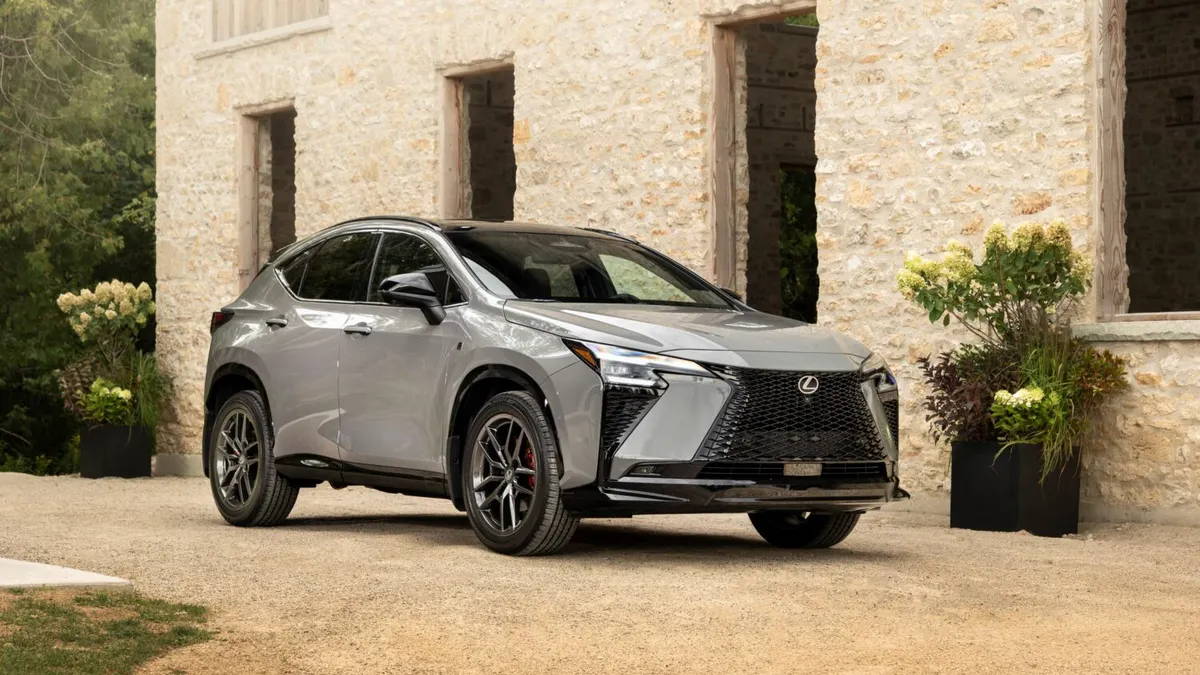
This time the focus, Ross prefaced to WardsAuto, was renewing the brand’s core — 90% of what its dealers sell from a volume standpoint. Dealers can look forward to a refreshed lineup over the next 18 months, according to Ross. That includes a renewed strategy for the entry SUV segment and the introduction of the Lexus UX’s replacement, along with an all-electrified NX compact crossover featuring hybrid and a plug-in hybrid powertrains.
WardsAuto checked in about Lexus’ plans for that product refresh, to embrace hybrids and EVs, make its dealers happy, engage with enthusiasts, and more. What follows is that conversation, edited only for clarity.
WARDSAUTO: When the EV surge swept across the luxury sector a few years ago, the RZ arrived right at the tail end. Now as the ES and the TZ arrive, it seems like it could be great preparation for a next wave of EV growth that we know is going to come. How are you helping your dealers get ready for that, and how are you helping make sure they see it that way?
DEJUAN ROSS: Very good question. I think you know we have a little bit longer of a runway than other OEMs with respect to electrification adoption. We’ve had plenty of time to prepare the dealers. I would probably classify RZ as our toe in the water, which we were able to get a lot of learnings out of, and then apply those learnings to both ES and then soon to be TZ.
BEV is, for the Multi-Path strategy, just one part of it. But I think also training and adoption for plug-ins is continuing to grow, following guest demand, and then our dealers continue to ask for more hybrids.
I kind of equate it back to when hybrid first came into the Toyota and Lexus side. Markets like Texas, Florida, probably took about a decade to adapt. BEV, it’ll take a while for full adoption, but our dealers have embraced it, and the dealers that embrace it the most are based upon the guests who are coming and asking about better products in those particular categories. And so I feel good about key segments. We don’t want to oversupply the market, but I do think that’s a signal we are heavily invested in — Multi-Path, which includes BEV and plug-in. But mainly the biggest demand from dealers continues to be hybrid currently.
So as we look into the hybrid lineup, what will you build out with hybrids next?
I would say the SUVs are probably first, but you know ES now is 100% electrified, hybrid and BEV. NX will follow the same cadence when it launches. Beginning of this year, NX will be 100% electrified.
There’s a couple products I can’t talk about now that will follow, towards the end of ‘27 into ‘28, and four products that will move from having an ICE option to 100% electrified hybrid, PHEV, and BEV.
So that’s going to be the future of our brand, which follows a similar path with Toyota. When you look at Camry, Sienna, products like that that once had solely ICE engines and ICE and hybrid, are now 100% hybrid. We’ll have the same products that are core products for us, move in that same direction where you won’t have an ICE option. You’ll only have a hybrid, a plug-in hybrid, and a BEV option.
Lexus IS sales have been doing really well, and yet that’s an aging platform. Could hybrid be next for something like that? And what about EREVs for the SUVs. Is this tech going to follow Toyota very closely — or beat Toyota out of the gate?
No, not right now. At least as planning is concerned, I would say we’re probably a little bit behind Toyota, even with respect to electrifying our lineup. Electrified, meaning hybrid again, we’re at 41%, with plans over the next couple of years to increase that to about half of our sales. But I think Toyota’s slightly ahead of that; I think EREV as well — they’ll be ahead of us on that.
With the increased popularity of SUVs, our percentage of SUV-to-sedan sales is about 80/20. But when we went the first four months of the year without ES it was probably more like 89/11. We were heavily invested towards SUVs. The sales volume proved that there is a sedan buyer in the market.
I do think, yeah, the conversation’s about a possible hybrid option in the future. But I think the biggest conversation is the success of the IS, making sure we continue that vehicle and have the resources for a next generation of IS.
We just completed our IS 25th anniversary road tour. So we went to four cities across the country that had cars from 2001 to 2026; they brought them out and we’re just showcasing their vehicle, their loyalty to the nameplate. We had over 2,000 people attend each session — one in each part of the country. So people are passionate about that product. We want to make sure the nameplate stays current in the lineup.
Has Lexus seen any evidence that, as gas prices have surged this year, that hybrid sales have too? I know it's helped Toyota, but has it also helped Lexus and your sales in some product lines this year?
Absolutely, yeah. Adoption to hybrid has certainly increased. We're seeing a higher percentage of our volume overall be dedicated towards electrified products.
So that's one sign, and I think the other side, we were talking about this earlier: Lexus is — I know it sounds like an oxymoron — a value story on the luxury side of the industry. And so, typically, when we face some headwinds economically, historically, the brand does a little bit better from sales volume and share because it's viewed as a smart buy in the marketplace — a vehicle that when someone maybe wants to get out of the leasing cycle and is uncertain about the future, wants to hold on to for long.
We basically do well because of the QDR reputation, right? Quality, dependability, reliability, and so you know our turning point as a brand. I think this is part of the reason why we are bringing in new buyers, which is something that we have desperately been looking to do for years. Because now we've added a couple more components to QDR, which is styling and fun-to-drive. You might also see some styling cues on some of our future products that probably appeal more towards the younger buyers that we have the opportunity to conquest, that may not have historically considered Lexus on their short list of products to purchase.
Ahead of the Lexus dealer meeting, are dealers more concerned about losing out on fixed ops and various potential revenue lines to bolster the business. What’s the next wave of dealer service and how are you making sure that they don’t miss out?
Historically, a great new-car sales year for the brand was 300,000. The last couple of years, the floor has been 350,000. Right, we sold 368 last year. We'll sell between 360 and 365 this year. Next year we'll sell 370.
Because of that additional UIO [units in operation], we've been telling dealers that the opportunity to increase revenue is on the fixed operation side. Many of them had already bolstered up their operations after COVID because it highlighted a lot of opportunities if you weren't that strong on the fixed operation side — particularly as new-car business was pretty challenging.
Out of COVID, what the brand did is we started almost a parallel set of dealer meetings dedicated to our fixed operations teams, we call them Guest Experience Summits. We just completed year four in August, and year five is already planned. So there we specifically invite service managers, parts managers, parts and service directors, collision managers, and we talk about new technology, new initiatives.
Our focus as a brand has been increasing retention each year by two percentage points. This year, currently, we're about 1.6% increase, and that's providing a lot of opportunities on the fixed operations side.
We're also coming to market with products that guests want to custom-personalize as their own, so the accessory sales has also provided some opportunities for dealers on the fixed operations side. As a result, we're having an all-time best-ever year on the fixed operations side — with still, to your point, a lot of meat on the bone for opportunity. That's probably a bigger opportunity in our business on the Lexus side than even with new cars. The new-car opportunity obviously is challenging with some production capacity issues, whereas obviously on the fixed operations side there’s a lot of room to grow.
And so is mobile service bulking up some of the business?
I would say mobile service is something our dealers have embraced for years, but not every dealer, so probably not as consistent as pickup and delivery. As an opportunity, mobile service is one of those — being able to commit to a guest that you can actually do a routine service within an hour, and convince them to take advantage of state-of-the-art service lounges that we have across the country.
So I think that commitment means staffing up from a technical standpoint. Every dealer will tell you that’s one of the hardest positions to fill in their store. So they’re actively looking at T10 schools to find technicians. I think reducing that wait time, increasing the amount of service loaner vehicles, and offering mobile delivery are three levers they can pull.
Let me go big-picture for a moment. Lexus is really holding its own in the U.S. and connecting well with the market, yet global sales are not doing as well for the brand. Is this initiating any sort of reality check within Lexus to make its lineup even more U.S. focused?
We hope so. I think that's a great suggestion — one I support. Yes, a product like TX, for example, is a product that's dedicated for the U.S. market, and so I’m obviously excited about that and future products that would be targeted towards buyers' habits and behaviors in the U.S.
But I think to your question, a short, a nearer-term success that we're seeing because of maybe some softness globally is the ability to secure additional production in ways that maybe we haven't been able to do historically. That's yielded us some additional production this year that our dealers will see for Q4 of this year, going into Q1 of next year.
And so, if that trend continues, I think that helps because we are max at production globally. Every region competes for their fair share of a global production market that's capped, and so the ability to pick up additional production that can work for the dealers in the U.S., and for the buying behaviors of our guests, is something in a shorter term that's proven to be more beneficial for us than maybe dedicating the product specifically to the U.S..
So I hope the latter happens. But I think in the nearer term, the ability to secure additional product is something that our dealers will appreciate.
When you look at sales weighted, and the number of Lexus products depending on production in Japan, you face at least for the time being some daunting tariffs — and then furthermore that chicken tax on a couple of your SUVs. Do you see an exit for this? Are your dealers involved in talks regarding this, and how quickly can you kind of shift some of that U.S.-bound production back back onshore?
Good question. I think as far as the tariffs are concerned, our dealers as well as us are starting to believe that this is not going anywhere anytime soon, right? So I think we have to figure out how to adapt in a changing, ever-changing environment. We certainly message our dealers frequently about having strong relationships with state and local government representatives, especially since in many cases they employ quite a few people in their local markets, and so their message is heard a lot louder than maybe others.
As far as vehicles and moving vehicles from one region to another, we actually feel really good about our plan. We haven't passed on tariffs directly to our dealers. What we've communicated to our dealers is that we want to follow the market, so there will be price increases as a result of tariffs. As other brands increase their prices, we want to make sure they remain competitive, we also want to make sure we give dealers a value story.
So we've been able to balance that for the past couple years. We'll work on continuing to balance that moving forward, but I would tell you today it has not impacted our sales plan. In fact, our plan is for modest growth for 2027 over this year. So this year relatively flat, next year modest growth, and we just have to be a lot more diligent by segment to see where those growth opportunities are.
Now, in terms of growth and growth opportunities, there’s been some discussion about Century recently. In the U.S. is there potential that it could piggyback on Lexus or be part of Lexus? Is there any room for Lexus itself to go upward, in prestige?
Last year, we communicated to our dealers our future plans. That included being able to have the opportunity to sell both a GR product as well as Century in the U.S. in the future. So I do think that's a reality with a smaller subset of Lexus dealers that will have that opportunity. But I think that's probably where our premium growth will occur.
Do you see space for something, you know, especially flashy here, like you know the LFA successor building on the talk about GR-something that would build buzz?
I do, and I think products like that obviously elevate the brand because they become aspirational. So there's definitely room, and I do see a future with some of those products, especially with LC 500 leaving the brand. You know, there's certainly opportunities for products like that that are niche in volume but obviously have a halo effect.
Bring back the V-8 for the blink of an eye?
Now you’re talking my language.