Dive Brief:
- State laws requiring car manufacturers to sell their vehicles through franchised dealers add an estimated $3,934 to $4,992 to its cost, according to a new issue brief by the International Center for Law & Economics.
- The issue brief says that state dealer laws add an extra distribution layer that essentially functions as a “middleman tax” that’s passed on to consumers, even where more efficient vehicle models are available.
- The ICLE used an analytical framework first developed in a 2000 Goldman Sachs report, which was later cited by the U.S. Department of Justice which the think tank says no longer applies in today’s retail environment. The issue brief updates the report’s methodology and includes factors such as current vehicle prices, interest rates, inventory data and dealer operating costs.
Dive Insight:
Buying a car is one of the largest purchases consumers will make, the issue brief says, yet car shoppers in all 50 states must adhere to a complex web of dealer-franchise laws dictating how that purchase must occur when the average price of a new vehicle is around $50,000.
“Protecting an incumbent distribution channel is not the same as protecting consumers,” the report concludes. “Allowing manufacturers to compete through different models would better align the law with the realities of the modern automobile market.”
According to the ICLE, states should not force an out-of-state car manufacturer to adopt a state-specific "retail structure” in order to sell their vehicles to local consumers. The study found many current state franchise statutes fit poorly “with the business models they now attempt to regulate.”
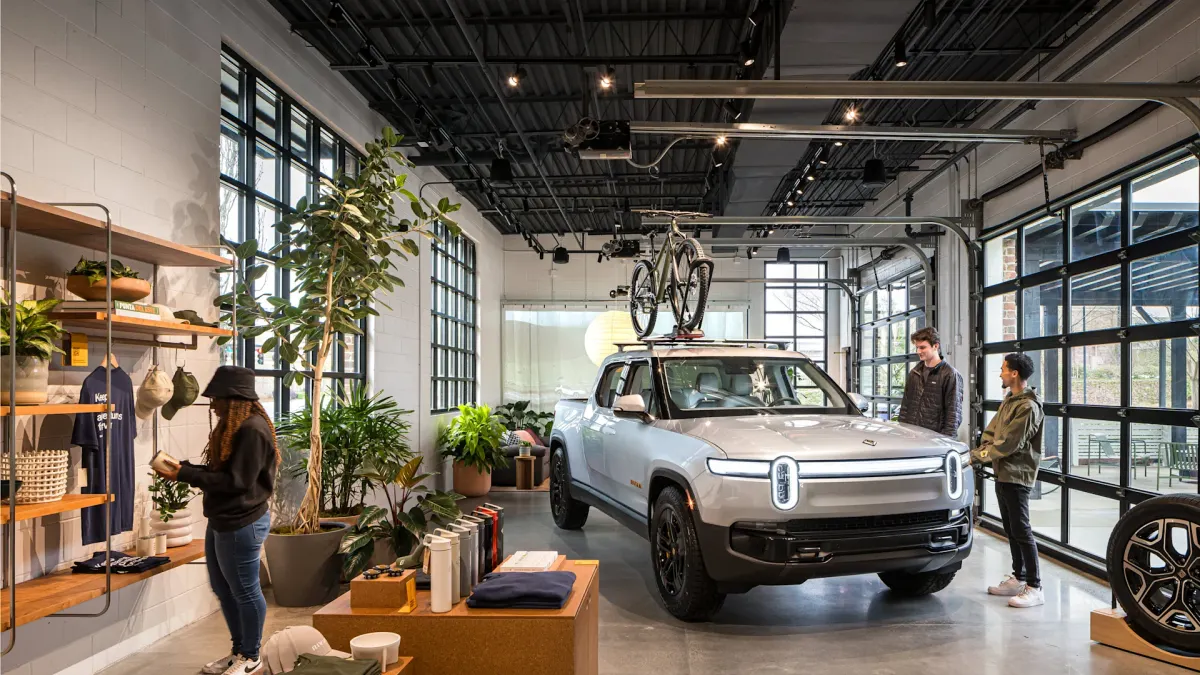
It says existing dealer franchise laws fragment the national market and burden interstate commerce, adding that they conflict with modern direct-to-consumer and software-driven vehicle business models offered by dealers that more car shoppers expect today.
The ICLE issue brief also says the existing retail franchise model is “structurally incompatible with software-defined vehicles that depend on over-the-air updates and integrated digital platforms.”
“The policy principle is simple: allow consumers to benefit from competition,” said Kristian Stout, ICLE’s director of innovation policy. “States should not mandate a single distribution architecture when multiple models can compete to serve consumers. Removing this tax would lower costs and expand choice.”
The patchwork of dealer franchise laws was enacted by state legislators between the 1930s and 1970s to protect dealers from coercive manufacturer practices, which are now deemed outdated, the ICLE argues. They were enacted at a time when the Big Three automakers dominated the U.S. market and had greater influence and control over their nationwide dealer networks.
The regulations were intended to protect dealers from being forced to accept unwanted vehicles, prevent franchise agreements from being terminated without cause, or prevent an OEM from locating a new franchisee inside an existing dealer’s territory.
“Dealer-franchise laws were enacted to protect dealers from manufacturer coercion, not to protect consumers from manufacturers,” the ICLE said in its issue brief.
However, the ICLE notes that dealers have also changed, evolving from small family-owned businesses into large, sophisticated enterprises, often owned by multi-state auto groups or even publicly traded companies. The ICLE cited a 2025 report from Kerrigan Advisors that said about 150 dealership groups now control roughly 30% of industry revenue, and that figure could reach 50% by 2050.
Dealers can also benefit from fewer regulations on how they sell cars. In an era where many vehicles can be purchased entirely online, the ICLE says banning direct-to-consumer sales requires that dealers maintain extensive physical retail networks and hire a commission-based sales staff, which alone adds roughly $1,200 to $1,900 in avoidable costs for consumers.
In addition, requiring that dealers keep an inventory of vehicles adds another $1,045 to $1,105 in carrying costs, and the “make-to-stock” model based on sales forecast projections creates about $1,600 in costs per unit, as dealers often rely on incentives to move their unwanted inventory, according to the issue brief.
In addition to added costs for consumers, the ICLE issue brief also said that the existing dealership sales model wastes valuable time. It says the average vehicle purchase required roughly 13 hours in 2025, including research, dealer visits and negotiations.