Lexus is offering a luxury sedan for the consumer who likes choices. Want a gas-powered vehicle? Then get the eighth-generation ES as a reimagined 2026 ES 350h hybrid. Ready to make the leap to electric? Then choose one of the first fully electric ES models — the ES 350e or ES 500e.
The so-called multi-pathway vehicle platform shared by this range of models is a first for the Lexus brand. All vehicles share the same platform and overall design except for minor model-specific details.
Exteriors don’t reveal what’s under the hood
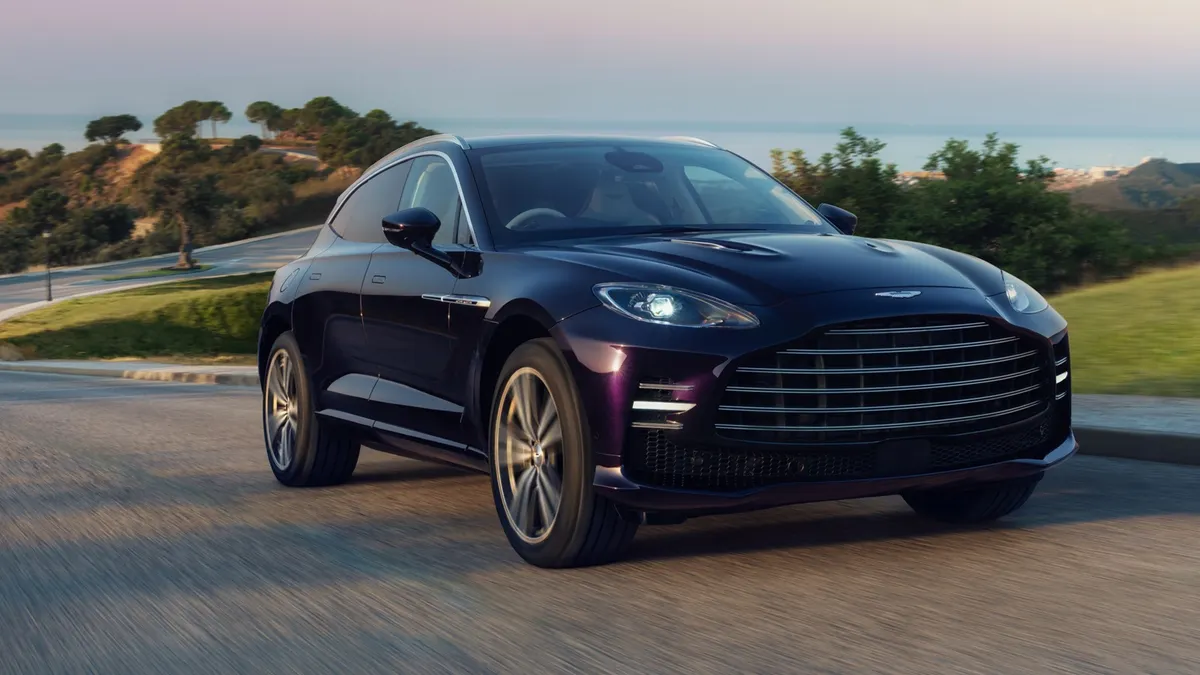
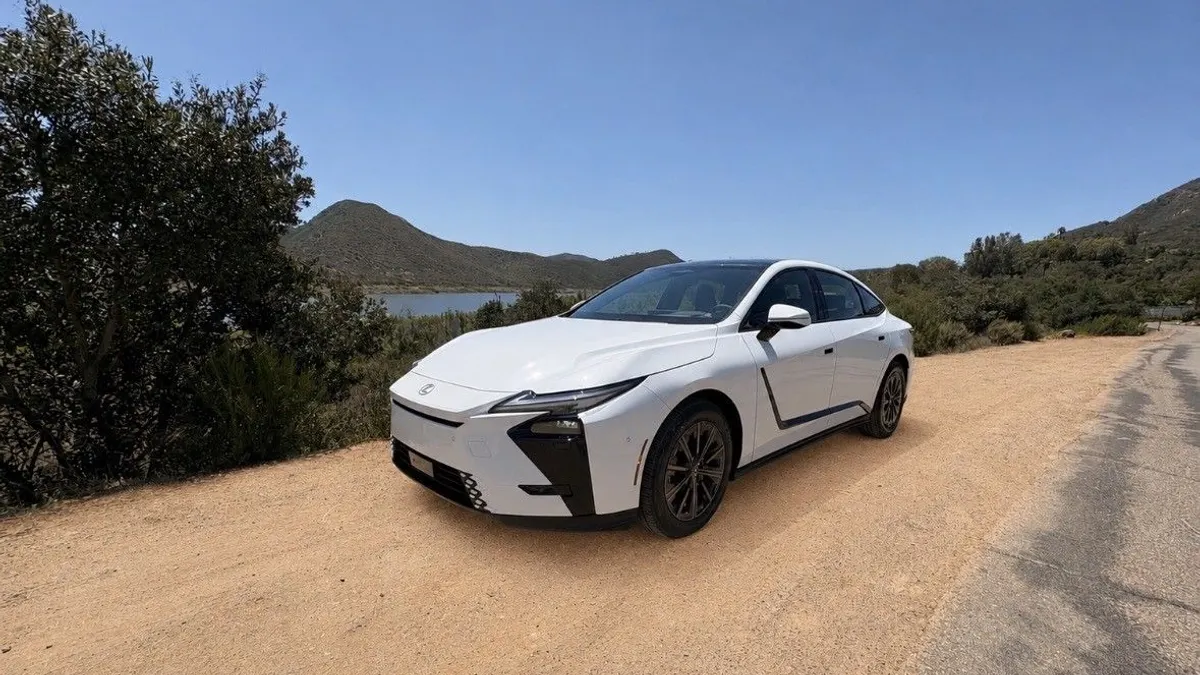
Both the EVs and the hybrid look exactly the same from the outside other than badging and a thin, hardly noticeable slot for cooling at the front of the hybrid. The EV nose is smooth. Gone from both is the previous generation’s oversize spindle grille.
The ES 350e has a single-electric motor and is front-wheel drive. The ES 500e has dual electric motors, one front and one rear, providing all-wheel drive. Both fully electric ES models share a 74.7-kWh lithium-ion battery pack.
Meanwhile, the redesigned ES 350h introduces the 6th-generation Lexus hybrid system, adding an AWD option along with a higher combined output of 244 hp. It features a 2.5-liter four-cylinder gas engine, an electric starter-generator and a motor-generator, with the duties between them handled via a planetary gear system.
The hybrid’s all-wheel-drive option adds an additional electric motor mounted at the rear axle that exclusively powers the rear wheels, providing enhanced traction on demand.
We found responsive acceleration from the hybrid, while its cabin remained noticeably quiet.
The ES 350h will offer even better fuel efficiency than the outgoing 2025 ES hybrid, with EPA-estimated ratings for the 2026 hybrid at 46 mpg with front-wheel drive or 44 mpg with all-wheel drive.
Putting each vehicle through their paces
Over the course of about six hours, we got to drive five different vehicles: the ES 500e Premium, the ES 350h Hybrid Premium+, the ES 350e Premium and two different ES 500e Luxury. All were AWD with the exception of the 350e Premium.
While the 500e has greater horsepower than the 350e — 338 hp vs. 221 hp — the 350e is hardly what I would call sluggish. We chose a route with some winding patches, and both vehicles handled and felt similarly. The 350e requires 7.4 seconds for 0-60 mph compared to 5.1 seconds for the 500e.
The 350e and 500e are available in Premium or Luxury versions, and the 350h is available in Premium or Premium+. Including destination fees, the 500e Luxury starts at $60,295 and the 500e Premium starts at $51,895, while the 350e Premium starts at $48,895. The 350h Hybrid Premium+ with AWD starts at $57,295.
Among the noticeable interior differences versus previous ES models is that the steering wheel no longer features the traditional stylized “L” badge; the brand is spelled out instead. Also ES 500e Luxury stands out with bamboo layering trim with a thematic ambient illustration. The color changes depending on which mode you are in: normal, eco, sport, range (which maximizes driving range) or custom. It’s pretty cool, especially in a dark parking garage.
For the first time, an optional Executive package (available on ES 350e Luxury trim only) upgrades the ES’ rear outboard seats with power adjustments, heating and ventilation functions, a massage feature and an ottoman on the passenger side. Sadly, I didn’t have time to ask my co-driver to drive me around while I sat in the back seat to check this out.
Lexus introduces more responsive new interface system
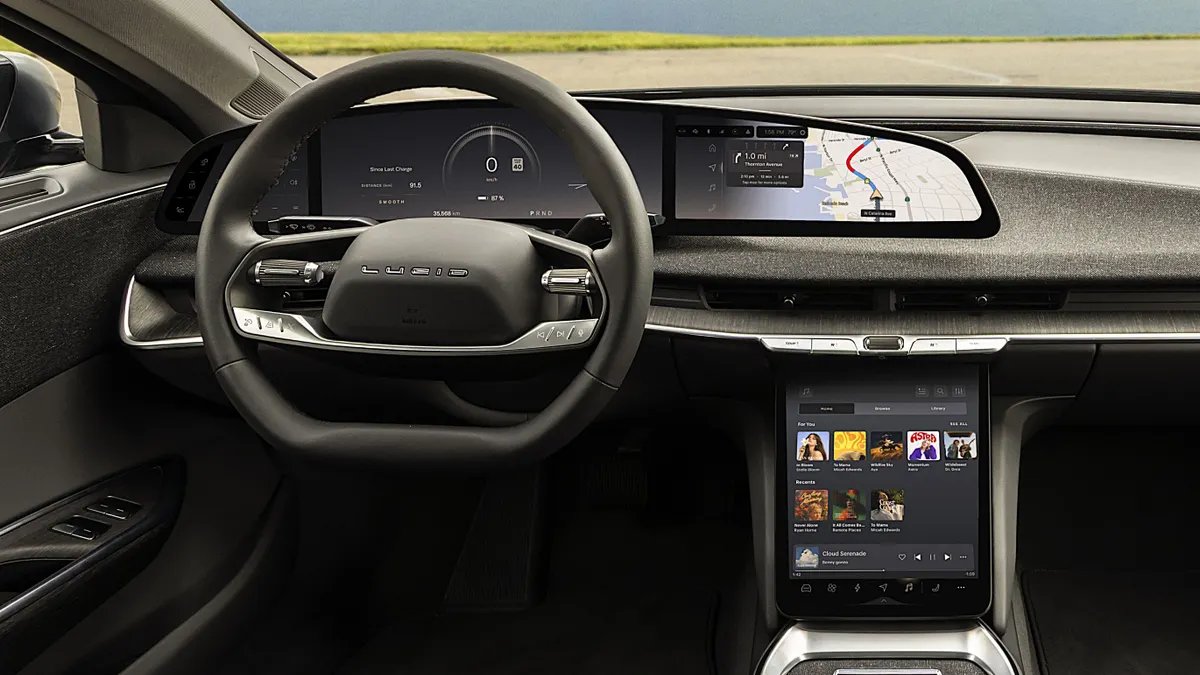
Every 2026 ES includes a new 12.3-inch configurable gauge-cluster display, as well as the latest Lexus Interface infotainment system in a 14-inch touchscreen. The system marks Lexus' first integration of AT&T 5G network connectivity into the lineup, which helps bring increased speeds, expanded features and more reception area through AT&T’s extensive network across North America.
The touchscreen’s response time is improved thanks to increased on-device computing power. Personalization is emphasized and the interface includes a configurable home screen, allowing drivers to customize their preferred on-screen combination of individual widgets for navigation, drive mode, audio, connected smart devices and weather.
The electric ES versions include features to set charging schedules and charge limits, and the navigation system can help dynamically plan for charging stops along the way. There’s also an EV Range Map for helping calculate the best route not just by drive time but with charging time added in, estimating the battery percentage at each stop and the final destination. It’s really handy and should save road-trippers time and anxiety.
What Lexus calls the Quick Control Menu is accessible from the upper right section of the touchscreen. The menu opens to settings for frequently used features, such as connecting to Bluetooth, adjusting screen brightness, switching from light to dark mode and shortcuts to configure Advanced Driver Assistance System (ADAS) features.
Lexus ES chief engineer confides there were a few bumps on the road
Lexus encountered two significant challenges in creating the new ES, Lexus ES Chief Engineer Kohei Chiashi tells WardsAuto. One was from a design standpoint. “We were trying to suggest a new kind of sedan, a next-generation-style sedan,” Chiashi said through a translator. “The ES historically has had an elegant, flowing silhouette, and we wanted to make sure we didn’t compromise that.”
Lexus says the new ES is “longer, lower, and broader than before, with a sleeker roofline and commanding presence that stands apart from its predecessors.”
Second, Chiashi explained via the translator, the multi-pathway vehicle design supporting hybrid and fully electric powertrain options was “much more intense” than originally expected.
They started as two totally different vehicles, each with its own set of problems. “All the problems that occurred with each version were completely different,” he said. “No matter which car we looked at, we had to make sure both of those were no-compromise versions of the car. Really trying to solve that and have the countermeasures to achieve that was much harder than expected.”
The upside, Chiashi said, was “a lot of fundamental discoveries and it made us stronger as a development team. And that’s become a very important asset.”