Dive Brief:
- General Motors reported net revenue of $48 billion for the second quarter of 2026, up from $43.6 billion in Q1 and by $900,000 from the same period last year, and the automaker announced its Q2 earnings report on Tuesday.
- GM reported net income of $1.3 billion in Q2, a decline from $1.9 billion in the same period last year. The automaker's EBIT-adjusted operating profit in Q2 was $3.9 billion, up 30% from $3 billion in the same period last year. EBIT-adjusted margin also improved from 6.4% in Q2 2025 to 8.2%.
- Vehicle sales in Q2 totaled 714,896 units, down 4%. The company said it reflected a smaller EV market, discontinued vehicles and some inventory constraints during the quarter. Still, as a result of its Q2 performance, GM updated its full-year guidance to an adjusted EBIT of between $14-$16 billion, up from $13.5-$15.5 billion previously.
Dive Insight:
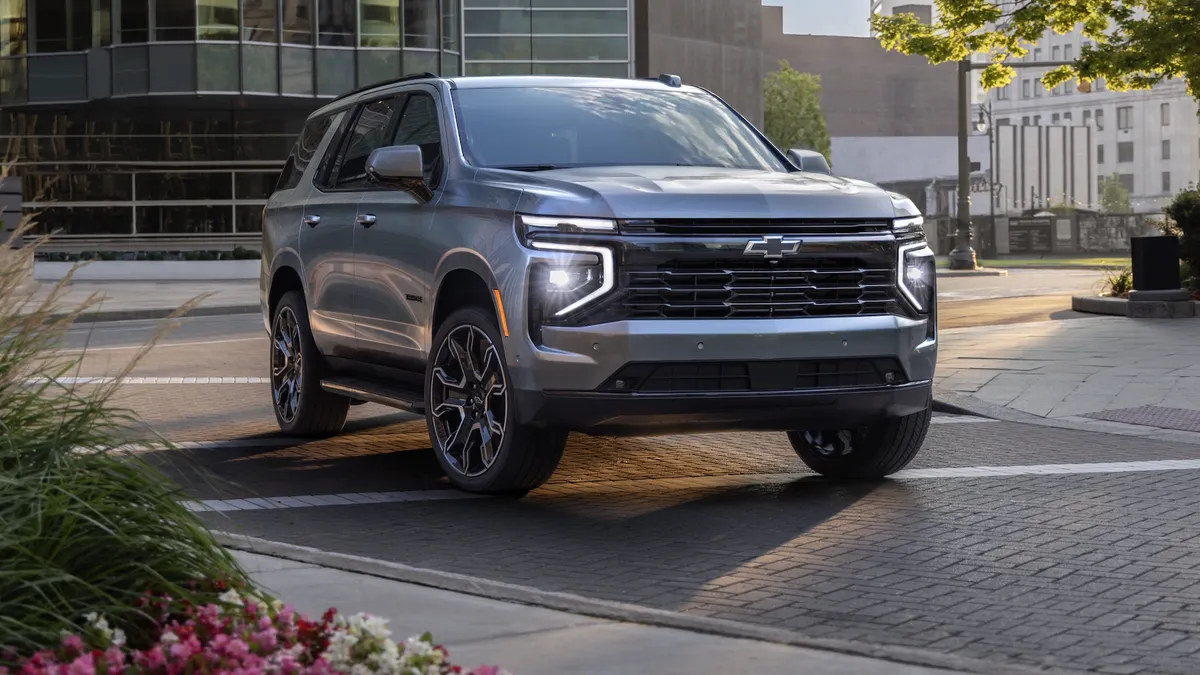
GM cited not overall sales volume but a series of other factors for a decline in EBIT-adjusted margin in Q2, versus 9.7% in Q1. They included shifts in its regional volume,cost pressures tied to inflation and manufacturing expenses related to onshoring more production to the U.S. However, the company’s margins are still within its target range of 8%-10% for 2026, which is being aided by strong sales of profitable trucks and SUVs.
“We are winning in the segments that matter most, including full-size trucks and SUVs, while maintaining disciplined pricing and inventory levels,” GM CFO Paul Jacobson said on Tuesday’s earnings call with analysts.
Jacobson said that GM’s fleet sales in the first half of 2026 were the highest in more than five years, along with the highest government sales since 2009 and record full-size pickup sales in Q2 driven by strong commercial demand.
“The business continues to perform very well, said GM Chairman and CEO Mary Barra on the earnings call. “Customer demand in North America remains steady, including for our pickups and SUVs and pricing is consistent.
Barra noted that GM share of the U.S. full-size pickup market stands at more than 42% through the first half of 2026, which is more than 10 percentage points above its closest competitor.
Looking ahead, Jacobson said that GM is working to recover from its costly shift away from electric vehicles and expects the related losses to improve by $1 billion to $1.5 billion for the full year.
In 2025, GM posted a 55% YoY decline in net income, from $6 billion in 2024 to $2.7 billion, which was primarily the result of EV-related charges last year, which were $6 billion alone in Q4 2025. GM’s total EV-related charges last year were roughly $7.9 billion, which significantly impacted its profits. But Jacobson said the company is working to recover from the multi-billion dollar EV losses in 2025.
“Our teams have worked tirelessly with our partners and suppliers across the EV value chain to conclude these negotiations quickly,” Jacobson said on the call. “I'm proud to say that we believe these actions substantially complete the material cash charges we expect to incur as we align our EV capacity and manufacturing footprint with the changes in regulatory policy.”
Jacobson added that the investments GM is currently making to onshore production, launch new vehicles and expand full-size SUV capacity will position the company to further grow revenue, gain market share and improve its profitability in 2027.
GM’s next major launch is the redesigned Chevrolet Silverado and GMC Sierra light-duty pickups, which will begin arriving in dealer showrooms in December. Barra said on the earnings call that GM “significantly elevated the exterior and interior design to increase their presence, refinement and appeal.” She added that GM plans to maintain record production volumes year-over-year.
GM last June announced a $4 billion investment in three U.S. plants and said it would shift its Orion Assembly plant near Detroit toward production of full-size ICE trucks and SUVs, starting in early 2027.
Correction: In our original coverage, we omitted some key financial metrics, including EBIT-adjusted operating profit. The story has been updated to include this information.