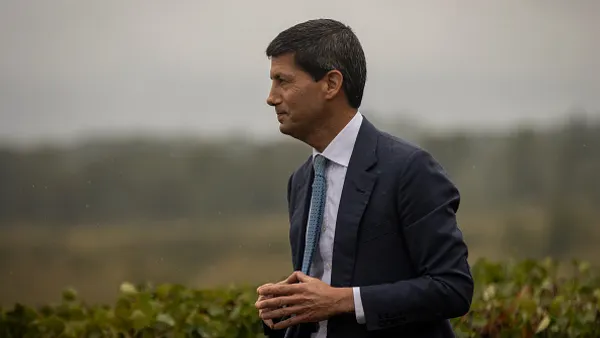
PLANO, TX – Toyota Motor North America's chief operating officer, Mark Templin, says President Trump’s tariffs on foreign-made automobiles are “not sustainable longer term without significant price increases, and the industry already has an affordability problem.”
Toyota produces slightly less than half the vehicles it sells in the U.S. outside its borders, including Mexico, Canada and Japan, the company says.
Templin, speaking to media gathered here to hear about Toyota’s future product plans and test-drive vehicles, notes that the average transaction price of a new vehicle, according to Cox Automotive, is nearly $50,000. “Adding a 25% tariff on all imported vehicles would put a new car out of reach for a lot of Americans.”
Toyota has not yet significantly increased retail prices on its foreign-made models such as Toyota Tacoma, RAV4, Corolla and 4Runner since the tariffs were put in place.
Templin tells WardsAuto that U.S. Commerce Secretary Howard Lutnick told Toyota that even though Japan levies no tariffs on U.S.-made vehicles, Japan exerts “non-tariff” barriers for U.S. automakers selling vehicles in that country. Toyota, says Templin, pointed out that German automakers have long sold vehicles in Japan by “selling vehicles with right-hand drive and smaller cars that Japanese consumers prefer.” BMW, for example, sold 35,600 vehicles in Japan in 2024, per Wards Intelligence, while Mercedes-Benz sold 53,000 vehicles and Porsche sold 9,300.
Templin says auto suppliers, without a policy change, will feel the brunt of tariffs worse than automakers because they are not as well-capitalized as the car companies. “It’s important to understand that supply chains are global. They’re complex and they’re very fragile.
“So, levies on parts will negatively impact the automotive supply chain and lead to higher prices (and) lower vehicle sales and will make repairing vehicles more expensive for customers,” says Templin.
The Trump Admin. says it is levying tariffs on countries with the intent of eliminating trade deficits and incentivizing foreign companies to locate more manufacturing in the U.S. President Trump has been using social media to criticize companies like Walmart for raising prices to offset the tariffs that the companies must pay. Trump often insinuates that the foreign countries pay the tariffs to the U.S. Treasury, but it is the importing companies who pay and normally pass the costs onto customers.
Online retailer Amazon said earlier this month that it would inform customers how much of the higher prices it would have to charge due to tariffs. The White House criticized the company, and it backed down on the price disclosure idea.
“I have had the chance to visit several policymakers…and we believe the administration understands the consequences of tariffs on imported vehicles and the fragile nature of the global supply chain,” says Templin.