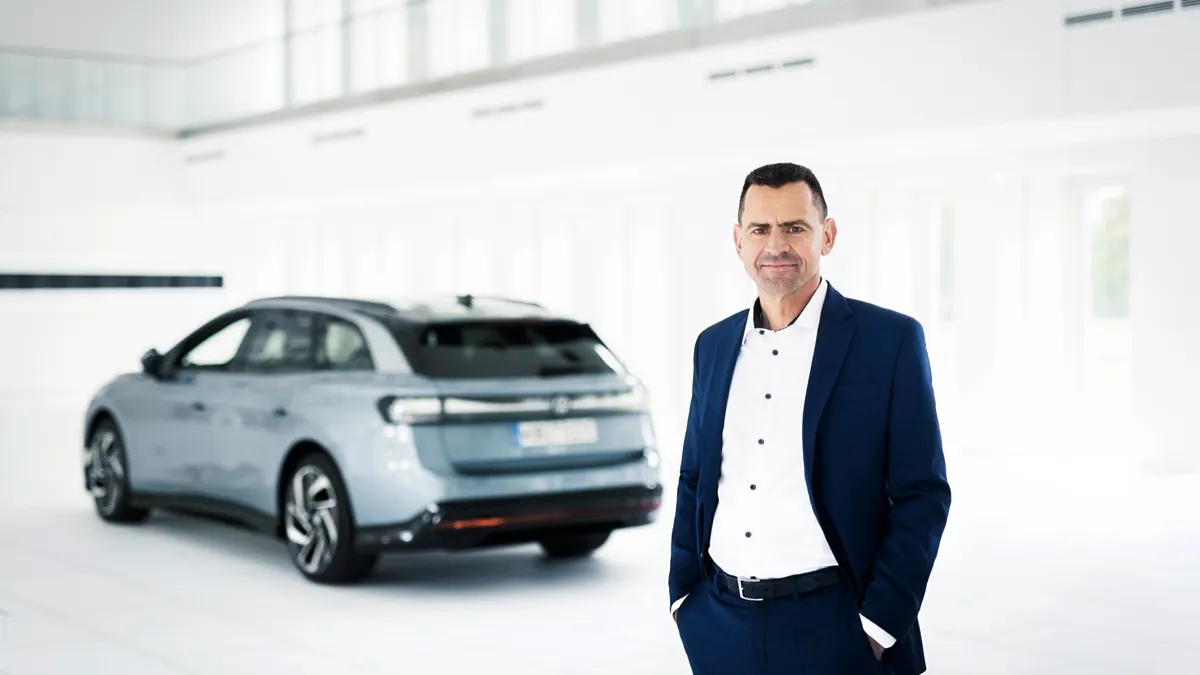
HAMBURG, Germany — Volkswagen's board member for sales, marketing and after-sales has announced a fundamental reset of the brand.
In a media preview of future Volkswagen models, Martin Sander said in German that the car maker had “lost its way” on design and usability and is now refocusing on what it calls "true Volkswagen" qualities.
Sander elaborated on what that means: Volkswagen's passenger car division is moving away from the technology-driven feature lists that he revealed have driven the development of its models in recent years and back to what he describes as a “customer-centric approach.”
"I wondered, why don't customers really feel comfortable using our products?" said Sander, Volkswagen brand board member for sales, marketing and after-sales. "Today, we start differently. We don't start with features, we start with people."
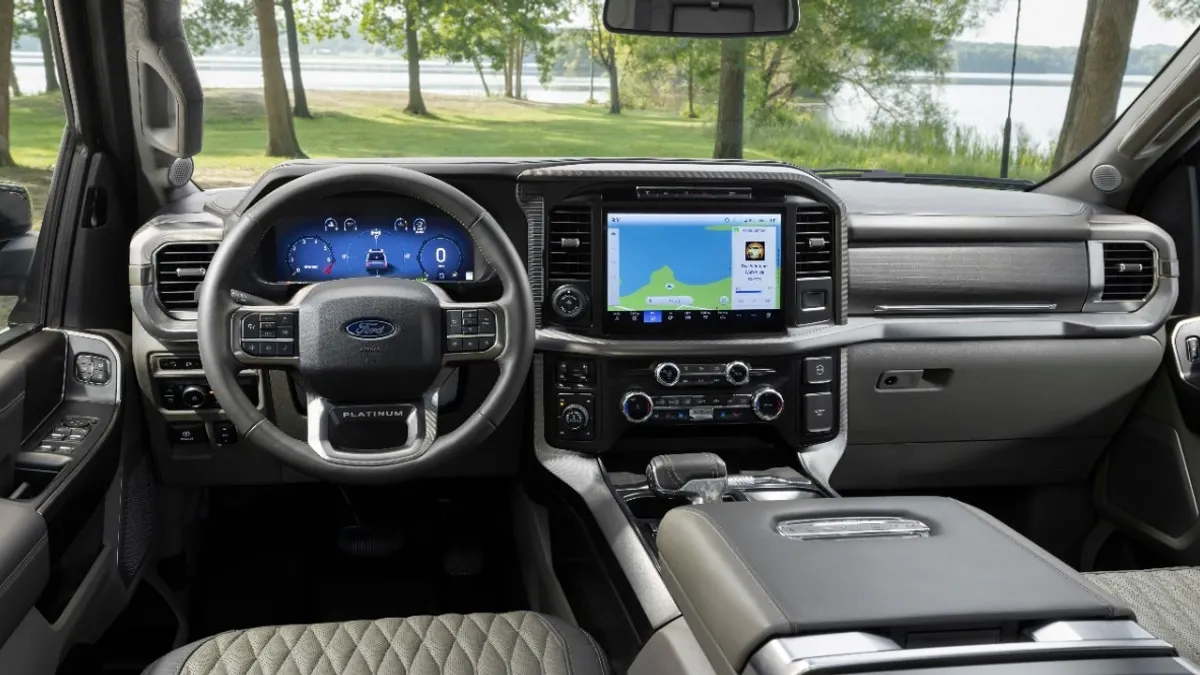
As part of the reset, Volkswagen said it is reintroducing physical buttons, intuitive controls and recognizable model names to upcoming models, walking back from touch-sensitive interfaces, deep digital menus and uncharacteristic, for Volkswagen, numeric model designations — including the ID.4 SUV, which VW is ending production of this month at its U.S. plant in Tennessee.
"A Volkswagen must feel right immediately," Sander said. "A Volkswagen must be intuitive and likable. That's why we are bringing back real buttons. We are bringing back intuitive usability. And we are bringing back real names."
Management has moment of clarity in Wolfsburg
Sander, who was head of sales at Ford of Europe before joining VW in 2024, also described an internal turning point when Volkswagen's entire management team gathered at the company's Wolfsburg headquarters in Germany for what he called an “unfiltered assessment of the brand’s problems.”
“We said, ‘Guys, it's time to be completely honest now. Let's put all numbers on the table, put all the problems, all the facts on the table. No filters, please,’” Sander revealed. “And we also said where we are going, but also where we are not going anymore.”
According to Sander, the Volkswagen management team applauded. “Not because everything was perfect, but because there was finally clarity. From that moment on, the team was aligned on focusing again on the core values of our company and our brand.”
Design overhaul under ‘Pure Positive’ lineage
Sander acknowledged that Volkswagen had strayed from its heritage image-wise, too. “The models you've seen over the last couple of years have not always been purely Volkswagen design, as customers would expect from us,” he said.
The brand has since adopted a new design lineage called “Pure Positive,” developed under Volkswagen's design boss, Andy Mindt. The philosophy rests on three principles: stable, likable and what Sander called a "secret sauce" — “a distinctive extra that only Volkswagen provides.”
"A Volkswagen that still looks great in 10 years from now," Sander said, describing the new design direction as "clear, timeless, and confident."
Engineering resets back to front-wheel drive
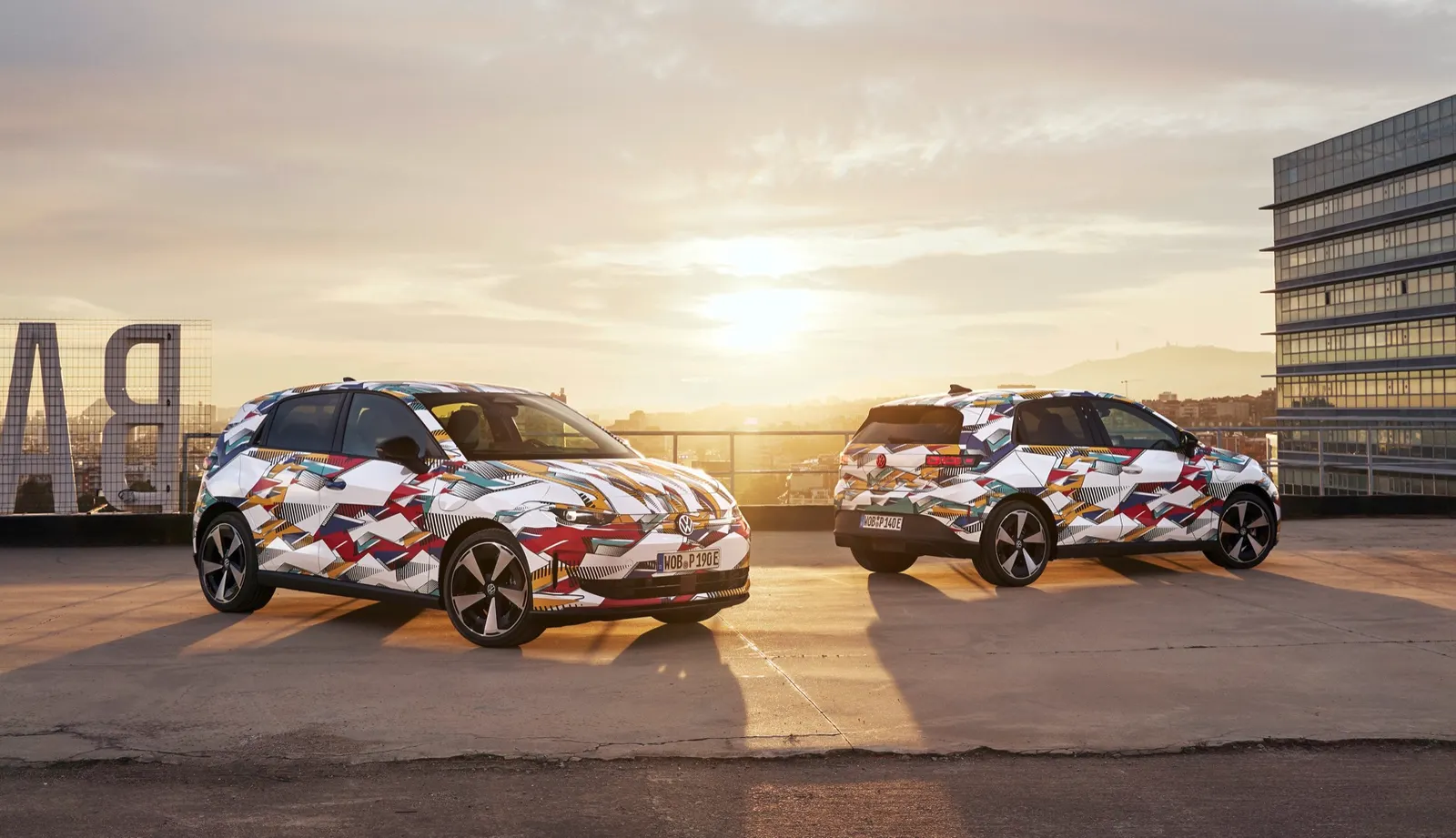
The reset extends beyond styling to the technical underpinnings of future models. The new ID. Polo, Volkswagen's upcoming entry-level electric hatchback planned for European sales during the second half of 2026, is set to adopt a front-wheel-drive layout, a configuration associated with more affordable and accessible Volkswagen models since the introduction of the original Golf (Rabbit in the U.S. market) in 1974.
The production car, previewed by the ID.2all concept, marks a deliberate return to front- wheel drive. While many of Volkswagen's current electric models use rear-wheel drive with an electric motor placed on the rear axle, the front-wheel-drive layout of the ID. Polo is intended to lower manufacturing complexity, reduce weight and improve interior packaging with a newly developed electric motor.
Volkswagen has described the approach as "democratizing e-mobility," with Sander noting that the brand's ability to scale technology across high-volume platforms remains a core competitive advantage. “The ID. Polo will be built on a new version of Volkswagen's MEB+ platform, adapted for front-wheel drive to prioritize efficiency and affordability over power and performance,” he said.
Back to ‘real’ model names
Volkswagen's latest electric models will also forgo the numeric designations given to recent electric models such as the ID.3, ID.4, ID.5 and ID.7, instead adopting established nameplates with decades of heritage. The first to benefit is the new ID. Polo — reviving a name Volkswagen has used since 1975.
"We are bringing back real names," Sander said. "Cars our customers understand immediately."
The existing internal combustion engine Polo will remain in production for the foreseeable future, with the Polo name now covering both electric and ICE models.
Customer personas replace feature lists
To refocus development, Volkswagen said it has begun using real customer personas rather than technical specifications. Sander gave the example of “Julia,” a 38-year-old nurse who works shifts and needs space for her daily life.
The company created comics depicting Julia's routine to help development teams understand who they were building cars for.
"Suddenly it became clear, who are we building these cars for?" Sander said. "Not for a feature list, but for real people and their lives. And this changes everything. We are faster, more focused, and closer to reality and to our customers now.”