

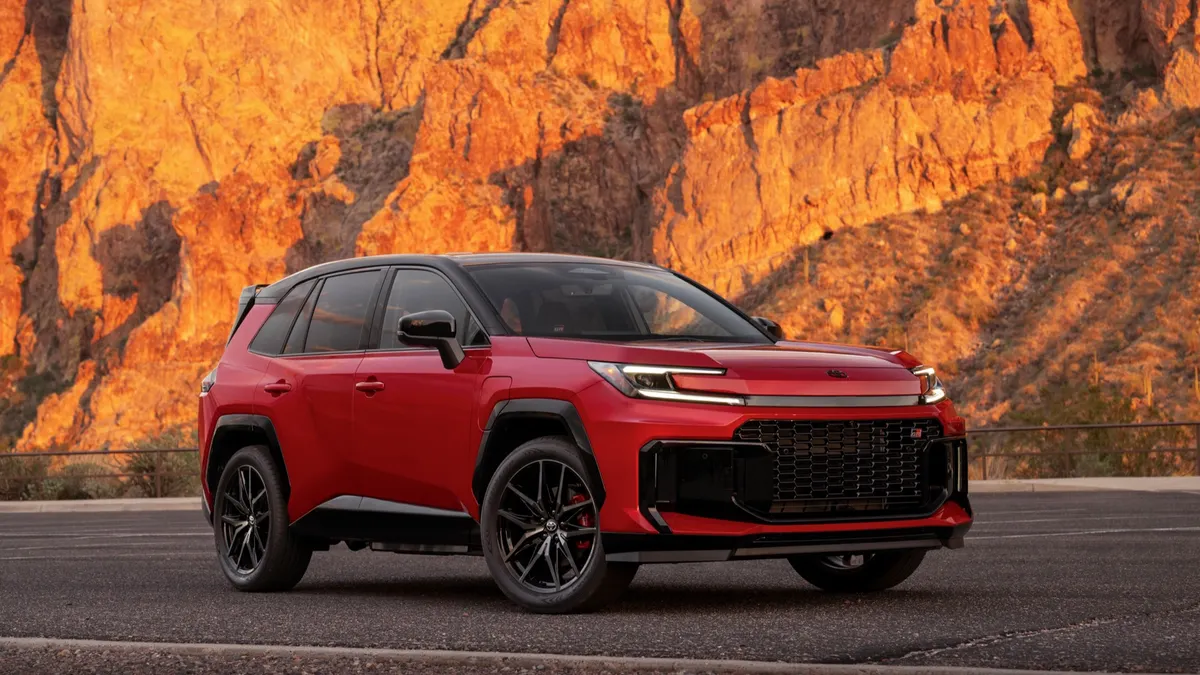
Hybrids have been one of the keys to Toyota’s sustained sales performance in the U.S. market, and the automaker saw 50% of its overall sales for North America go to hybrids in the first quarter.
Curious to learn more about the sales uptick and how it fits into Toyota’s dealer allocation strategy, WardsAuto spoke with the executive who has been leading that sales charge — David Christ, the group vice president and general manager of the Toyota Division at Toyota Motor North America — ahead of Toyota’s annual U.S. dealer convention, which was held last week.
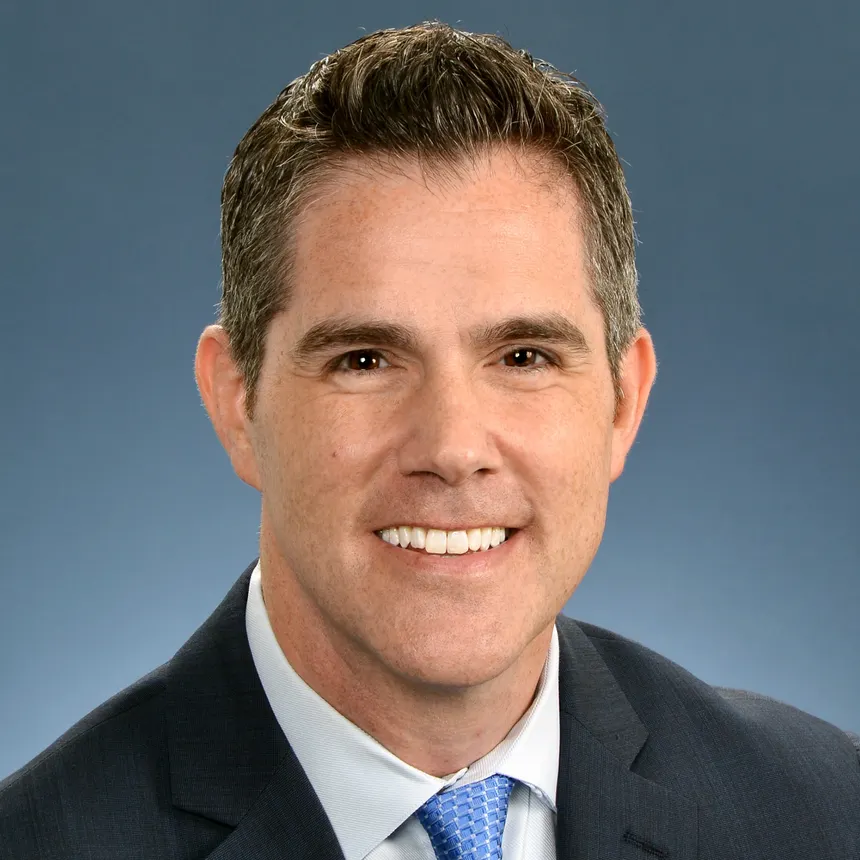
Christ leads all sales, marketing, and market representation for the automaker, plus “guest experience and retention activities” for Toyota regional sales offices and distributors, according to Toyota. And prior to this role, Christ served as group vice president and general manager of Lexus, responsible for all aspects of U.S. Lexus automotive operations, including sales, marketing, customer service and dealer operations.
In a half-hour audio call, WardsAuto checked in about Toyota’s allocation decisions for electric vehicles, how it’s facing tariff hurdles, and how it plans to maintain affordability. Follow along for that conversation, edited only for clarity.
WARDSAUTO: It's been an uncertain time for EVs, and yet Toyota's EV lineup and its EV sales themselves have really surged during this time, and done well out in the lot. How have you been treating the allocation of EVs relative to other models, and how is this going to evolve over the next year or two — to your best guess?
DAVID CHRIST: On the EV front, our sales are up this year. We're very excited to launch new products in the BEV space. We went from one car last year to three cars today. Most likely late this year, early next year, we're going to have a fourth. So that broader lineup with more choices for customers has been really helpful to give more Toyota and Lexus customers, as well as other people who are considering our brands, a choice.
The second thing which has helped sales is candidly, in the old regulatory environment, we had to really limit the allocation of BEVs outside of the CAFE states, and that obviously resulted in more sales in those 13 states, but less sales in other states. So now that we have those restrictions lifted, we've been able to allocate them more broadly, based on where the BEV registrations are, and we've been better able to match the product with the market, and that's helped sales across the country.
Other automakers have said that without regulations, they could do better with EVs in the “smile states.” Are you finding that your electric vehicle products are doing well in those southern and coastal states, or is the distribution pretty even?
You know, the second and third largest volume outside of California is Florida and Texas. Both of which we had very minimal allocation to prior to the regulations changing. Now those markets, along with other markets are selling more BEVs. So it's definitely helped us. If a dealer doesn't have the car, it's very hard for the customer to consider buying it. So first, they’ve got to see the car, they’ve got to drive the car, particularly if it's their first BEV. I think most people want to experience the car before they jump in. So yeah, that allocation change has been big, and then of course adding more products to the lineup helps because we have more vehicles across more use cases and more pricing categories.
How do your comments about distribution play out when we speak of hybrids in general, and especially hybrid trucks, which I know have been really tight in inventory?
On hybrids broadly, we have been building more and selling more this year. Last month, we were, in the Toyota division, almost 60% what we call electrified — which is hybrid, plug-in hybrid, and BEV, with the vast majority of that being hybrid. Last year we ended the year close to 50%. So we are selling more hybrid and plug-in hybrid powertrains along with more BEVs, which is a great story for our multi-pathway strategy and approach on pickup trucks. We think that hybrid powertrain in our trucks is a great alternative for customers, and those are selling well, as well. They tend to be on the higher-end models, but they're selling well nonetheless. Even though we don't offer them on the entry-level grades for price reasons.
The changes announced recently for San Antonio: Are those intended with the idea that there will be a lot more hybrid trucks a few years from now?
We make the decision on how we go to market with our powertrains based on consumer demand. Obviously moving some of the production to Texas is a big decision and a great decision, and we're going to use that as a way to build more in the U.S., which is great for everybody. But is it going to necessarily mean more hybrid truck sales? I don't know that for a fact. I think we're gonna listen to the market and respond. If more and more customers want hybrid trucks, we're gonna figure out a way to build them.
Demand is strong; inventory is low. It's given your dealers really something to take advantage of and enjoy, and that's led to some very high valuations for your franchises. How do you keep that very high momentum going as the market isn't going to stay in one spot, as it continues to shift?
There's, I'd say, a few things that we pay close attention to. The first is customer voice. We're constantly tracking our customer feedback from a bunch of different sources, and we always try and listen to our customer. The second is the dealer voice. What are the dealers saying about what the customers want and need? And we always use those as our kind of North Star on what we build and how we build it.
Going forward, I think we're going to remain committed to the portfolio strategy, where we're going to offer products across many price points with multiple powertrains, and we're going to try and make stuff ready for customers based on their interests and needs. So it's not a very complicated formula, but it feels like a winning formula. We're always trying to match our product offerings with what the customer wants and needs, and that's really why we're enjoying some success right now, as our products are very dialed-in on consumer demand.
Toyota’s new global CEO has been reported as saying that Toyota has too many models or variants. Do you think this is the case for you at present? Is this anything you hear from your U.S. dealers, or is it the case of the more the merrier right now?
I can't speak to that quote, but what I can say is we don't hear that from our dealers at all. In fact, I would say we're pretty proud of the fact that we still have six vehicles under $35,000. So we have very strong and abundant options at the very low end of the price point of new cars, and then we have vehicles that are big and roomy, and you know very capable of moving families. And we have everything in between. So, no, our dealers don't say we have too many models. They basically say we want more of the product we sell!
Is there white space that Toyota could still tap into? I know you once did this with Scion; could you tap into more small cars as part of your global lineup below Corolla and Corolla Cross? Is there room there today in the lineup? And then, is there room for anything even larger than what you have now with Sequoia?
I think we're always looking for opportunity segments or subsegments that we can get into. We don't have any that we're openly talking about, but we're studying all of it. And I would also say there's a huge effort and interest in trying to keep each series — so each vehicle that we sell — accessible to customers. So, what grade packaging do we offer? How many do we build in the lower grades? And certainly that's evident by how many cars we sell under $35,000. So it's not just whitespace of segments that maybe we don't sell in. It's also the whitespace of how do we keep these cars affordable to our customers.
There's no secret that probably the No. 1 word on most dealers' mouths is affordability. Everything's gone up in price over the years. The price of new cars, the interest rates have gone up. The car insurance has gone up. There's just a lot of extra costs on the customers. Always looking for ways to bring our pricing or bring our products in at a price where more customers can access them.
Now, with respect to cost, you're in a pretty great place with supply chain and localized assembly. But you've told a few outlets that you're kind of in wait-and-see mode with tariffs, with the turbulence still happening over tariff negotiations. Currency was helping the company with some of the lineup this year. But when is this lasting long enough where you have to go in and really rejigger pricing?
Our pricing strategy kind of remains the same as it was pre-tariffs, meaning we try and stay with the market. The USMCA is obviously really important to us. About 30% of our sales in the U.S. are built in Canada or Mexico, so it's a big chunk of our business. We obviously supported USMCA when it was signed a few years ago, and before that, NAFTA to encourage a regionalization of supply chains. That strategy works, I think, for all brands where they build and build parts across North America. We'd love to see USMCA get resolved, but there's no panic. You know we're built to work through these situations and deal with them, and you know, keep the customer at the forefront through the process.
I think we're doing our part to educate politicians and people involved in the discussions of how interconnected all of the supply chains are, and how difficult and costly it is for the consumer to untangle those supply chains. There's examples probably with every brand, where a part is built in the U.S. shipped to Mexico, put on a car, and then comes back as a finished product, and vice versa. So you know, we think solving the USMCA thing will be good for the industry and allow us to really lock in the longer-term decisions.
What are some things that you'll really need to get right next year, based on how your lineup is evolving — or ongoing issues with the market at large?
I think we learned as an industry the hard way in ‘21 and ‘22 how critical the supply chain is. You know the supply chain is a critical component to get right, and our team is doing a great job. Each year — the last three years, I believe — we've built more vehicles than we did the year before, and last year was a record for North American production. So making sure we have the parts to build those cars is kind of job one, and the supply chain team just does an amazing job at that. To me, that's really important.
The second piece is planning and predicting consumer demand. What cars do the customers want? How do they want them equipped? What's the right grade mix? And we have a really focused team here that works on that. Again, it comes back to what I said earlier, which is customer voice and dealer voice. We're always engaging with both of those. Groups to make sure we're headed in the right direction.
What are the wild cards: The midterms? The cost of fuel?
You know, the price of gas has been an interesting one because you know it has driven a little bit of interest in BEVs and plug-in hybrids. So a customer that has an 8- or 10-year-old gas vehicle might be more interested in an electrified powertrain than they would if gas was cheaper. So that's been interesting; that plays right into our wheelhouse.
The bigger macroeconomic stuff, we just try and stay close to what's going on. We look at the sales tape every day to see how we're doing, and we talk to dealers every day to see how we're doing. And right now, we feel like our product lineup is well positioned for the market. By launching more BEVs, we've really, we think, gas-price-proofed our lineup. Where if people do want a more fuel-efficient vehicle or an all-electric vehicle, we have them. Our plug-in hybrid sales are up, our hybrid sales are up, and our BEV sales are up. So we've hit a triple on those fronts.
I'd say one car that we really are excited about, a full year in, is the new RAV4. That product has been literally sold out. At the end of the month last month we had two days’ supply of RAV. Two days. We said we're going to have to change the reporting to count hours.