Editor’s note: John McElroy is the president of BlueSky Productions, which produces Autoline Daily, and a longtime opinion columnist for WardsAuto. Views expressed here are his own.
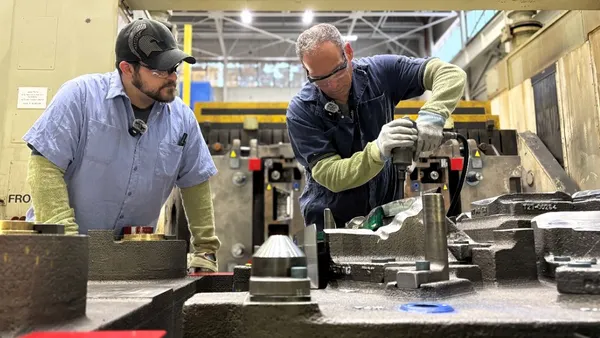
There’s a lot of talk about bringing manufacturing back to America. Most of that talk centers on tariffs, supply chain resiliency and jobs. But it overlooks a critical part of manufacturing: the U.S. tool and die industry.
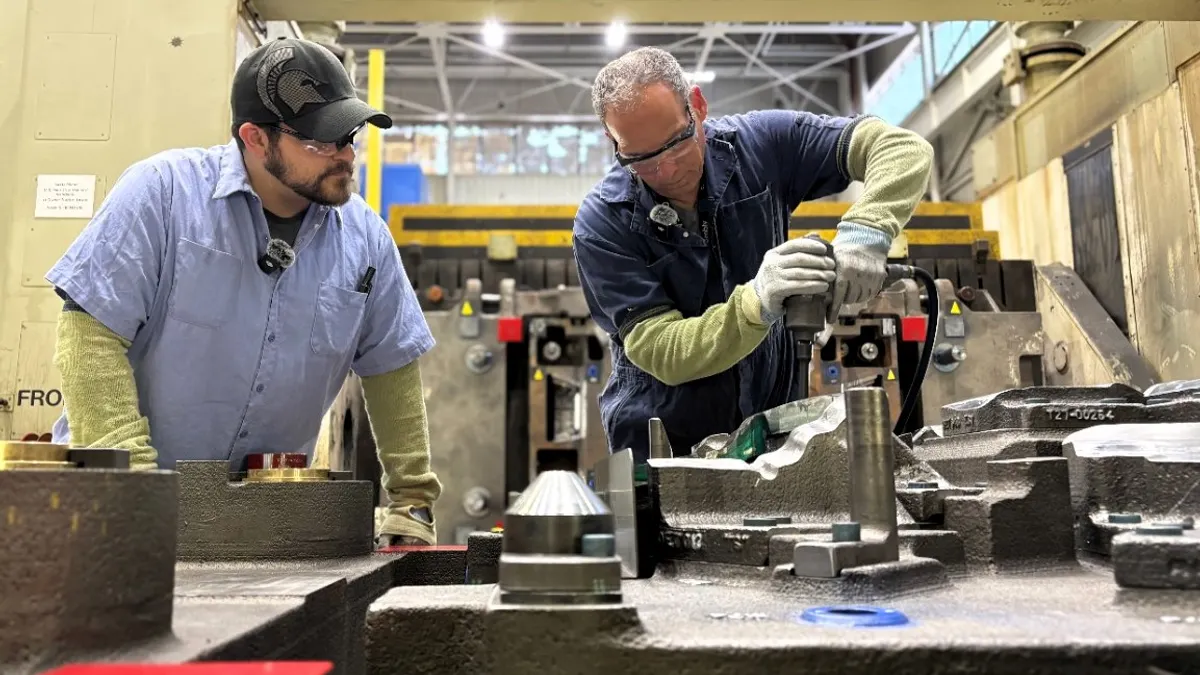
According to Laurie Harbour, principal at Wipfli and an analyst following this industry, there are now only 125 dedicated automotive tool and die shops left in the United States.
We can talk until we’re blue in the face about reviving American manufacturing, but if the U.S. can’t make its own tools then it’s just a bunch of hot air.
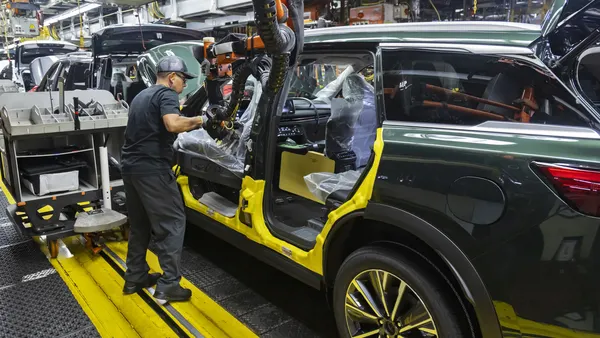
A modern vehicle requires anywhere from 20,000 to 30,000 parts across nearly 2,000 major subassemblies. Every single one of those components — from body panels to interior trim — relies on dies, molds, fixtures, and jigs to launch, refresh, or redesign.
As a comprehensive new study from the Center for Automotive Research in Ann Arbor, Michigan underscores, the U.S. domestic tooling ecosystem is facing an existential crisis. According to the paper, titled Rebuilding North American Tooling, employment in special die and tool manufacturing plummeted by 56% from 1997 to 2026, while the average age of our skilled tool-and-die workforce has climbed to 54.
We are staring down a lost generation of skilled tradespeople.
Worse still, our domestic economic model is fundamentally uncompetitive with overseas rivals, particularly China.
As Paul Patrash, CEO of Elite Mold & Engineering, told me, cheap capital and aggressive state support give suppliers based in China an immense structural advantage.
While tool and die shops in China benefit from low-interest or zero-interest loans and progress payment structures where they receive up to 90% of funds before shipment, U.S. shops are routinely forced to shoulder the financial burden of steel, engineering, and labor for months.
According to the American Mold Builders Association summary of tariff issues, 90% of U.S. manufacturers pay their tool suppliers in China using progressive payments, yet only 55% extend those same terms to domestic shops. Progressive payments give tool shops one-third of the money up front, another third midway through tool development, and the final third upon delivery.
Some U.S. automakers and suppliers make shops wait up to 180 days after a Production Part Approval Process for payment. There are literally some new cars driving on American roads whose tooling has not even been paid for yet. Meanwhile, aerospace customers routinely pay U.S. tool shops within 60 days on the dot.
While Detroit automakers maintain their own captive tool and die shops — including Ford’s Dearborn Tool and Die Plant, GM’s Flint North American Engineering Tooling Center, and Stellantis subsidiary Autodie — these operations largely exist to meet UAW job commitments. The vast majority of tooling is still bought overseas.
To break this cycle, our industry and federal policymakers must take immediate, decisive action:
- Add incentives and capital access. Tool and die shops desperately need tax abatements to help offset the massive costs of hiring and training local talent. The federal government has doled out billions in loans to EV startups like Tesla and Rivian, yet it has provided virtually nothing to the foundational tool and die industry that makes vehicle production possible. Federal matching grants, equipment financing, and tax credits specifically targeted at workforce development could all help remedy the situation.
- Modernize payment terms. Automakers and Tier 1 suppliers must reform their antiquated commercial models. Adopting Department of Defense–style progressive payment terms and honoring prompt payment schedules will inject vital working capital back into small, privately held shops.
- Embrace automation and advanced technology. To compete on speed and cost, shops must embrace advanced manufacturing technologies. For example, Elite Mold & Engineering is using a 3D printer from Mantle capable of printing tool-grade H13 and 420 stainless steel which can cut the cost of molds up to 60%.
- Level the Defense certification playing field. Many tool shops are eager to diversify into defense and aerospace contracting, but Department of Defense requirements like CMMC cybersecurity certification can cost upwards of $100,000 — a prohibitive barrier for small businesses. Federal subsidies must help offset these compliance costs.
- Provide equal manufacturing credits. The federal government provides significant incentives to OEMs for onshoring vehicle assembly; it is past time to extend those exact same credits upstream to the tool and die shops that anchor the entire supply chain.
We cannot talk seriously about supply chain resilience or national security while letting our tooling base wither away. The automotive industry cannot wait a decade to act. By aligning government support, reforming commercial payment terms, and investing heavily in our workforce and technology, we can rebuild North American tooling capacity — before the tooling industry disappears entirely.