Sonic Automotive reported record-high consolidated revenues of $3.7 billion and record gross profit of $598.8 million for the first quarter of 2026, as used car sales grew despite a 10% decline in new-vehicle sales compared to the same period last year, the company announced in its earnings report.
The company’s consolidated gross profits — which combines the results from its franchised new-car dealerships and EchoPark, Sonic’s used-car-only channel — were lifted by increased revenues from the company’s fixed operations, finance and insurance, and used car sales.
Used vehicle revenues grew by $44 million to $1.27 billion in Q1 2026, a 4% increase from the previous year. The increase helped offset new vehicle sales’ $49 million decline in the same period. Sonic’s franchised dealerships and Echo Park both contributed to the increases.
“Amazingly high new-car pricing” is driving used-vehicle demand, said Jeff Dyke, Sonic Automotive’s president, in an earnings conference call on April 30. He said Sonic’s average new-car transaction price topped $60,000 in the first quarter for the second quarter in a row.
“With the appreciation or the increase in new car pricing, you know, it’s making affordability a big, big issue, and that is going to put wind in the sails for pre-owned,” Dyke said in the call.
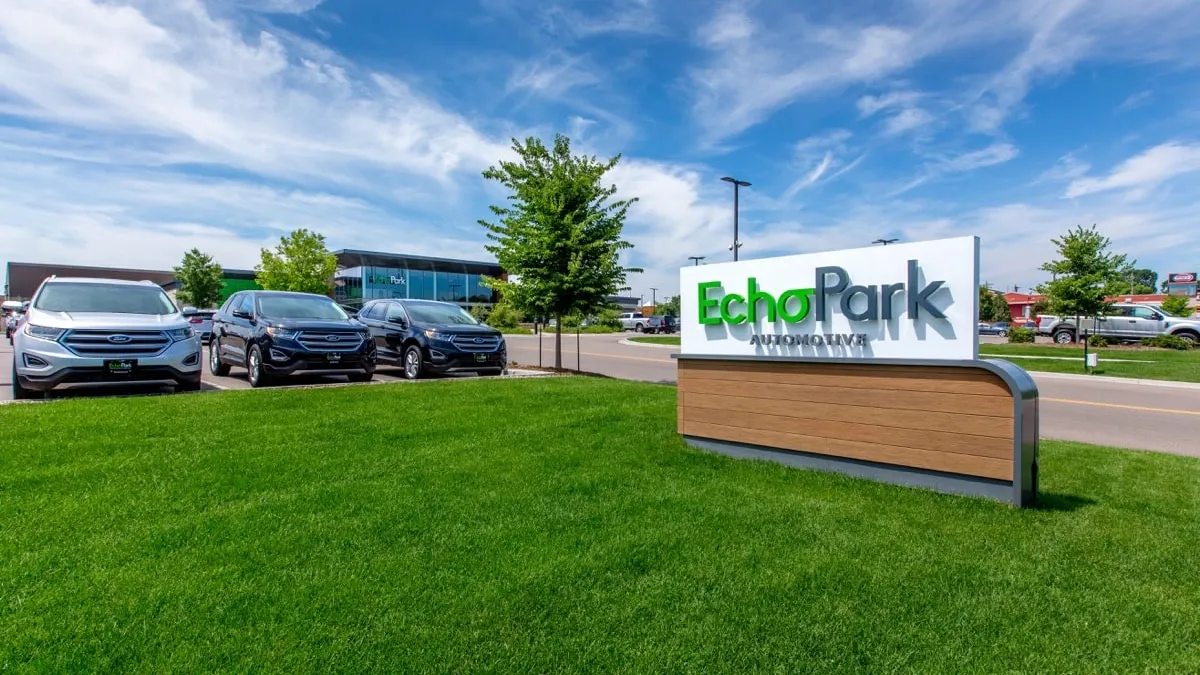
Sonic reiterated it would stick to a plan announced earlier to relaunch the EchoPark brand with a new marketing campaign in the second half of 2026. Sonic also plans to add a few new EchoPark locations, starting by the end of this year.
Those would be the first new additions since Sonic reduced the number of EchoPark stores, in response to the shortage of late-model used cars during and after the pandemic. At the end of 2025, EchoPark had just 18 locations, from a high of 52 at the end of 2022.
David Smith, Sonic Automotive’s chairman and CEO, said in the conference call that Sonic intends to keep costs down when adding new locations, a lesson learned the first time around.
“As we move forward and as we open new stores, new EchoPark stores, our cost basis in those stores is going to be less than we have spent historically. Which is going to make it far easier to become profitable a lot faster in those locations,” Smith said.
In a follow-up phone interview on May 4, Dyke said Sonic isn’t counting on the industry returning anytime soon to the pre-pandemic, new-car annual sales rate of 17 million-plus. “That would be great, but we don’t really need it” to be highly profitable, Dyke said.
To put that in perspective, Cox Automotive has forecasted 2026 U.S. light-vehicle sales will be 15.8 million in 2026, down about 2.6% versus 2025.
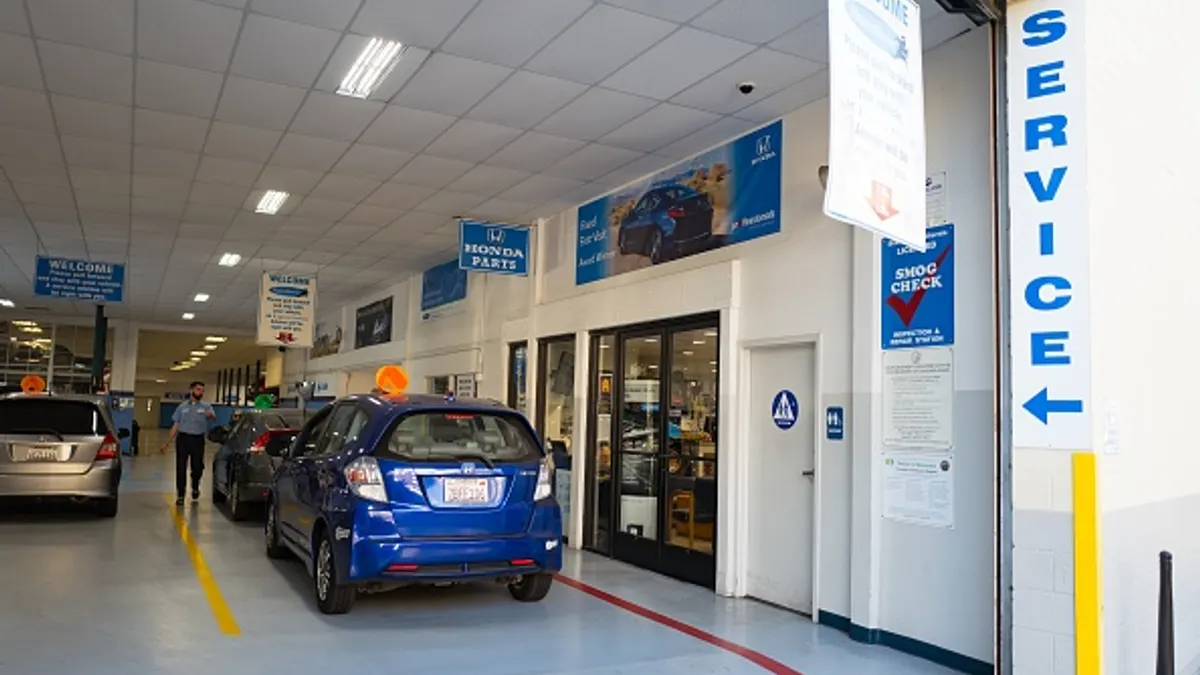
Other profit centers are taking up the slack for Sonic. The company’s fixed ops gross profit in the first quarter was up 10% year over year for its franchised, new-car dealerships, to $261.1 million — a record high, the company said. Sonic’s F&I gross profit for its franchised dealerships was also up 7% to $139.3 million.
Sonic has also cut down on buying used vehicles at wholesale auctions. It is sourcing more used cars from trade-ins and from data-mining its own service customers to identify those who are in a positive-equity position. That is, they are good candidates to trade in because they owe less on their auto loan than the vehicle is worth.
Dyke said Sonic’s policy for its franchised dealerships is to present all service customers with vehicles in positive equity with a trade-in price quote. “If it’s in equity, we’re giving it to them,” he said in the phone interview.
More recently, Sonic began sourcing late-model used cars for its EchoPark channel from its franchised dealerships for the first time, starting late in the first quarter.
In all, EchoPark sourced around 40% of its used-car inventory from non-auction sources in the first quarter, up from around 10% historically, the company said. Non-auction vehicles earn an additional average of around $1,200 in gross profit per unit than auction cars, Dyke said in the conference call.
Sonic Automotive CFO Heath Byrd said on the earnings call that used-car sourcing is a “big driver” for the company. “The team has found ways to source vehicles in multiple ways rather than the auction,” he said. “That’s a big part of it.”